

Not Beets, Not Carrots: The Kitchen Staple You Can Turn Into A Natural Wood Stain
We may receive a commission on purchases made from links.
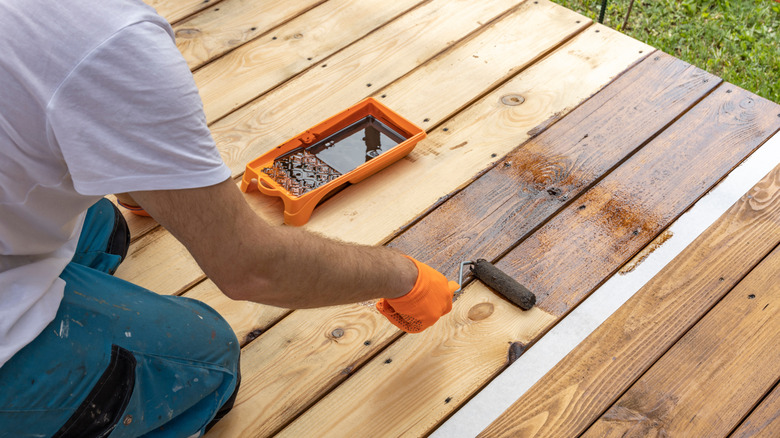
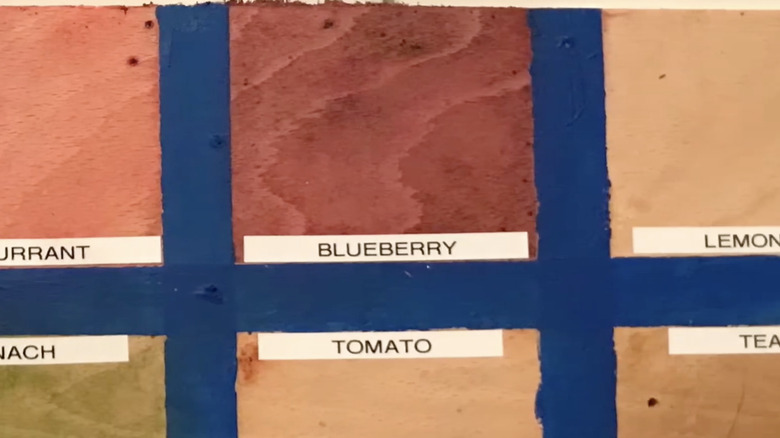
Have you just completed a small wooden project and are wondering how to finish it? Perhaps you've just thrifted a lovely wooden shelf that needs a revamp before you can use it in your home. One of the best ways to decorate natural wood is with a beautiful stain. It's sure to highlight that interesting grain pattern. If you like the idea of using kitchen scraps as a natural wood stain (though not coffee grounds, beets, or carrots) rather than buying a premade stain, this DIY project is perfect for you. You can use a breakfast and baking staple to make a gorgeous, purple-toned wood stain — yup, we're talking about blueberries.
If you've ever crushed a blueberry between your fingers or used a punnet of them to make juice or jam, you'll know that the resultant liquid is a stunning deep blue-purple. The color comes from the abundant anthocyanins within dark-hued fruit like blueberries. While the liquid looks pretty, it will also stain anything it comes into contact with. Why not use this ability to your advantage? As long as you protect your clothes and skin, blueberries are a kitchen ingredient you can use to naturally stain the wood in your latest DIY project. You can use fresh or frozen blueberries to create your stain, so long as they're crushable. In fact, frozen blueberries may work better than their recently picked counterparts. To make your own wood stain, you'll also need some vinegar, some salt, a kitchen strainer, and a small bowl.
Making a natural wood stain from blueberries isn't very difficult
First, crush the berries and strain the juice into the bowl. You could also use a mortar and pestle to crush the berries and then strain the liquid. Once you have ½ cup of juice, mix 1 teaspoon of vinegar and 1 teaspoon of salt into it. These act as preservatives, ensuring the stain doesn't go moldy when stored, and help fix the color. Pour the concoction into a clean jar and screw the lid on tightly. Alternatively, you could use 1 teaspoon of alum (potassium aluminum sulfate) per 1 gallon of blueberry juice. Another way to release as much dye as possible from the blueberries is to use the hot press method. Put the blueberries in a pot with just enough water to cover them. Bring the water to a boil and keep it boiling for about 30 minutes. Smash up the blueberries during the last 10 minutes of the process and strain off the liquid as before.
Don't throw out rusty nails. Use them to DIY a unique wood stain that you can add to your blueberry stain to deepen the color. Alternatively, you can add a piece of steel wool soaked in vinegar to your blueberry stain. If you used the hot press method, add the steel wool after the stain has cooled. The steel wool has a similar effect to the nails, adding black or brown tones. Let the steel wool sit for 24 hours or longer — the longer you wait, the deeper the shade. Remove the steel wool and strain the liquid into a container. Before you start staining your wooden item, decant a little of the stain into a smaller working container rather than dipping your rag or brush into the primary container. This will preserve the color and condition of the stain. Seal your project with Minwax Clear Matte Polycrylic Protective Wood Finish to lock in the stain.