

How To Prevent Algae From Growing On Your Concrete Patio Naturally
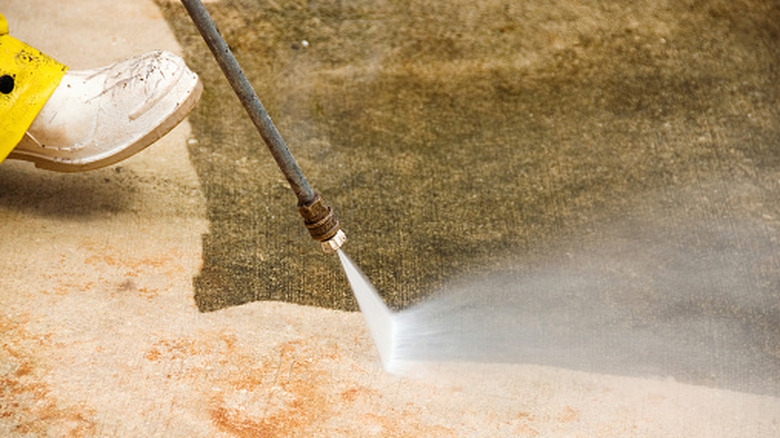
Algae: It's green, it's slimy, and it's a massive hassle to get rid of. If you live somewhere that frequently faces warm, humid weather, you're likely all too familiar with the stubbornness of its growth. Concrete's slightly textured, hard surface makes it the perfect home for algae to grow, and its porosity is a major help, too, holding onto moisture long after the most recent rain. Algae spores can easily take hold and spread across your entire patio, and even after scrubbing them away, you may notice that telltale green tinge returning just a few months later.
So how do you banish green algae from concrete and cement surfaces for good? The answer is improved drainage. While common cleaning solutions like pressure washing, scrubbing with bleach, or investing in a product specifically designed to eliminate algae can immediately restore the appearance of your concrete patio, they don't address the root of the problem. Algae needs plenty of moisture to thrive, and while there's not much you can do to stop the rain from falling, you can certainly prevent it from pooling on your paved spaces.
Additional steps like clearing away excess foliage, sealing your concrete often, and regularly rinsing or sweeping your patio can also help to reduce the likelihood of algae formation and allow water to more easily evaporate after a heavy rain or watering session. By making more permanent changes that improve drainage and lessen the formation of pooling water, you can go longer between cleans and maintain both the appearance and structure of your concrete patio.
How to improve the drainage of your concrete patio
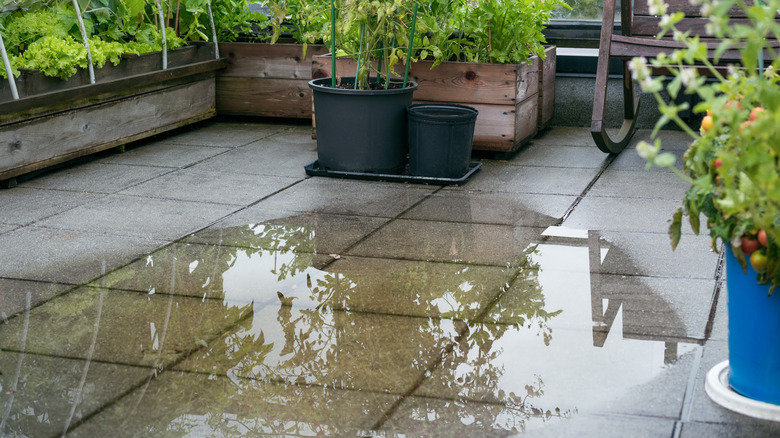
Before you make any permanent changes to your concrete patio, you must first identify the problem. Take a look at the area after a heavy rain and note any spots where water seems to pool or take an especially long time to evaporate. If it seems to be collecting simply because there's plant debris or objects preventing drainage or direct sunlight exposure, clear them away — that might make a major difference in your situation.
Next, it's onto the important stuff: slope. When you're designing your perfect patio, you're likely envisioning a completely flat surface, but that's far from the ideal reality. To prevent puddles from forming, water needs to flow off of the concrete, away from the center and away from your home. A slope of ⅛ to ¼ inch per foot is generally recommended. It's subtle enough to go unnoticed while still helping water drain away from the slab, maintaining both the health and the appearance of the material. If you find that your patio isn't properly sloped, it might be necessary to professionally resurface or re-pour the slab, though a thin topping layer could be all you need for a minor adjustment.
Additionally, consider adding some drains or a border of permeable material around your concrete. The soil around the slab should also slope downwards, helping to further direct water away from the surface. Once proper grading is achieved, you should notice significantly less pooling and moisture retention, eventually leading to a much cleaner (and less green!) patio over time.