

How To Sharpen A Wallpaper Scraper
We may receive a commission on purchases made from links.
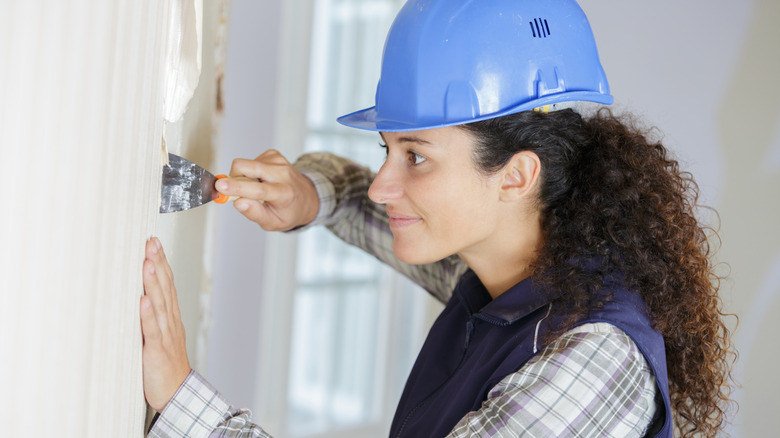
Getting rid of old wallpaper is one of those tasks that you underestimate until you're about ten minutes into taking it on. Sometimes you're removing it because you're painting your home as part of a full renovation, and other times, it's a one-off decor upgrade to a single room. In any scenario, having a dull wallpaper scraper to remove old, worn wallpaper can make this arm-taxing job twice as hard (and take twice as long) as it needs to be. Luckily, your only option isn't just to go to the hardware store to purchase a new one. Instead, you can sharpen your current scraper with the SHARPAL 121N sharpening file, which can be found on Amazon for about $22 or at your local hardware store.
Sure, it costs a bit more than a $12 replacement wallpaper scraper, but you won't need to buy a new one every time the old one goes dull. Sharpening a wallpaper scraper might seem insignificant, but it's the kind of skill that belongs on any list of basic DIY home improvement projects every homeowner should know how to do. Some scrapers include a removable blade that can be swapped out for a replacement, but many come with a permanent blade.
This is exactly where a diamond file comes in handy, as it can sharpen the blade in place without any oil or need to remove or replace it. This particular file is an ergonomic sharpening tool that features a monocrystalline diamond surface, which allows for simple blade sharpening without a lot of complicated repositioning and hand maneuvering. It comes with two grit levels: A coarse 325-grit side and a finer 1200-grit side on the opposite side.
Sharpen your scraper blade safely in a few easy steps
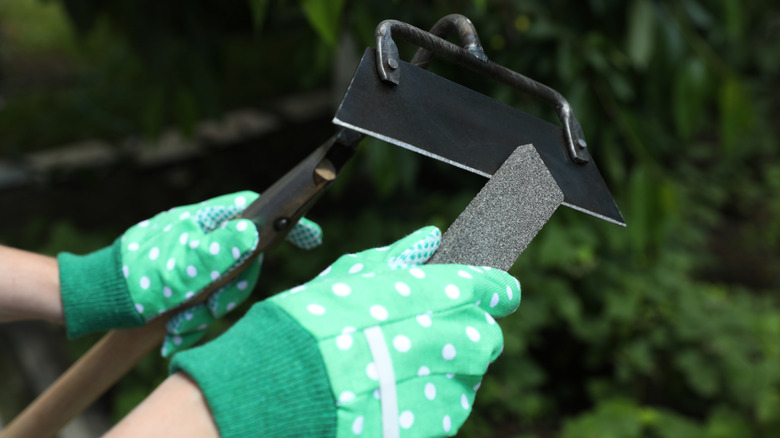
Before sharpening your scraper, always don a pair of safety glasses and a pair of cut-proof gloves, like the Schwer SlicePro ANSI Cut Resistant Gloves, for protection. If you have a workbench with a table vise, such as the Yost LV-4 Homeowner's Vise, place your wall scraper diagonally inside the vise to hold it in place. If you don't have one, hold the scraper steady with one hand while resting your forearm on a table or countertop.
Be sure to wipe off any dried adhesive, paint, or debris beforehand, so you're sharpening bare metal, not gunk. Next, identify the bevel, or angled edge, on your scraper blade, and match that same angle when sharpening so you don't round it off or accidentally create a new edge. Starting with the coarse-grit side of the sharpening stone, run it along the blade while maintaining the existing bevel angle, using light, even strokes.
After a few strokes, go over it a few times with the finer-grit side for a cleaner, sharp finish. Finally, wipe away any metal shavings and test the edge on a scrap piece of wallpaper to check if it cuts and lifts the material effectively. Note that if your blade isn't completely dull or damaged, you may not need to use the coarse side of the stone — you can start with the fine-grit side instead for a quick touch-up, and you're good to go. Regarding especially tough wallpaper removal, experts recommend using a scoring tool to to create tiny perforations loosening glue beneath wallpaper before scraping.