

5 Creative Alternatives To Traditional Retaining Walls
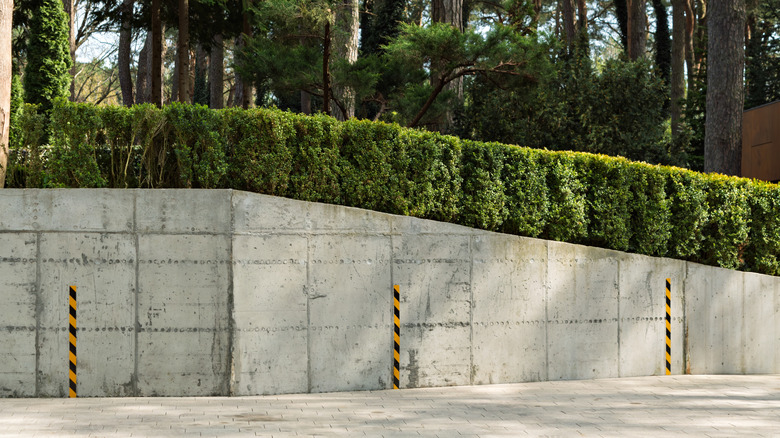
Homeowners build retaining walls, typically in sloped areas, for several important reasons — holding soil in place on that slope, preventing erosion and flooding as water runs down the slope, and making space around the slope more functional for outdoor living. These features can also make an attractive, curb-appeal-inspiring addition to your landscape. As you think about the materials you might use for your retaining wall, consider the possibility of using non-traditional materials or approaches that will make your new property addition stand out. Maybe there's a material that's off the beaten path but suits your aesthetic better than traditional materials, or a function made possible by an unusual approach.
The same three things to consider when choosing your retaining wall material can help guide your quest for the non-traditional. These considerations are purpose, location, and aesthetics, so you'll want to keep these factors in mind when choosing non-traditional materials. Do you get excited by dramatic natural materials like boulders and plants? Does the neat appearance of gabion make your heart sing? Maybe you're attracted to a DIY approach like "stones" made from concrete bags or the extra functionality of a wall with a water feature or other built-in.
Still, keep in mind that not every creative alternative is right for every situation. For example, you may need to choose the best type of retaining wall to help prevent flooding, which may not be possible with all suggestions listed here. Also be aware that the do's and dont's of building a retaining wall – like checking with local authorities on whether you need a permit — also apply to non-traditional varieties.
Retaining wall waterfall or water feature
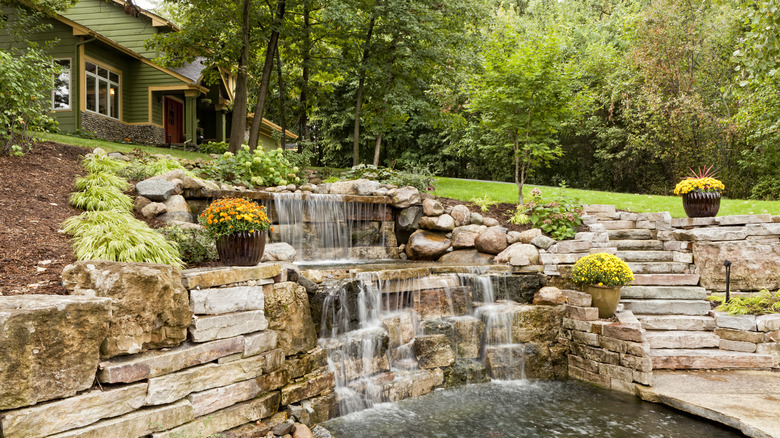
One of the most dramatic and satisfying ways to build a retaining wall is to include a water feature in the design. A waterfall is a natural fit for sloped areas and can quickly become the focal point of your landscape. Imagine the soothing sound of water spilling over rocks while your retaining wall is doing its job holding the soil in place.
Several styles are possible, including both the pond or pond-less versions, and some can be built right into the retaining wall. Obviously, space is a consideration for this project, especially if it includes a pond. You'll also need to consider whether the waterfall needs lighting, what kind of landscaping should go around it, and what kind of drainage you can feasibly install.
Retaining wall with built-in
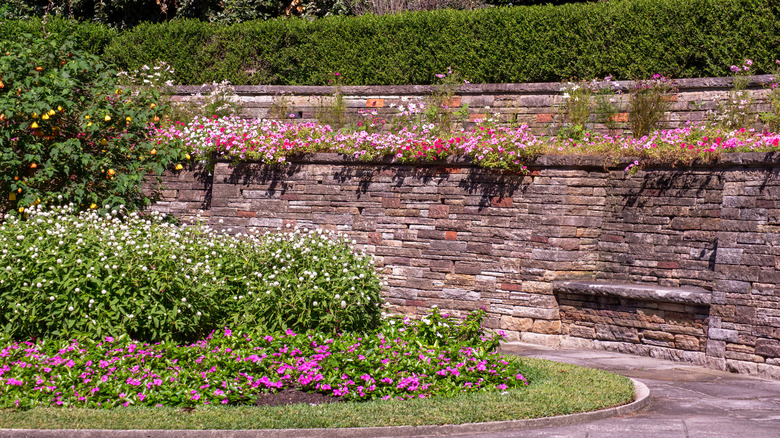
Retaining walls are already doing the important work of holding your soil in place, but they can do so much more if you build functionality into them. Built-ins that could be included include benches (also known as seat walls), sheds or storage areas, planters, fire pits and fireplaces, steps, and more. You can even create a built-in spot for your grill.
If your retaining walls are terraced, the flat part at the top of each terrace level can be considered a built-in planter, and is a perfect spot for planting shrubs. That said, a terraced or multi-level retaining wall cries out for built-in steps for safe and easy movement between levels.
A few caveats come with adding a built-in to a retaining wall, depending on the specifics of your additions. For example, you may have to use a different material for a fire pit or fireplace built-in than you did for the retaining walls, as special fire-resistant materials may be needed.
Gabion retaining wall
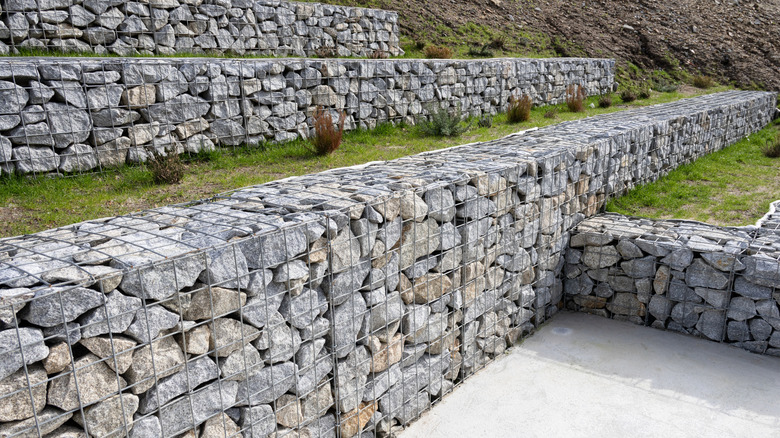
The gabion approach to retaining walls uses natural materials, but displays them in an unnatural — yet pleasing — way so that the design looks crisp and uniform. In this design, rocks are contained in stainless steel or galvanized gabion cages (called "baskets"). Gabion designs offer the advantages of easy installation and low maintenance. Drainage is important for any retaining wall; in fact, lack of drainage is a commonly-overlooked mistake that will cause your retaining wall to collapse. Fortunately, gabion walls excel in the drainage area, as water flows easily through the rocks and down the slope.
If you already have plentiful rocks on your property, you can save a lot of money on this project while also wrangling rocks spread throughout your landscape. You can even attain a beautiful rock garden look with this approach by interspersing plants between or in front of gabion sections. You may be wondering if gabion sections need concrete foundations, but most do not; a 2-inch to 4-inch gravel layer should be a sufficient base.
Boulder retaining wall
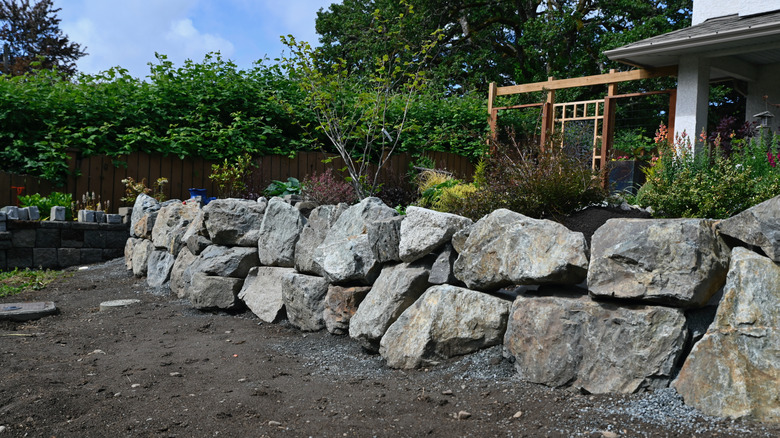
Want to make a bold statement with your retaining wall? Boulders bring some dimension to your yard as a simple yet impactful addition, and boulder retaining walls are known for their longevity, lasting at least 50 years if properly installed and needing little to no maintenance. You can even introduce plantings in the nooks and crannies between boulders.
A good gravel-based foundation and effective drainage via drain pipe are critical for a boulder retaining wall. Boulders must be installed so they both interlock with each other and lean slightly backwards into the slope. Given these requirements, the weight of the boulders, and the possible need for heavy equipment, you may want to engage a professional to install your boulder wall.
A fun variation on a boulder retaining wall is to use mixed-size materials, incorporating boulders and smaller rocks, adding even more visual interest. You can take advantage of color variations in rocks and boulders to mix up sizes, shapes, and colors for a creative approach.
Concrete bag retaining wall
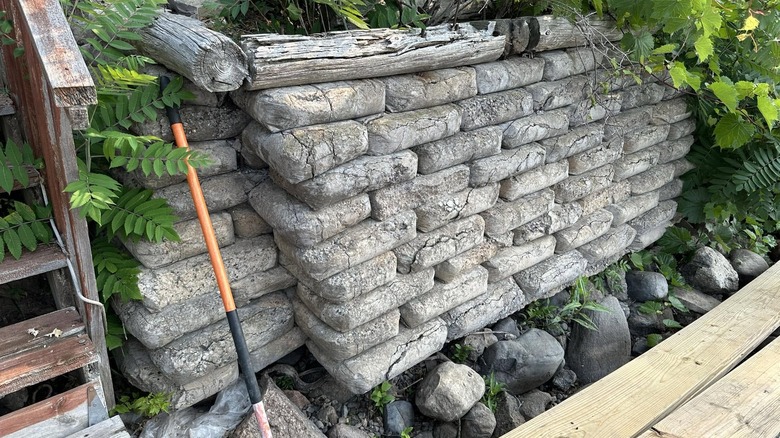
A likely top non-traditional choice for DIYers is to build a retaining wall using only concrete bags, an inexpensive and easily accessible material. Though this technique has gotten recent buzz online, it has been around for many years, with retaining walls using concrete bags built decades ago still functioning today.
The process involves stacking 50-pound bags of quick-setting concrete mix, paper wrapper and all, saturating them with water, and allowing the concrete to set for 24 to 48 hours. Once dry, the paper will eventually decompose, or you can rip or torch it off. Make sure the label says "biodegradable" and the bag doesn't have a plastic liner. The resulting dried concrete bags resemble broad, natural stone. Some DIYers also insert rebar in at least some of the bags for additional support. The concrete bag method is best suited to walls that are retaining up to 4 feet of soil.