

You Don't Need Much Concrete: There's An Easier To Use Material For A Retaining Wall
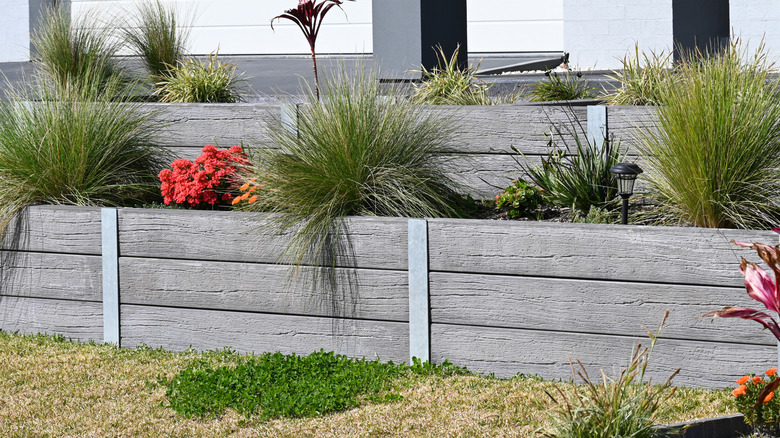
Retaining walls are often built with concrete beams or blocks, which are strong and offer excellent durability. Concrete can even be textured and colored so that you're not forced to compromise with with visually-boring slabs. However, the material is heavy, building walls safely takes considerable skill, and concrete is one of the least environmentally-friendly materials on the planet. So anyone who may be looking to make their garden more sustainable will want to minimize its use as much as possible. Wood is an alternative that can not only be greener, but easier to use too.
Not all wood is ethically sourced, so look for lumber that is stamped either FSC (Forestry Stewardship Council) or SFI (Sustainable Forestry Initiative). You can often find wood with these marks at major hardware and big box stores. Some non-stamped wood might be called sustainable, but without proper certification it's difficult to be sure.
Wood is easier to cut to size and fix in place than concrete, and you may already have the necessary tools at home. A saw, hammer, and cordless drill will often do the trick. Depending on the design and wood chosen, it may be possible to build a retaining wall without any concrete at all. Let's look at the options.
How to build a retaining wall using wood
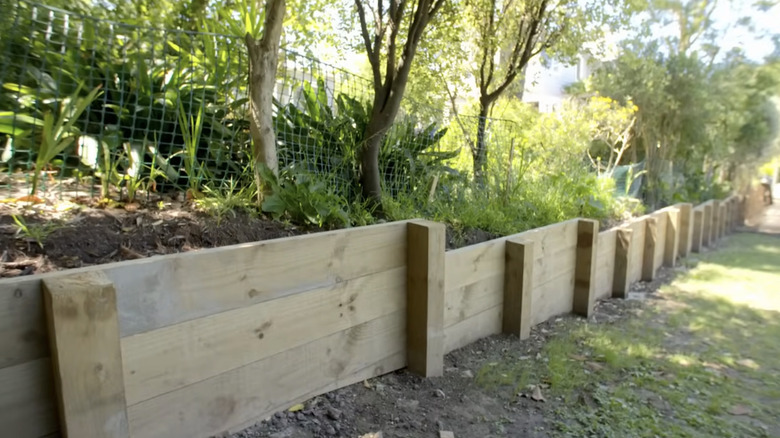
There are a number of key do's and don't's when building a retaining wall, and the amount of dirt you need to hold back is a major factor. On its own, wood won't have the absolute strength of a properly-built concrete version, so four feet tall is probably the maximum height you'll want to build.
One popular idea is to use railroad ties for landscaping, and their solid mass may make it possible to go higher. They are usually drilled through and have rebar inserted to hold them together. However, their size and toughness mean they aren't the easiest wood to work with. Reclaimed railroad ties may also contain toxic creosote. If you like the rustic look, you could simply pound round logs into the dirt. If so, you'll want to make sure that at least a third of the height is below ground, but even then they might soon start to lean.
Probably the most common wood retaining wall is also easy to create. It uses 4x4 posts (or similar) set into holes that are then filled with quick-set concrete for solidity. Horizontal boards are then attached and a preservative coating applied (there are lots of colors to choose from). The boards can be fitted either inside or outside the posts, depending on the appearance you prefer. If they're on the inside (the dirt side), they can be nailed, but if they're on the outside, it's better to use screws to prevent the pressure of the dirt from pushing them apart.