

Flooring Trends That Were Everywhere In The '90s
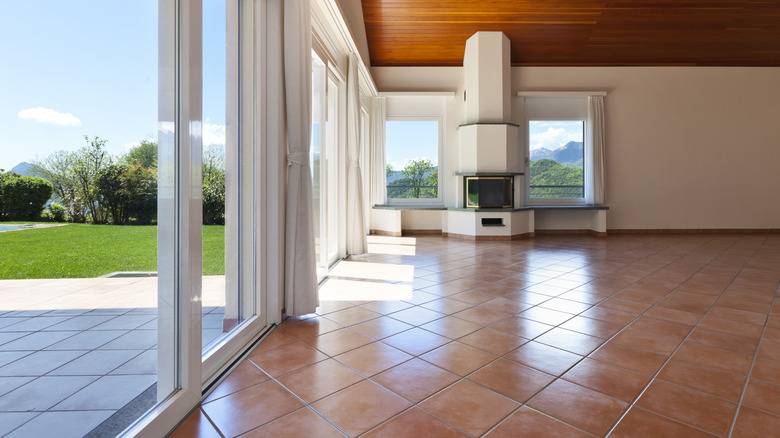
Compared to the bright, energetic home and flooring designs of the '70s, and the bold approach to interiors in the '80s, the '90s marched to a very different beat. Whereas, in decades past, homes had been extravagantly adorned with an almost-anything-goes approach to flooring, the interior mood of the moment in the '90s was evolving, fast. The period saw a growing trend towards family-centric lifestyles, which naturally demanded a blend of both comfort and practicality over elaborate decoration.
And if that sounds familiar, it should. Not so recently, cool grays and stark whites were all the rage, and yet the most popular flooring trends of 2026 are now noticeably more geared towards comfort and connectedness to nature. But given how far technology has come in just a few decades, the resultant floors in the '90s were often vastly different to those we see today. Below, we've highlighted 11 key flooring trends that were very much at the forefront of '90s home design. Some may inspire you to infuse your home decor with a flavor of the '90s. And some, as interesting as they are, may, after all, be best left in the past.
Beige, taupe, and greige carpet
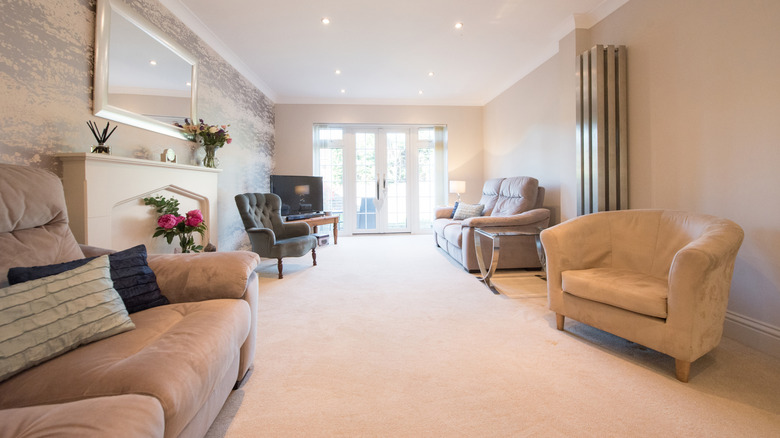
Compared to the striking colorways and bold pattern trends that defined '60s homes — and, to a lesser extent, those in the '70s and '80s — the '90s somewhat calmed things down. One of the most prevalent floor trends of the decade was a movement towards neutral carpeting: think beige, taupe, sand, ivory, and, of course, the heady mix of gray and beige inspiringly known as "greige." It was a movement away from those highly-visual statement floors that had been so prevalent in previous decades, and while some might say it's boring, it did, believe it or not, serve a purpose.
For example, as many DIY home designers now know, pared-back colors like this instill a sense of warmth and stillness. In the '90s, they also gave homeowners a way to coordinate with changing furniture and paint trends. However, perhaps the most important reason is that they provided a tonic to the overpowering and bold expressions of previous decades, while making it easier to achieve the more flexible, "liveable" spaces that family-centric households demanded.
Berber carpet
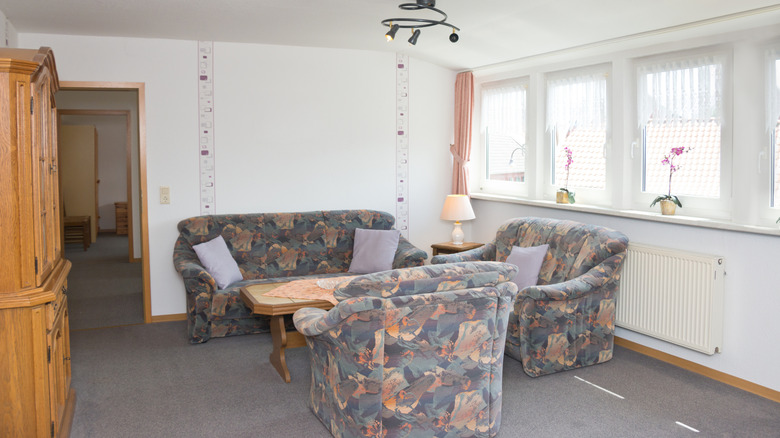
Another carpet-based trend that screams '90s was the prevalence of berber carpet. These looped, highly-textured styles of carpet (in those aforementioned neutral colors) offered a more casual, contemporary look in homes versus the traditional plush carpets of years past. They often featured flecked patterns, which could help to "hide" everyday dirt and wear. More than that, thanks to their short pile, they were decidedly easier to clean than the carpet types that had dominated in previous decades — not least the groovy-to-grim shag piles that were so popular in the '60s.
Again, the desire among homeowners for practical, family-friendly spaces goes a long way to explaining the rise of berber carpets. Don't forget, more and more households were seeing both parents leave in the morning for work. There wasn't the time in the week for one of them to keep the house nice and clean, so things like flooring had to work extra hard in order to be worth the expense of installing.
Subtle carpet patterns
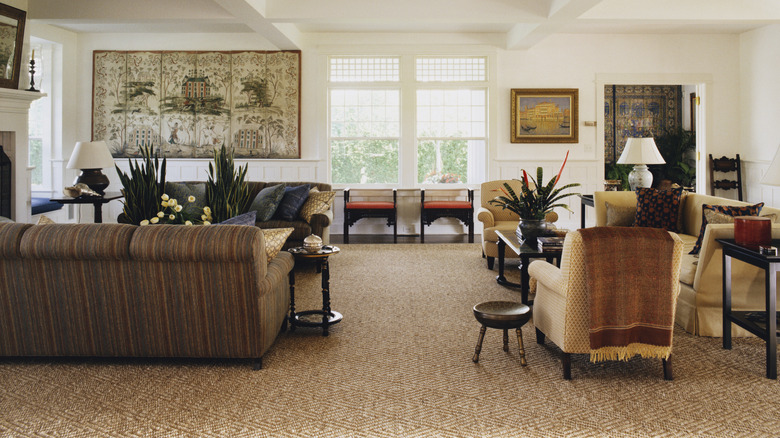
If you have your fingers on the pulse of interior design, you'll know that pattern is one of the hottest carpet floor trends of 2026. But, in the '90s, as we've seen, homeowners were favoring a much more neutral approach to their floors. That's not to say that pattern wasn't "a thing," it's just that they were treated with much more subtlety — again a response to the overwhelming patterns that had dominated for the past two decades.
For example, in the place of striking geometry and high-contrast colors, many homes incorporated tonal variations instead. These were achieved with variations in pile height, fiber orientation, and weave structure — lending a floor the appearance of pattern and texture without actually changing the material or color. It enabled homeowners to achieve that flexible, practical, and "calm" quality that was so "of the moment" in the '90s, with just enough interest to avoid appearing monotonous.
High-gloss, warm-toned hardwood
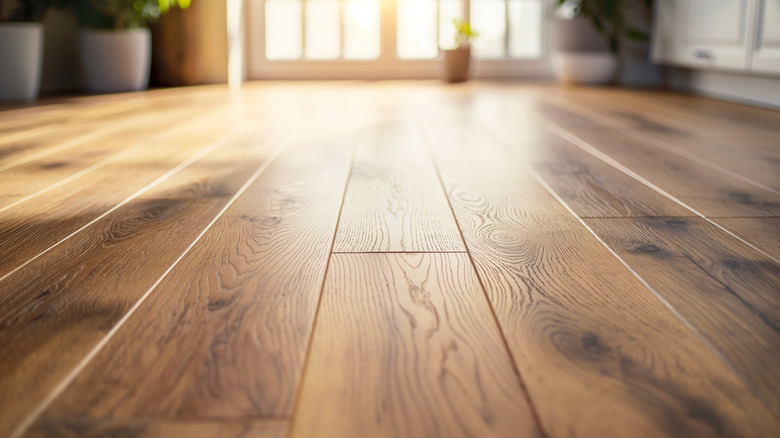
Hardwood flooring underwent a major revival during the '80s and '90s. It had been sought-after for decades, although for a long time it was considered a luxury beyond the means of the average homeowner. In the '90s, though, new finishing technologies and improved installation techniques had made it more accessible than ever. One wood flooring trend that was typical of the '90s was orange-toned wood, although shades of honey, amber, and cherry were all also popular. Most also featured a glossy finish, and together, these combinations exuded a sense of quality, permanence, and warmth — all important during the '90s.
These floors also connected nicely with the growing popularity of trends from overseas, like French farmhouse and Mediterranean (especially Tuscan) influenced interiors. These leaned heavily on natural wood tones, which only served to cement the popularity of hardwood in the run up to the 21st century. Now, as we touched on with berber carpets, which used tonal variations to "break up" the monotony long runs of carpets, this wasn't as easily achieved with wood. Instead, many homeowners chose to layer their wooden floors with area rugs. And in case you need any proof, just take a closer look at the gorgeous, rug-strewn wood floor of apartment 20 in the hit '90s TV show, "Friends."
Engineered wood flooring
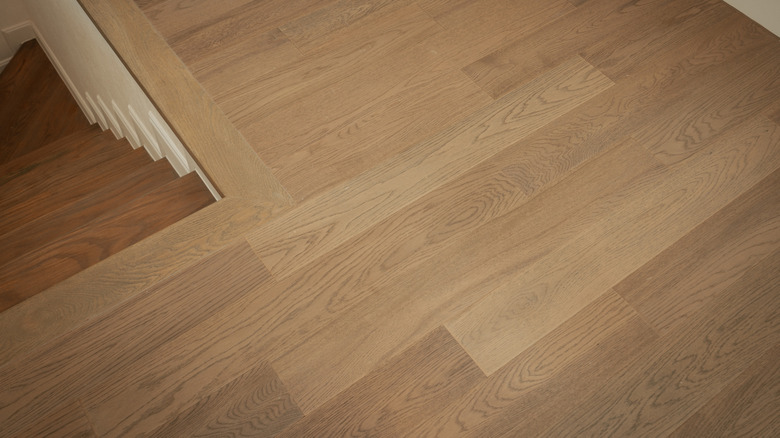
One of the reasons that hardwood was gaining legs during the '90s was the introduction and evolution of engineered wood floors. These products helped to expand the wood-flooring market beyond traditional solid-hardwood boards. They provided a surface that was much easier to install. They were also better able to cope with environmental conditions, like damp and humidity, which naturally cause regular boards to expand and contract, leading to gaps.
They were also available in a wider array of wood types and colors versus the comparatively limited selection of solid hardwood boards. Crucially, engineered floor boards made previously-expensive materials more affordable to ordinary homeowners. They weren't cheap, per se. But they were certainly more cost-effective. And at a time when economic prosperity meant more homeowners had the money to spend on quality, durable items, it's really no surprise that engineered wood flooring surged in popularity.
Pergo and laminate flooring
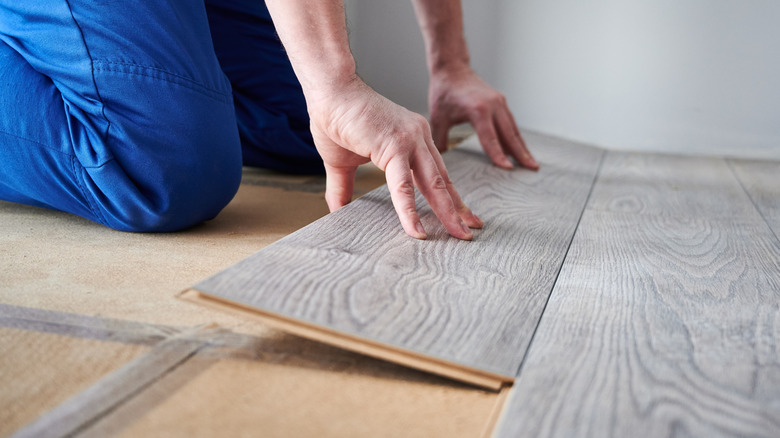
Laminate flooring was actually first invented in the late '70s. It was the creation of Swedish company, Perstop, and by 1984, their proprietary new flooring product — which was sold under the brand name Pergo — was flooding the European market. By the early '90s, it was also swimming its way into homes across North America. As for what made it so popular, there were several important things.
As the first click-lock style flooring of its kind, it offered a simple-to-install, durable, and very low-maintenance alternative to real wood and tile. It was also more cost-effective. It delivered the photographic likeness of real (and expensive) wood and tile finishes, but at a considerably lower cost. And, as mentioned, the click-lock installation requirements meant that homeowners could easily incorporate it without hiring a professional. This was a big deal in the '90s. DIY home-improvement culture was gaining serious strides in the run-up to Y2K. When homeowners realized that they could get a beautiful floor — one that was simple to maintain, easy to install by themselves, and cheaper than the real deal — they understandably came a-clamoring.
Parquet flooring and geometric wood
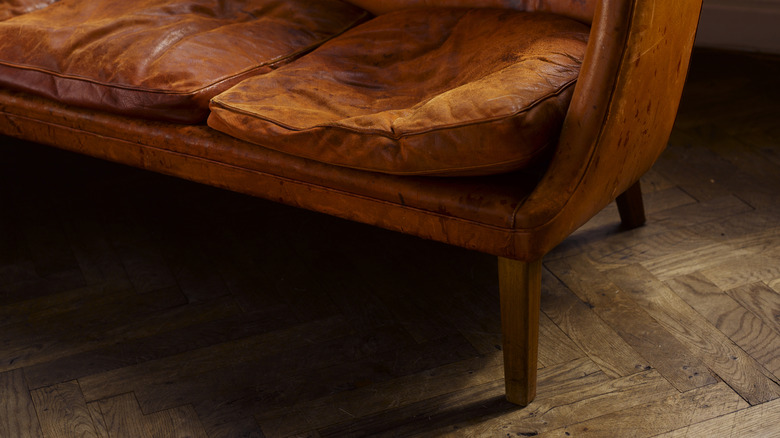
Given the desire for hard- and engineered-wood flooring, the rise in parquet floors and geometric wood patterns is somewhat unsurprising. If you've never seen parquet flooring, then where have you been? Parquet flooring brings the wow factor to spaces in a way that regular wooden boards simply can't replicate. It incorporates a series of small wood pieces which are arranged in intriguing geometric patterns. In the '90s, it offered homeowners a more custom look versus standard wooden planks. In other words, it delivered homes a look that felt less "off the shelf," while still grounding them in those all-important warm, neutral tones.
It also slotted nicely into the decade's rising interest in European-style interiors, particularly the fascination during the '90s with French farmhouse design. Those geometric floors felt traditional, yet architecturally tasteful. They were also highly functional, which was more important than ever in the '90s. Like hardwood and engineered wood, they were specified in a variety of colors, often with a rich, high-gloss finish.
Terracotta tile floors
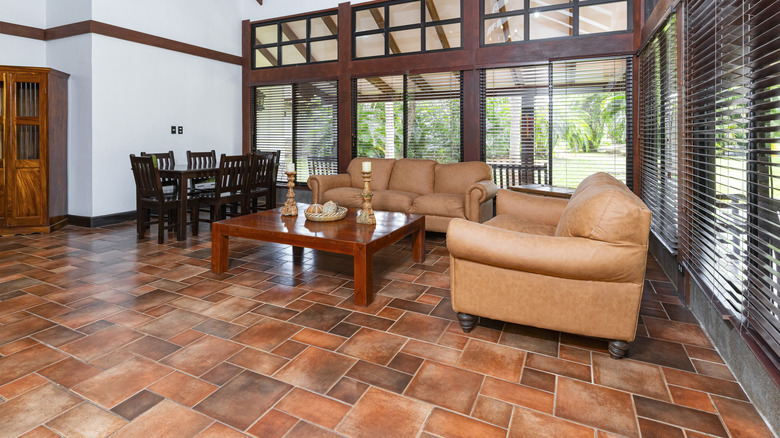
When you think of warm and rustic Tuscan interiors, does your mind become filled with visions of sun-soaked terracotta? Well, so did those of homeowners in the '90s. And at that time, particularly later in the decade, Tuscan-inspired interior design was all the rage. While the homes that imbued the trend were not, per se, a true reflection of actual Tuscan design, there were certain tropes that, even today, probably feel reminiscent of our most memorable Italian vacations.
Terracotta, both as a color and a tile type, tied into the wider need throughout the '90s for calming, earthy colors that afforded homes a feeling of warmth. And, as mentioned, they harnessed the craving in the latter part of the decade and into the early 2000s for that old-world, Tuscan vibe. Their naturally textured surfaces brought a tangible feeling of "rustic" to floors. More than that, like wood and neutral carpet, terracotta is a surprisingly versatile backdrop for a number of styles and designs. In other words, it offered a sense of "neutrality" for homeowners who weren't entirely convinced by the notion of wall-to-wall carpet.
Natural stone and stone-look flooring
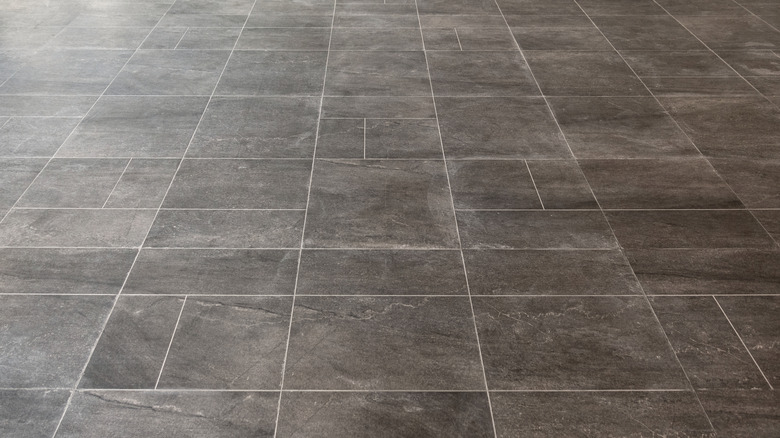
Terracotta wasn't the only type of stone that became popular for flooring during the '90s. In fact, multiple stones were very much in vogue during the decade. Slate and limestone were popular, while travertine — widely associated with that aforementioned Mediterranean aesthetic — was especially highly coveted. They were of particular use in the kitchen and bathroom, where the benefits of natural stone flooring really came into their own, standing up to the rigors of high-moisture and high-traffic.
However, it was perhaps the way in which they curbed designers' craving for an "old-world" feel that cemented their place in the history books of '90s flooring. And depending on the tile of choice, homeowners could as easily imbue a sense of southern French design as they could traditional Tuscan warmth. At the same time, manufacturing processes were improving. Marble effect tiles were hitting the mainstream, making stone all the more popular. Meanwhile, luxurious matte finishes were giving homeowners a chance to depart from the glossy finishes of yesteryear and instead allow the natural color and texture of their tiles to do the talking.
Tile baseboards
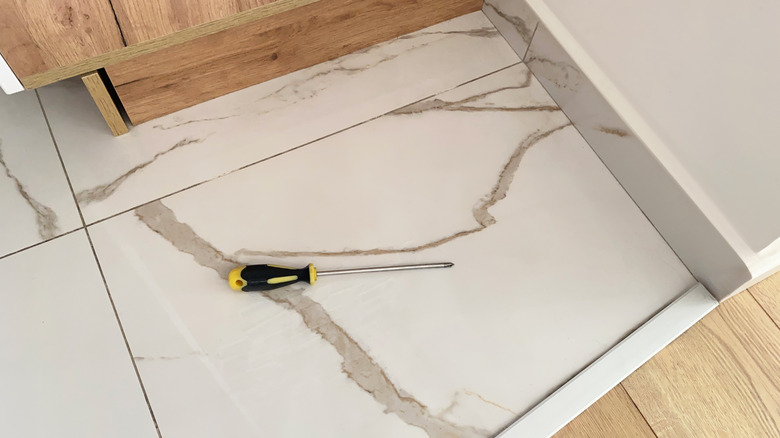
One '90s flooring trend that stands to make your home look outdated is the inclusion of tile baseboards. In the '90s, these were popular — allowing homeowners to buy a little extra of whatever they ran along the floor and use that to "baseboard" their walls. And in certain scenarios, they certainly made a lot of sense. In rooms like the bathroom, where exposure to moisture was basically guaranteed, they allowed homeowners to effectively "waterproof" those sections of wall in the same way they would their bath or shower surround.
If you're struggling to picture it, then think of tiled baseboards as a kind-of kitchen backsplash, but at ground level. At the time, it made total sense, particularly when compared to rot- and mold-prone baseboard materials like wood. However, if you remember what we said at the start — that some '90s floor ideas are best left in the '90s — this is one of them. Instead, Missy Steffens, principal designer of M.Steffens Interiors tells Southern Living that if you want to adopt this '90s trend in a way that feels current, then you should avoid a narrow, ground-level strip and instead go all-out with tile wainscoting.
Frieze carpet
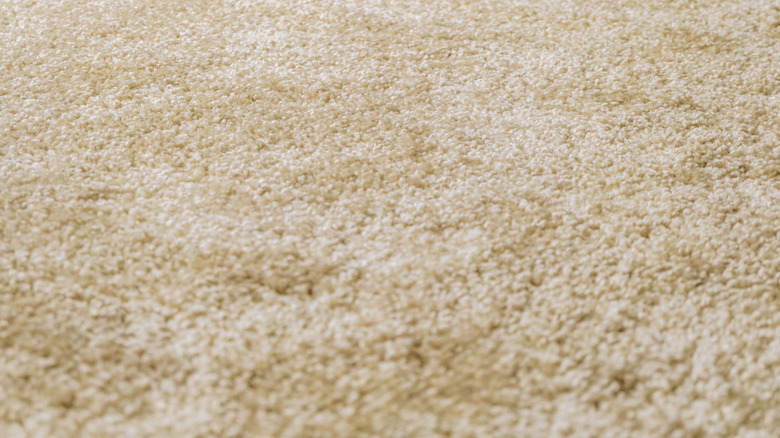
Our final stop on this tour of '90s flooring trends takes us full circle — back to the creative world of carpet. Of course, in the context of the '90s, "creative" may not be the best word to describe those neutral, monotone runs of carpeting. In the case of frieze carpets, they were probably best described as a blend of comfort and practicality. They bridged the gap nicely between the borderline-austere low-piles of berber, and the high-pile problems associated with the more shaggy furnishings of decades past.
Compared to the short, easily-maintained piles of berber, frieze carpets are decidedly more cushy underfoot, which appealed to those in the '90s with an eye to domestic coziness.They feature a slightly-curled, "kinked" pile, which also recovers from foot traffic much more quickly than the smooth-cut carpet constructions that were prevalent in previous decades. That slightly higher, curled pile also lent a sense of visual texture, without the need to overwhelm a space with pattern. Crucially, it helped to hide daily dirt more effectively than lower-cut berber carpets, which again appealed to the practicality-first approach adopted by so many '90s home designers.