

Do Cinder Blocks Always Need To Be Filled With Concrete?
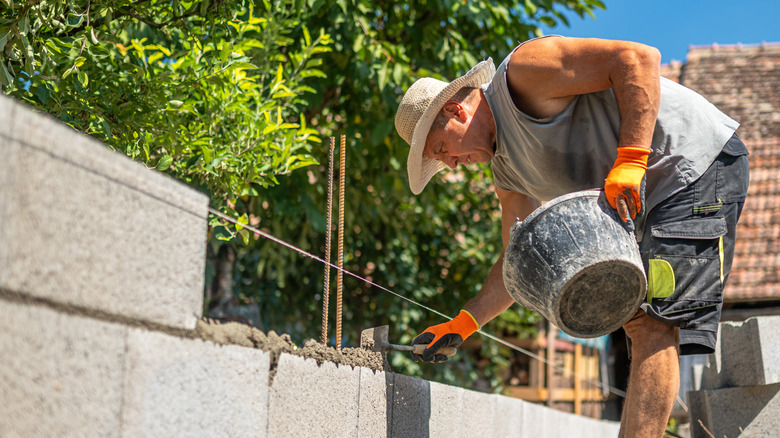
Cinder blocks are often used in building lightweight structures and walls, and may contain hollow areas, which you can fill. The benefit is that they can be used in many ways. By filling them with different materials, you change the purpose of your cinder blocks to make them practical all around your home and garden. Concrete is the most obvious example, but you can also use materials like dirt, sand, foam, and gravel, depending on your needs.
It's worth noting that although the names are often used interchangeably, there is a difference between concrete blocks and cinder blocks, specifically in the materials used to make them, which also influences strength. Because of this, they are often ideal for different purposes. However, when it comes to filling them, you can still fill them with very similar materials. So whether you're looking to use actual cinder or concrete blocks, knowing what to fill them with can come in handy.
More concrete is a common way to fill cinder blocks. It adds weight and stability, which are necessary for structural builds, including ones that will be dealing with lateral force and a lot of pressure. Sometimes, in these cases, rebar is also used to fill the holes and add extra support before they are filled with concrete. But if you aren't using these blocks for such an important purpose, then you can use other materials to fit your needs best, or even just leave them empty.
Why you may want a certain filling for your cinder blocks
Some examples of what you can use to fill cinder block hollows include sand, gravel, and foam. These are the most common, but you can also use some other, more unique fillers, including cellulose insulation, vermiculite, grout, and perlite. Each item has a slightly different benefit, depending on what you want from your cinder blocks.
For example, cellulose, perlite, and spray foam all have the benefit of being lightweight and providing thermal insulation. The former is often used when specifically going for sustainability, and perlite is most commonly a filler with non-structural interiors, like half walls.
Sand, grout, and stones are all heavy and strong enough to add stability and support. Sand also has the added benefit of helping to further block sounds, and it and stones are often good for allowing drainage in areas where water can get into the blocks. Vermiculite, along with many of the other materials, helps to increase fire resistance. It also blocks out heat, sound, and moisture.
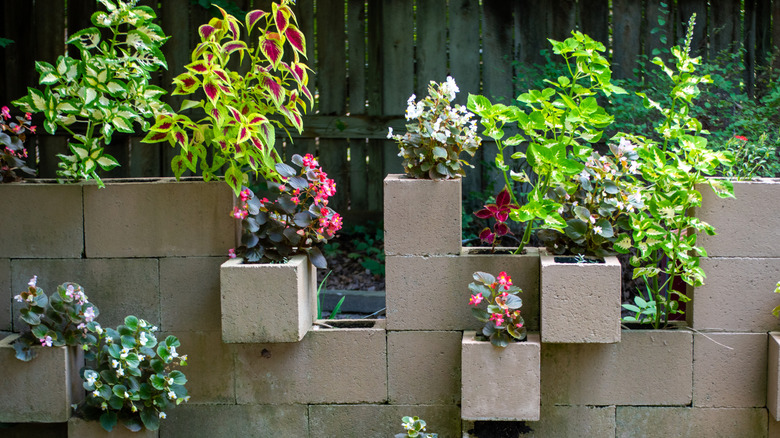
Depending on how tall you are stacking them, cinder block holes can also be left empty. They aren't stable enough to be used structurally, but it is fine if you just need something small, such as building a raised garden from concrete blocks. For certain DIY projects, dirt is also a potential filler, as you can use it to create a unique flower bed or build a succulent garden entirely from concrete blocks.