

Skip Concrete Blocks: The Similar Material For A Cost-Effective Retaining Wall
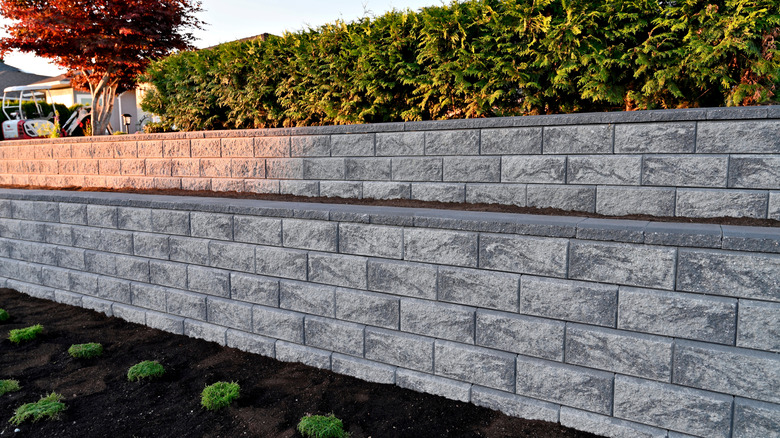
Retaining walls are common structures in backyards that are built on a slope. They provide a barrier to hold back the soil that would otherwise collapse, so that the garden can be on two levels. There are lots of do's and don'ts when it comes to building one, but what is the best material to use? Concrete blocks are one of the most common types materials used by professionals. They are easy to get hold of and install, provide great durability, and will stand the test of time. However, there is an alternative material that can arguably offer the same list of benefits at a cheaper price, which may make you ditch concrete blocks, and that is cinder blocks.
Cinder blocks are building tools made up of cement, sand, and coal cinders. They represent a lighter version of traditional concrete blocks, due to being hollow in the middle. This makes them easier to work with and slightly cheaper. For context, concrete blocks cost anywhere from $1.75 to $2.60 per unit, whereas cinder blocks are $1.60 to $2.10 per unit. Even though it seems like a small difference, when you're buying enough materials to build a retaining wall, the cost really does add up.
The pros and cons of choosing cinder blocks for a retaining wall
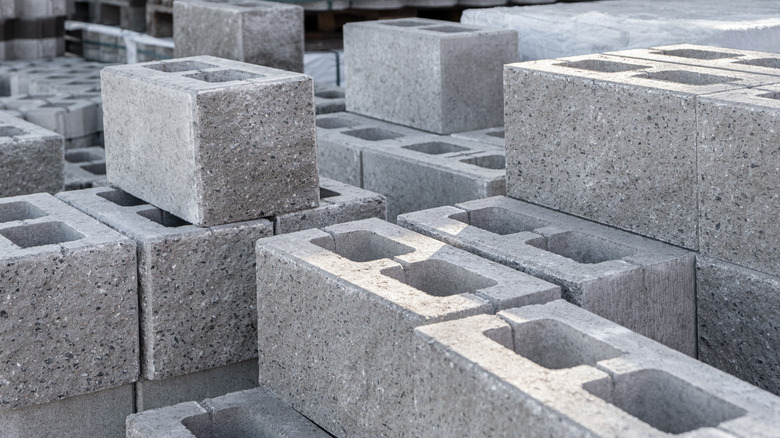
Whether you're building your own retaining wall or hiring a professional, one of the main things that is likely going to be on your mind is the overall cost. Yes, cinder blocks are cheaper than solid concrete blocks, but it's important to look at the bigger picture and consider all of the pros and cons of concrete blocks versus cinder blocks. Because cinder blocks are hollow and lighter, they are easier and quicker to work with. If you're planning to employ a professional to do the job for you, labor costs will likely be cheaper with cinder blocks, as it will be a quicker process from start to finish.
On the flip side, because cinder blocks are lighter, it also means that they also have a lower strength profile. On the whole, garden retaining walls aren't usually classified as large structures. So, this shouldn't be an issue, but it's worth keeping in mind.
The composition of cinder blocks means that they have a really good level of insulation. The air pockets that are present offer a great thermal and sound barrier, ideal for backyard retaining walls. However, their porous structure can also mean that water can seep through into the blocks. To stop this from happening, it's important that the blocks are sealed and waterproofed.