

This Person Made A Sandy Beach For Their Organic Pool: 'Extraordinary'
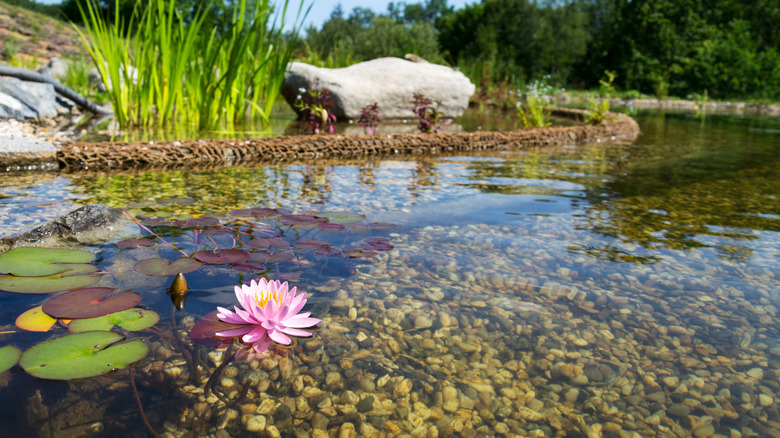
A lot of people like the idea of a pool in their backyard, but it doesn't have to remain a fantasy. Even if you have a relatively modest plot, there are plenty of swimming pool ideas that don't take up a lot of space. That said, if you're looking for a less traditional-looking pool, one challenge for the eco-conscious homeowner is the use of chlorine or salts to keep the water clean. It's something organic or natural swimming pools (NSPs) are intended to overcome. Instead of harsh chemicals, it's plant life that filters the water. Organic pools come in all shapes and sizes, but over on YouTube, David Pagan Butler figured that his had something missing: a sandy beach. He added one economically by using geotextile, pool liner, sandbags, and, of course, sand. Let's look at how he did it.
Before we do, let's just clarify what organic pools, or NSPs, are. They are not just some muddy hole filled with water. They can be regular with paved edges, although many people prefer a more naturalistic approach. They can be made using an EPDM rubber or PVC liner, or with concrete or gunite (a product that is sprayed onto a surface using specialized equipment). EPDM is arguably the best choice if you want to make your garden more sustainable, but the pros and cons of each should be considered.
The key difference is that NSPs have what's called a regeneration zone. It's where plants and friendly bacteria take out the impurities to provide a clean and safe freshwater swimming experience.
Preparing the organic swimming pool for a sandy beach
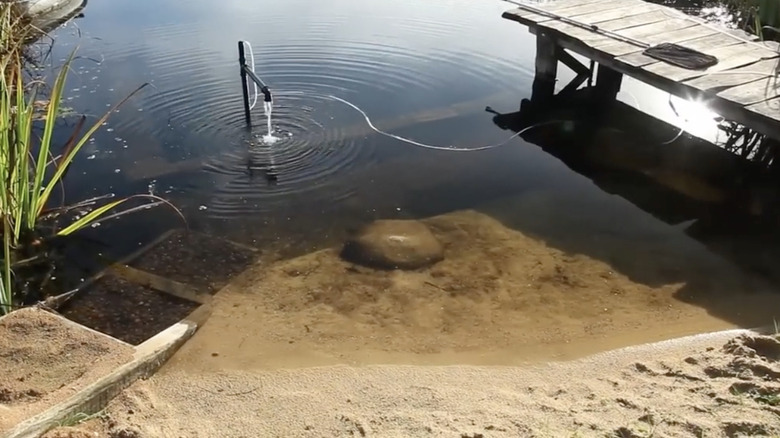
It's important to point out that using this method to add a sandy beach can only be done if the organic pool has a sloping edge much like you will usually find at the coast or a lake. If you want to add one to a pool with vertical sides, you'll need to build a containment area — effectively a kids' sandbox. It wouldn't be difficult to do with some boards and short 4x4 posts for supports, but you couldn't have the sand actually running into the water in a natural way. Any sand that spilled over would simply sink to the bottom of the pool.
Even when the swimming pool has sloping sides, it could swallow an awful lot of sand. The solution, as David illustrates in the video, is to build an underwater wall or baffle so the sand doesn't need to cover such a large area or be as deep.
David is working with an existing regeneration zone, but has removed the plants. If your layout is different, you'll probably want to create an initial barrier, and use gravel to bring the bottom of the pool up a couple of feet.
Adding the sandy beach to the organic pool
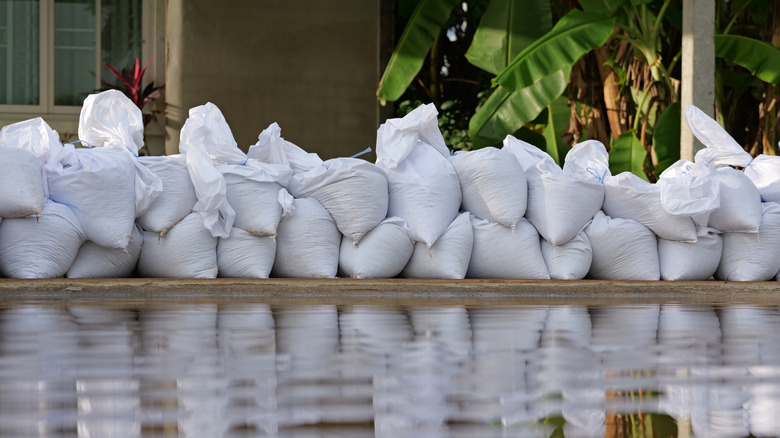
With the bottom of the swimming pool raised, you can now build the secondary wall to retain the sand. David uses 50-lb sandbags; typically you would fill these bags about 2/3rds so they stack properly. First, he puts down some geotextile (heavy-duty landscape fabric) to prevent the gravel from puncturing them. The polypropylene bags have limited strength, so to protect them, David also traps a spare piece of pool liner underneath and wraps it around the back of the wall and over the top.
Finally, he adds a layer of geotextile running from outside the pool area, across the gravel bottom, and up and over the front of the secondary wall. David suggests weighing the geotextile down with more gravel, but you could perhaps use something like paving slabs to make it more stable and secure. Then it's just a question of covering the area with sand to finish the beach.
You may find that with regular use, the sand will tend to migrate into the pool, but it shouldn't take a lot of work to rake it back periodically. You might also want to landscape around the beach area with some heat-tolerant plants to give it a natural oasis vibe.