

Ditch Traditional Portland Cement: The Eco-Friendly Alternative That'll Hold Just As Strong
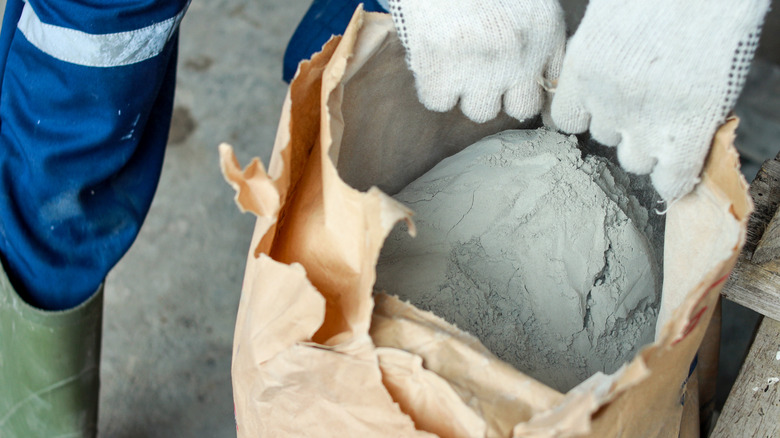
You've decided to renovate your dull backyard, and the first item on your list is cement for your raised concrete planters and DIY poured concrete pavers. But then when you arrive at the hardware store, you spot bags of cement labelled Type 1L or Portland Limestone Cement. What does Type 1L mean? Should you pick it up or go for the traditional Portland cement instead? Well, if you want an eco-friendly cement alternative that still looks good and lasts, you should take those bags of Portland Limestone Cement (PLC) home with you.
Portland limestone cement works just as well as traditional cement, but it has a 10% lower carbon footprint. To understand why, it might help to first learn the difference between concrete and cement. Concrete is actually a mixture of cement, water and an aggregate, such as sand or gravel. Because cement is a core ingredient in concrete, tens of thousands of companies globally rely on it for concrete production. In fact, there's no other human-made material in the world that's used more broadly than concrete. Global cement production reached nearly 4 billion metric tons in 2025, and it's responsible for a significant amount of greenhouse gas emissions. In total, cement production generates about 8% of all human-made carbon dioxide emissions. Fortunately, over time the industry has introduced a variety of blended cement products that require less processing. One of them is Portland Limestone Cement.
Portland Limestone Cement generates fewer carbon emissions
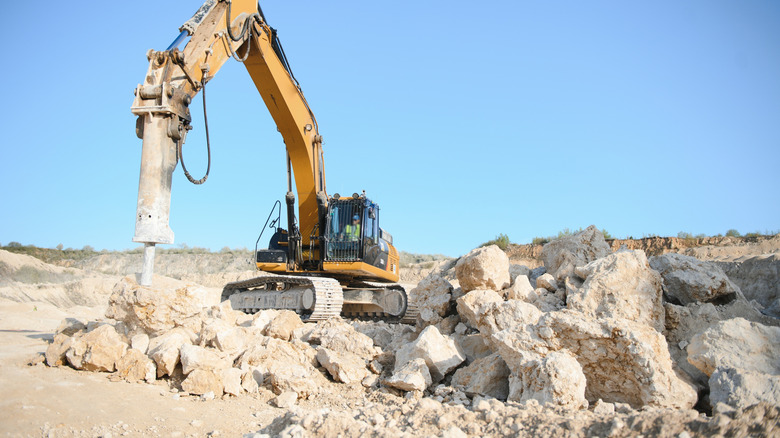
Most of the emissions generated by cement production are a byproduct of creating clinker. Clinker is the active binding agent used in all types of cement, and it's what Portland Limestone Cement (PLC) seeks to replace. PLC or Type 1L cement usually replaces 10 to 12% of the clinker with ground limestone — sometimes replacing as much as 15%. This lowers the total amount of energy required for the production process and effectively lowers carbon emissions by as much as 10%, according to concrete manufacturer Prosoco. In simple terms, PLC is way better for the environment than traditional cement.
Moreover, while Portland Limestone Cement uses significantly more limestone than ordinary Portland cement, this increment does not adversely affect the strength or performance of the mix in general use cases. It's just as strong as the good old stuff. That means you will not have to compromise on the quality or workability of your concrete mix in order to stay green. In fact, many Portland limestone cement products are still ASTM-compliant. Because they meet all the same standards for strength and endurance through weathering, aging, and freeze-thaw cycles, you can confidently use it for your building projects.
Other advantages of Portland Limestone Cement and how to use it
The benefits of PLC over ordinary Portland cement don't stop at its sustainability and strength; there's can also be a price advantage. Because using limestone costs the manufacturer less than other filler materials, those reduced costs may be passed down to consumers, depending on how you buy. In some cases, Type 1L or Portland Limestone Cement could be more cost effective than ordinary cement. When picking up bags at a hardware store, however, the price is generally comparable, so you can feel better about your environmental impact without blowing your budget. A 92.5-pound bag of TXI Portland Limestone Cement is priced at $19.88 at Lowe's, while a 92.6-lb bag of Quikrete Commercial Grade Portland Cement costs $18.98.
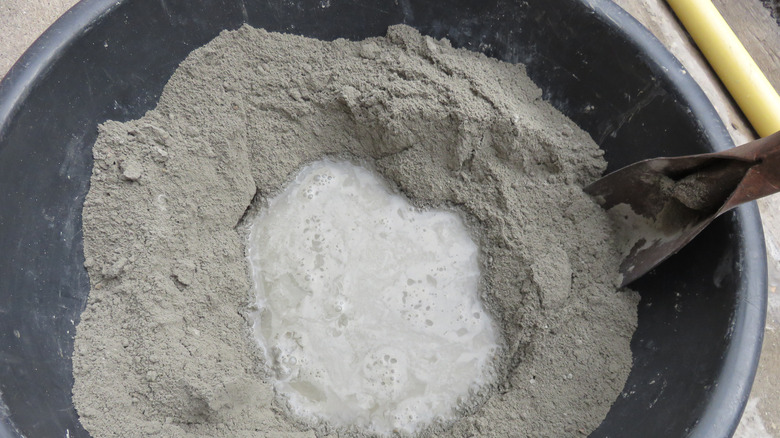
That said, before you think you're choosing the best concrete to add instant charm to your backyard, there's one important thing worth noting: how to handle PLC. Since ground limestone is softer than clinker, your Portland Limestone Cement concrete mix will need a slightly different preparation process compared to ordinary Portland cement. Make sure you follow the manufacturer's instructions carefully, and when using PLC cement for the first time, first perform a trial batch before you begin your build. Doing so will help you evaluate its water usage requirements as well as its setting and curing time.