

Better Than Hand Pulling: Remove Poison Ivy With A Tool You Already Own
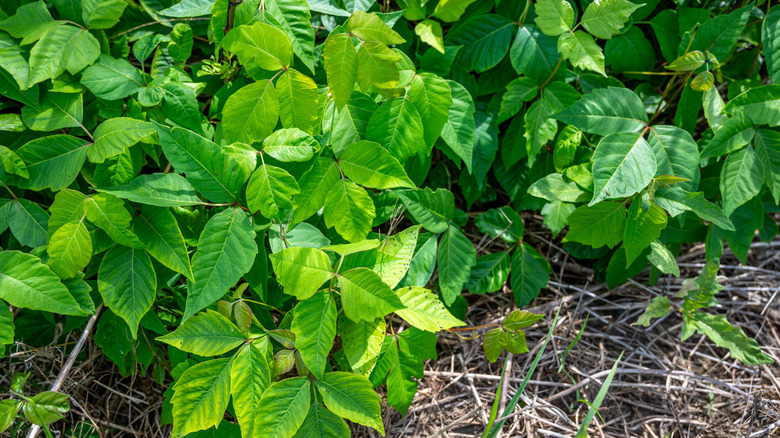
While it may be common knowledge not to touch poison ivy, sometimes responding to a leaf brushing your hand by violently ripping the plant out of the dirt is a reactionary defense mechanism. In other cases, one may figure that their hands will allow them more control when removing the ivy. Even if you wear protective gloves, oils from the plant can stick to your protective layer and irritate your skin long after the ivy is gone. Gloves may not even be enough in some situations, such as when dealing with a large poison ivy thicket that threatens to attack your legs, forearms, face, or any other bit of exposed skin. To mitigate the risk to your person, the best way to remove poison ivy is with a tool that belongs in every garden shed: A shovel.
A good shovel can easily scoop out the majority of troublesome plants from the root, and poison ivy is no different. The first step is to correctly identify the poison ivy by looking for its characteristic clusters of three leaflets. However, don't confuse poison ivy with boxelder, another tree that also has leaves in groups of three.
Once you've confirmed you're dealing with poison ivy, use your shovel to loosen the soil around the base of the plant, then dig until you can remove as much of the root system as possible. Along with making short work of the ivy, the shovel will also allow you to keep more distance between you and its toxic leaves. Even so, you should still be sure to properly cover up before dealing with poison ivy. A poison ivy rash is rarely life-threatening, but it is still very unpleasant to deal with and can last a long time.
A shovel is great for removing poison ivy
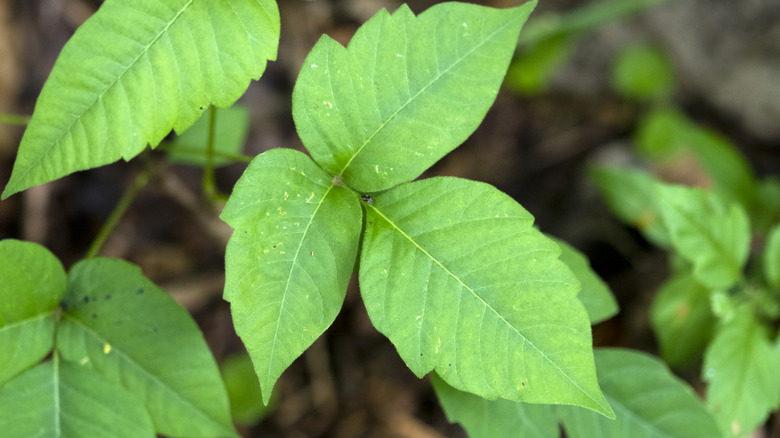
If you're battling an especially unwieldy poison ivy plant, you can utilize other essential garden tools to cut it down. An overgrown plant may develop long vines and foliage that make it hard to access the ivy's main root system. A pair of gardening shears can quickly cut back this excess growth. For additional distance from the plant, long-handled loppers or pruning shears can be especially helpful. Since the goal is to remove the plant entirely, you can safely cut back the vines and foliage until the root area is easier to access.
Shovels are great for efficiently removing large patches of poison ivy, but if you're only facing one or two plants, it may not be necessary to pull out the big guns. A garden trowel, which is basically a miniature shovel, is also helpful for weed removal. It's a good option if the ivy has crept into a smaller flower bed or anywhere you don't want to overly disrupt the soil. Once you've eliminated the ivy, you can fill any leftover holes with mulch or dirt. Then, carefully seal the poison ivy in a sturdy garbage bag and dispose of it with your household trash, following any local disposal guidelines.
Never burn poison ivy or add it to your compost pile. Burning the plant releases urushiol into the smoke, which can cause a serious reaction if inhaled, while composting may spread the oil elsewhere in your yard. Be sure to also thoroughly clean any tools you used while removing poison ivy, or the urushiol could be transferred the next time you use them. After everything is clean, you can employ a simple method to prevent poison ivy from creeping into your yard in the future.