

The Best Materials To Use To Build A Durable And Low Maintenance Pergola
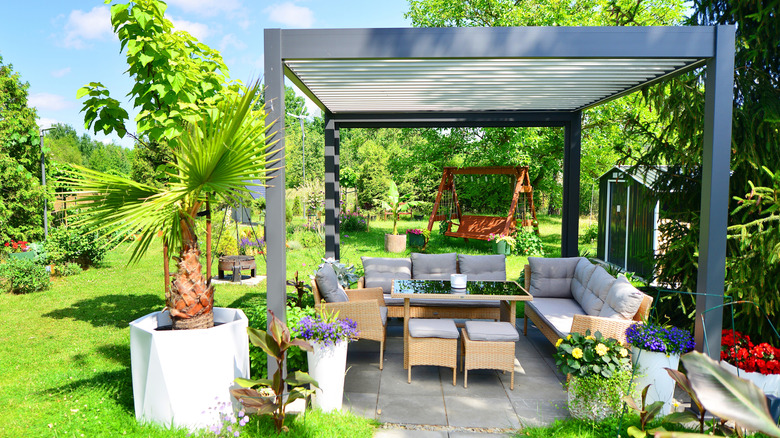
Pergolas can be a great addition to your yard, creating an oasis of shade and extending the space you have for dining and relaxation. They can increase the value of your home and, given their affordability, generally provide a solid return on investment. Among the key considerations when planning the perfect pergola are the durability of the materials and their maintenance requirements. Most experts agree that aluminum offers a long life and is easy to look after, but it's not the only choice, especially for the DIY enthusiast.
The three common materials for pergolas are aluminum, vinyl, and wood. Steel pergolas exist and are very strong but extremely heavy and prone to rust. There are also composite materials, which are long-lasting and easy to clean, but their lack of structural strength means more support is necessary. So there's a danger of losing that open, airy feel, and sight lines could be interrupted.
Aluminum pergolas have a lot going for them. They don't have quite the strength of steel, but are still robust. Aluminum does not rust, will not rot, will not be attacked by insects, and is resilient even in the face of hot or very cold weather. The only maintenance required is to wipe it clean from time to time using a cloth and soapy water. Vinyl has many of the same benefits, although it isn't as strong and may fade over time. If maintenance is your main concern, wood definitely comes in third among these competitors, but it's worth considering for other reasons.
Aluminum, vinyl, and wood pergolas
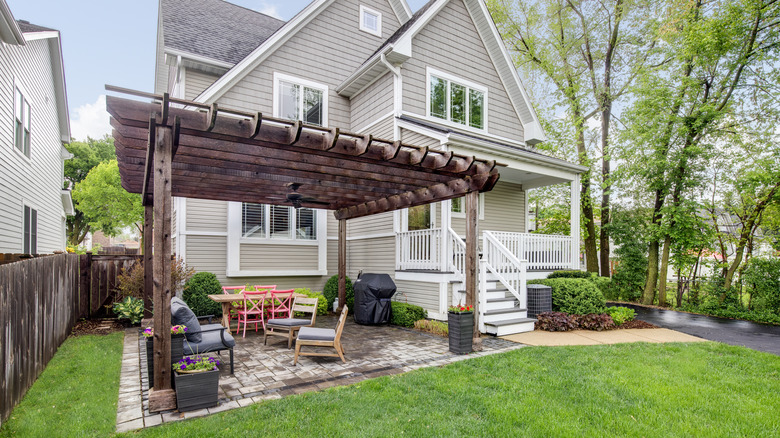
In general, aluminum offers more design and color options than vinyl. However, unless you employ a specialist contractor, you'll mostly find these come in kits of a predetermined size. At this point, you may want to think about the pros and cons of a custom pergola vs a pre-built one. If you're going to create a unique pergola that you install yourself, wood is the way to go.
Some worry that wood offers limited longevity and requires a lot of maintenance, so let's look at the numbers. Aluminum pergolas can last 30 years or more, as long as the hardware used to put it together is corrosion-resistant. Your only concerns are the occasional chip or dent. Vinyl can last upwards of 20 years, although its color may fade with time. Pressure-treated lumber has a life of around 15 years but will require a coat of preservative every few years. Cedar and redwood pergolas can last ten years longer than that, as both are naturally resistant to bugs and rot. That said, they will weather eventually. If you want to retain your wood's natural warmth, regular treatment is a must.
Pergolas are an affordable and stylish backyard upgrade. If you want sleek and modern, and you're happy working with a kit, your best option for durability and low maintenance is aluminum. Vinyl comes a close second. The right choice of lumber can last just as long, but will need to be looked after occasionally. For some, though, it's an aesthetic that is worth the extra effort.