

The Drought-Resistant, Flowering Shrub That Gardeners Have All But Forgotten
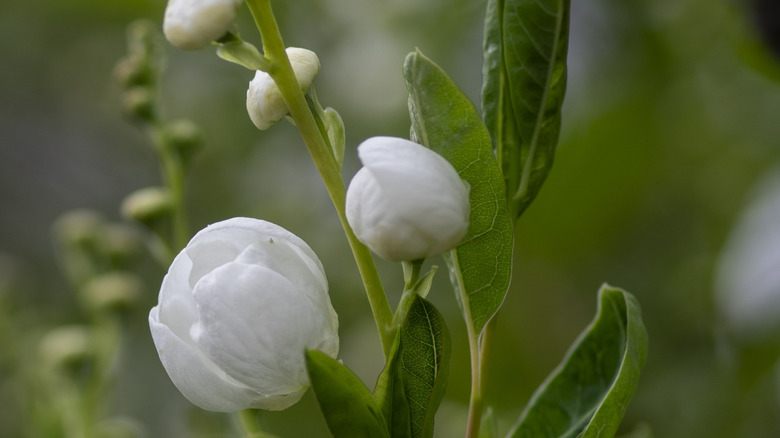
If there's one former landscape staple that plant lovers would dearly like to see in more front yards, it's the pearlbush (Exochorda racemosa). "Old-fashioned but not commonly used," laments the Morton Arboretum, while UConn's plant database bemoans that the once-ubiquitous shrub is now "underutilized in the landscape."
There's certainly no time like the present for bringing back this former fave rave, especially given the growing need for drought-resistant plants that will thrive without much water. Pearlbush is well known for tolerating high heat and minimal water. That means that if you live in a place that is traditionally on the arid side — or you've been experiencing drier summers lately — pearlbush can step into the breach. The showy shrub provides year-round interest, from its early leafing stage, its white buds and large flowers, to its peeling wintertime bark of contrasting colors.
Although pearlbush is one of the best perennials to grow for gorgeous white flowers, the shrub actually gets its name from the budding stage, in which those buds do indeed resemble white pearls. The flowers themselves bloom around April for about two weeks. The common pearlbush grows about 10 feet tall and up to 15 feet wide, but smaller cultivars exist. These include the more compact choices like 'The Blizzard,' 'The Bride,' and 'Northern Pearls,' which grow anywhere from 3 to 8 feet tall and wide, depending on the specific cultivar you choose. In general, the pearlbush is hardy in USDA zones 4 to 8, but always check the specific variety before choosing the pearlbush.
Pearlbush shrubs are low-maintence, but appreciate some love
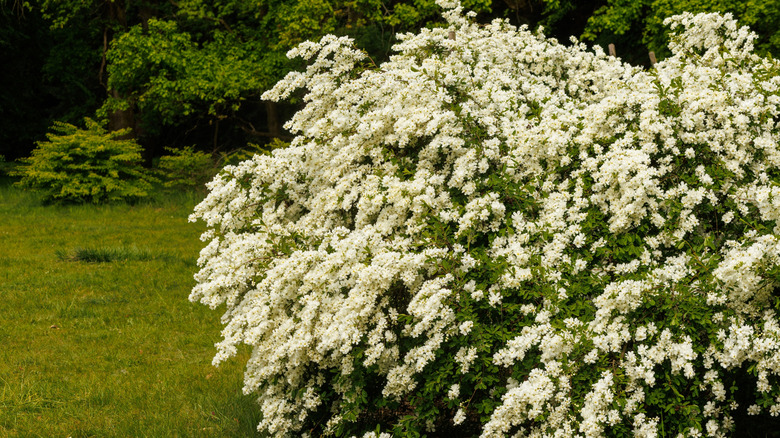
If you're interested in bringing back the type of shrubs that were common a hundred years ago, pearlbush is a great place to start. The ultimate low-maintenance plant, pearlbush thrives in full sun, although it can tolerate sites with partial shade. It prefers somewhat acidic conditions, with a soil pH of under 6.0. Even though pearlbush tolerates drought and heat fluctuations, it appreciates a light mulch to regulate soil temperatures and moisture levels. Slow-release fertilizer, applied in spring, can also keep it vibrant.
Pearlbush is one of the spring-flowering shrubs that should be pruned after flowering. That's because the plant flowers on last year's growth, so cutting it back in late winter or early spring would prevent budding and blossoming. If you do want to shape the somewhat floppy plant, wait until after April, when its flowering season has passed.
Pearlbush is generally a tough plant, with no real insect or disease enemies. Several pearlbush cultivars, planted together, make an impressive hedge. Or, establish a single specimen to brighten up the early spring landscape, while you're waiting for other flowering perennials and shrubs to wake up. You can also create your own old-timey garden with other classic plants from pearlbush's heyday, including mock orange, flowering quince, and lilacs. Common pearlbush is considered mildly invasive in a few spots in the Eastern U.S., so it's worth checking with your extension service or consulting a reputable database.