

How To Choose The Right Type Of Lawn Mower Blade To Buy
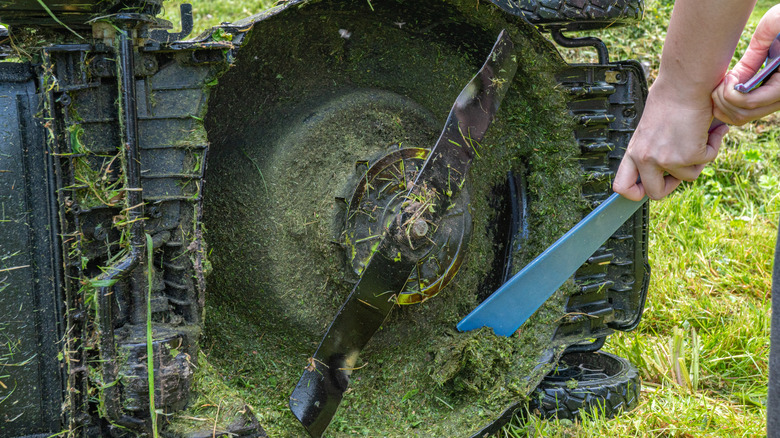
You may spend quite a few hours researching which type of lawn mower is best for your yard. People may focus on picking a cutting deck size that matches the property, the difference between electric and gas-powered models, and the various price points that are available to fit your budget. However, you should also pay attention to the blades that the lawn mower uses, as most people need to replace them every one to two years, and you'll want affordable products that are easy to find.
When it's time to replace your lawn mower blade, you need to be sure you're buying a product that matches your mower's requirements. You'll want to consider items like the type of mower design that you own, the length of the blade, its mounting hole, and the type of work you want the blade to do.
If you want to be certain you're purchasing a replacement blade that will match your machine, the best advice is to check with the unit's manufacturer or read the user guide that shipped with the machine. If you know the model number and manufacturer of the lawn mower, you can visit the manufacturer's website and search for the proper replacement. Some manufacturers even let you buy the replacements from them directly. Otherwise, you can study the specifications for your existing blades and try to find a third-party replacement product that matches. After all, lawn mower blades are not universal in that they can fit just any mower, but some products can fit several mower models.
Matching the length and number of blades to your mower
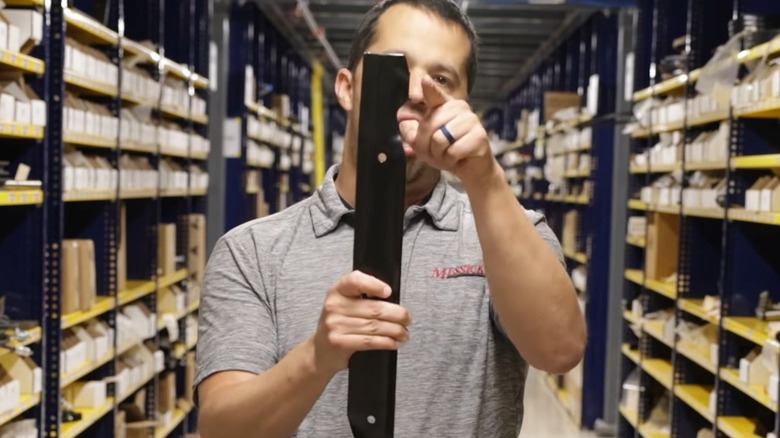
If you can't use your lawn mower manufacturer's website to find the right type of replacement blade, you can take a few other steps to find a match. Start by measuring the length of your current blade. Disconnect the spark plug when taking this measurement to prevent the machine from starting unexpectedly. Measure the blade from one corner to the opposite corner on the far end, using the corners with the sharpened tips. Don't measure it straight across or the new one won't fit properly, because the blades aren't symmetrical. If you install the wrong size, the entire machine may vibrate severely and could create a safety hazard for the operator.
You should also measure the width of the piece. Use the widest or flattest point of the blade to create the measurement. This area is usually close to the center mounting hole. You may not always need the width to find a replacement, but it's easy to grab this number while you're already measuring the length.
Keep in mind that some lawn mowers have more than one blade, which usually makes them better for larger cutting jobs and working with wet grass. If you know that one of the two or three blades needs replacing, you should replace all of them at the same time, providing better cutting performance and keeping everything in balance.
Other considerations for selecting the right mower blade
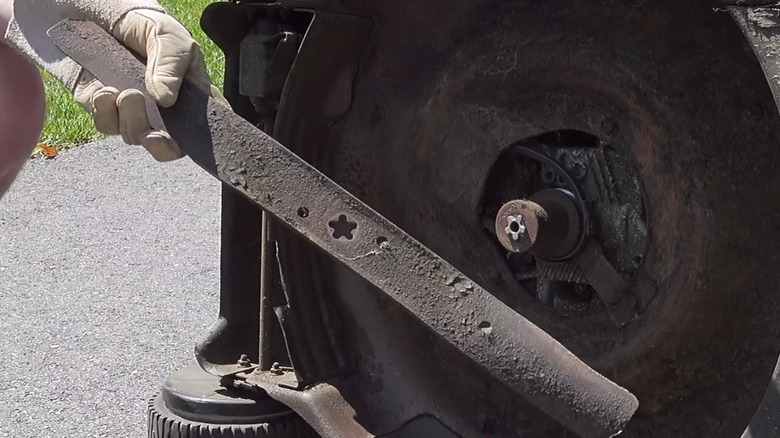
Once you've calculated the size measurements for your existing mower blade, you should inspect its mounting holes. Several different hole shapes are available, and you must purchase a replacement blade that matches what you currently have. A circular hole is the most common option, but you will need to measure its diameter to be certain you are buying a compatible blade. A design resembling a star is also common, including a five-, six-, or seven-point star. Some mowers use a rectangular center hole. A few models use a hole that looks like a bow tie or the letter "H." If your current blade has extra holes on either side of the center hole, the holes on the new blade need to match their size, shape, and location.
Think about the type of cutting you want to do, and pick a blade design that will make it as efficient as possible. You can compare bagging versus mulching versus standard mower blades, for example. Mulching designs are common, as they hold the cut pieces of grass in the deck longer, allowing them to be cut into smaller pieces. A standard blade design is also very common, as it can handle a variety of conditions, but it doesn't excel in any of them. A less popular option, called a bagging blade or high-lift design, helps lift the clippings upward, where they have a better chance of ending up in the attached collection bag.