

The Common Reason Why Most Retaining Walls Fail
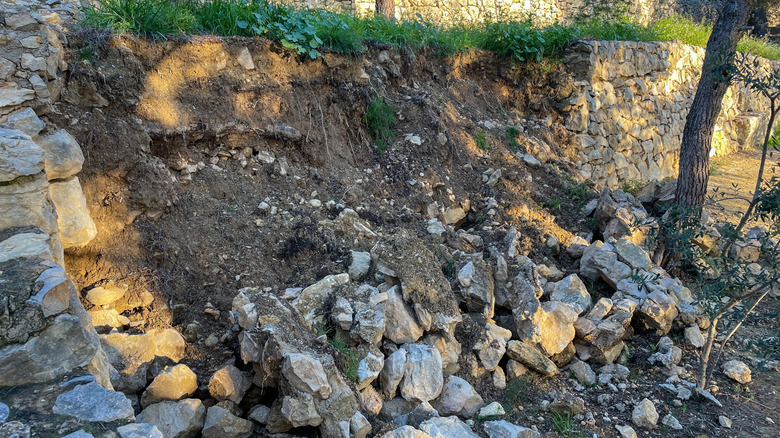
Are you thinking about building a retaining wall on your property? Or, do you have a retaining wall that has failed, but you're not sure why? If either of these apply to you, then you may want to take some time to consider why some retaining walls fall over and how you can avoid that fate in your own yard. When seeking to build a durable retaining wall, your first instinct may be to consider the strength of the materials you are using or how they will look. However, one of the most common reasons that retaining walls fail is a weak foundation.
So, before you get started building your wall, it is crucial to understand, firstly, why a solid foundation is important. Then, you can begin to learn how to create a strong foundation yourself. One of the reasons retaining walls — even relatively short or low ones — need a solid base is because they have to withstand the pressure of the dirt pushing against them horizontally. Without a good base, the wall can fail under that pressure in just a few years. A solid foundation also prevents retaining walls from shifting or moving over time. If you build your wall straight onto the soil, even if the dirt is relatively firm, the wall is likely to become unstable as the soil becomes wet, hardens, and washes away over time. As a general rule, any place where water can get in is in danger of becoming unstable. So, take a moment to learn all the do's and don'ts of building a retaining wall with a solid foundation to prevent it from collapsing.
How to build a strong foundation for your retaining wall
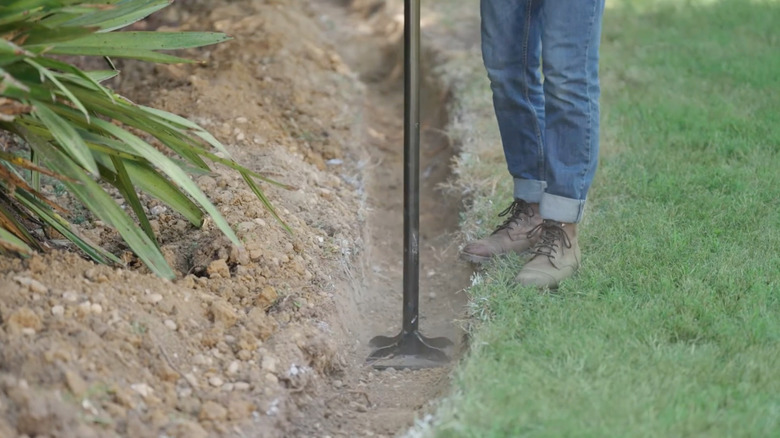
Before doing anything, call your local municipality to double-check your property lines and the locations of any utility lines on your property. This will prevent you from starting your base on property that is not yours and from building over utility lines that could be damaged by the weight of the wall or which may need to be accessed by workers. Then, dig a trench along where you want the wall to be. This should be deep enough for 3 inches of your base material and at least half the height of the first row of bricks. This will make the wall even more sturdy, because the first layer will be set into the ground and, therefore, more stable.
After that, dump in 3 inches of your base layer. Gravel is a good option for drainage and creating a really strong base — just make sure to not use pea gravel, as the smooth surface of the rocks means that they don't compact well. Specially made paver base is another good option, because it is very fine and easy to compact down into a strong, thick foundation. Use a hand tamper or compactor to press down the base so that it is unlikely to slide around under the weight of the wall. Make sure to check before laying any bricks that the base is level, because an uneven foundation can cause the wall itself to be uneven and, therefore, less stable. You can then begin laying your blocks. By creating a firm foundation, you can rely on having a retaining wall that will look amazing in your yard for years to come.