

Is It Okay To Hose Down A Portable Air Conditioner?
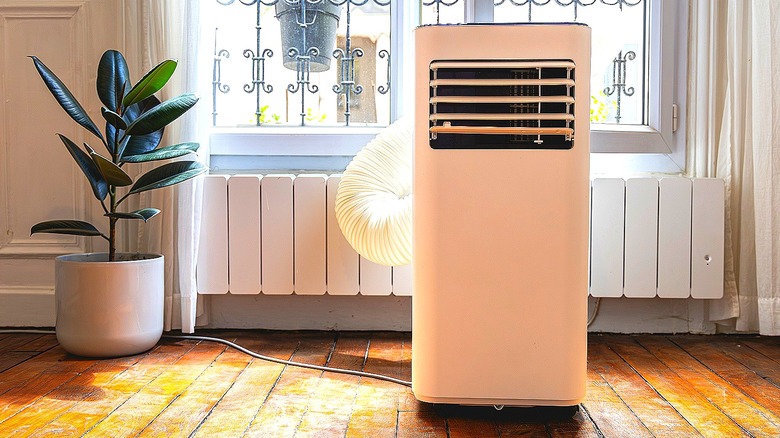
When heat waves strike, keeping your portable air conditioner(s) running efficiently is essential. As dust and grime build up on the unit's vents, blasting them clean with a garden hose might feel like the ultimate shortcut. After all, if outdoor central AC units can handle a good spray-down, why not your portable one? Unfortunately, taking a garden hose to your portable air conditioner won't yield the same results. In short: It is absolutely not okay to hose down a portable air-conditioning unit.
Unlike the rugged and weather-resistant condenser units sitting outside for central air, portable ACs are strictly indoor appliances. Dousing the main unit with a hose is a fast way to ruin the motor, fry delicate circuit boards, and create a genuine fire or shock hazard. In fact, these strict maintenance rules are just a few of the downsides of portable air conditioners that might make you rethink using one in your home. That said, certain removable parts of the air unit can take a splash.
Cleaning the AC's filters, exhaust hose, and exterior
When you're ready to clean your portable AC, remember to always unplug the air conditioner first so you aren't risking an electric shock or frying the internal wiring. Your portable AC's air filters should be checked every two weeks at least during the summer to keep airflow strong and energy bills in check. If your unit's filters are reusable (versus disposable), you can clean them at this time, too.
To do so, pop the filters out, then go over them with a vacuum to remove dirt and dust. Follow this up with a rinse under the faucet, or with a low-pressure hose attachment. Just be sure they're completely bone-dry before slipping them back into place. If you don't, you'll just be inviting mold and mildew to grow inside the machine.
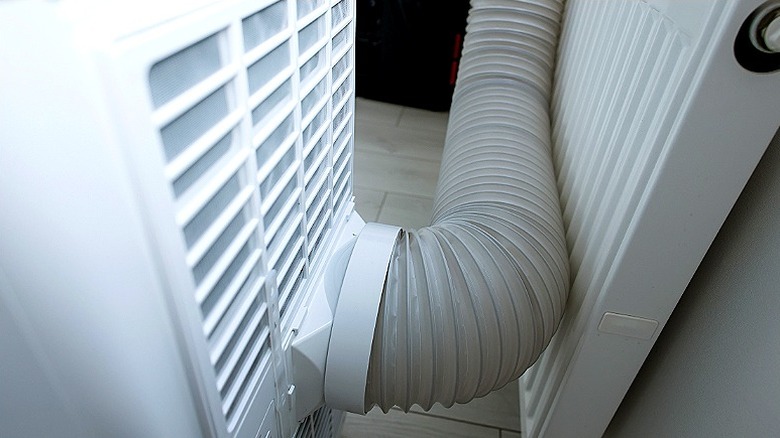
The exhaust hose and window kit of a portable AC also need some love to clear out caked-on dust and keep hot air venting properly. Simply remove the plastic accordion hose and the window panels, then either vacuum the parts or give them a good rinse using your showerhead or a garden hose. As with the filters, if you use water to clean, make sure every part is dry before reassembling the setup.
As for the unit's exterior, wipe down the outer casing with a soft damp cloth and a drop of mild dish detergent. Whatever you do, never spray water directly onto the AC's shell; even a small splash trickling into the unit's vents can short-circuit the electronics.
Draining a portable AC unit and cleaning its coils
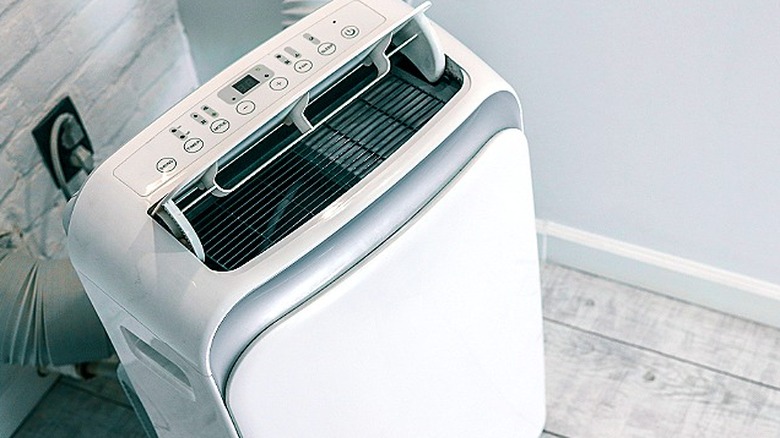
You'll also want to drain your portable AC unit of any internal water if it's not done automatically. For units that need to be manually drained, just remove the bottom drain plug (or cap), and catch the water that empties with a tray or a layer of paper towels. It's important to regularly drain this water to prevent mold from developing.
Behind a portable AC unit's filters lie the internal coils, which collect dust that can quietly choke off the machine's cooling power over time. You'll want to clean these coils, and do so carefully. First, remove the outer shell to access the coils, then use a soft damp cloth or a brush attachment from your vacuum to gently go over the coils to loosen and lift off dirt. If dealing with stubborn spots, you can spray on a no-rinse foaming coil cleaner. (Just make sure to follow the instructions.)
While you don't need to tackle the coils as often as the AC's filters, aiming for a deep clean once a season will make a difference. Clearing out that buildup right before summer starts (or right before storing the unit for winter) keeps the compressor from overworking, saving you money on your electric bill and adding years to your unit's lifespan. (Find out how extreme heat impacts your air conditioner's performance, too.)