

How To Get Rid Of Carpenter Bees With A Simple Solution
We may receive a commission on purchases made from links.
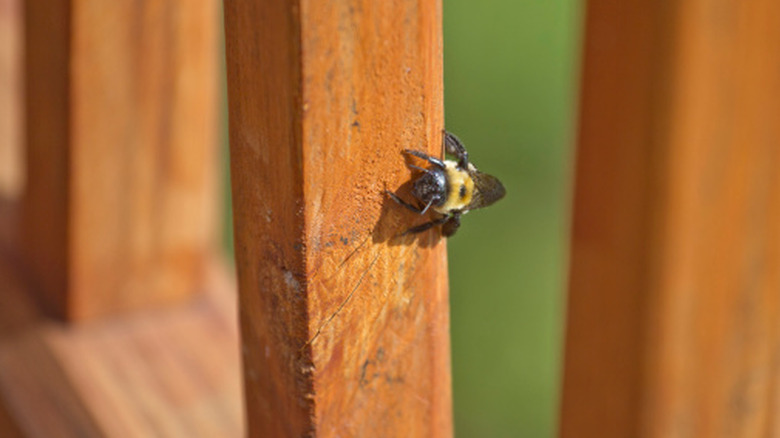
Carpenter bees create a mess wherever they decide to build their nests, whether it's your deck, home, shed, or other wooden structure. Knowing what to do if you find carpenter bees in your shed or anywhere else can be the difference between heading off this problem from the start and letting it get worse until you're faced with real structural damage. If you wait too long to get rid of these pests, you might regret it. Thankfully, there is a tried and true solution you can handle on your own without calling in professional help. Insecticidal dust is a simple solution to rid your property of carpenter bees once and for all. By inserting insecticides deep into their nest using a duster, you can effectively remove a group of bees.
You can try to say goodbye to carpenter bees using a fresh-smelling plant they can't stand, but lemon balm alone might not do the trick every time, and it won't kill them. Insecticidal dust, applied inside the opening to their tunnels, kills on contact. Types of insecticidal dust include chemicals like the very effective carbaryl, deltamethrin, permethrin, and cyfluthrin. Atticus Tirade 1% Dust Insecticide from Amazon uses cyfluthrin and is one powerful option with good reviews.
Remember to be mindful when using these kinds of pesticides, especially near animals, children, or ponds and streams. Pesticides are poisonous, after all, so familiarize yourself with all warning labels and directions before using them. If you are a little leery of using insecticides, a more natural option is diatomaceous earth, though a 3:1 mixture of boric acid and water may be an even more effective solution for those avoiding pesticides.
Steps to applying insecticidal dust to remove carpenter bees
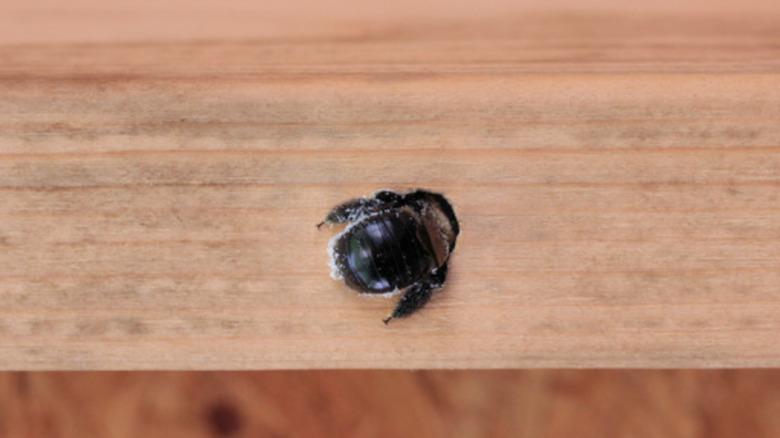
Before applying insecticidal dust, it is always a good practice to identify the insect first. Make sure you can tell the difference between carpenter bees and bumble bees, considering you never want to kill the latter — bumble bees are wonderful pollinators, they rarely sting or bother people unless disturbed, and they don't cause any damage. So, check to see if the bees are hairy; bees with fuzzy little abdomens are bumble bees.
Once you positively identify the carpenter bees, determine where exactly they are burrowing. Their "doors" are usually dime-sized holes. You can use an insecticide duster like the HARRIS Diatomaceous Earth Powder Duster from Amazon for $9.99, which has an extended nozzle to reach into these tiny holes.
Insecticidal dust sprayed through the entryways of carpenter bee tunnels can be a controlled and simple form of management. Ensure you have located and treated all the holes present in the infected wood structure. After you have applied the dust to get rid of the carpenter bees, decide on a plan to keep them away in the future. Any holes they created should be plugged, and you should consider painting or staining exterior wood. However, make sure to wait a couple of days before plugging the holes or altering anything, so that the bees have plenty of time to pass through the insecticidal dust and spread it.