

Easily Plant Bulbs With An Ancient Garden Tool That Still Works
We may receive a commission on purchases made from links.
While gardening tools have evolved over the years, some designs were so effective that they never really needed replacing. Even ones that have been around since Roman times can still be used today for the same tasks and more. One such ancient garden tool is the dibber, which is one of those bulb-planting tools that make gardening so much more convenient. This simple implement was originally made from wood or even bone and was used primarily for sowing seeds. Today, it remains a favorite among gardeners, especially when it's time to plant bulbs quickly and accurately.
As manufacturers refined the design, dibbers became more practical, with many featuring markings to help gardeners plant seeds at the ideal depth for whichever species is being sown. The tool was then adapted for bulbs, with a tapered shape that creates wider openings as it is pushed deeper into the soil, giving larger ones the space they need. Modern versions, like the Esvopa Dibber, which is made from wood and stainless steel, are a great example of this.
How to use your dibber to plant bulbs plus more
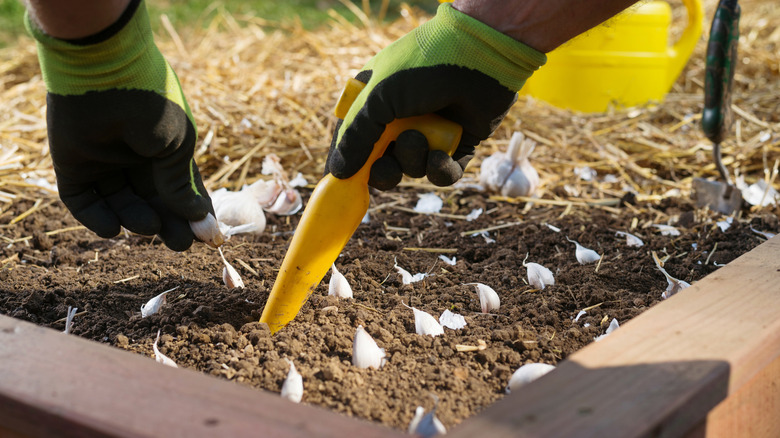
Once you get comfortable with using your dibber, you'll actually be surprised at how often you reach for it. For bulb planting, it lets you quickly create openings in the soil at the right depth, helping low-maintenance flower bulbs establish strong roots and bloom successfully. The depth markings also make it useful for sowing larger seeds, such as peas and beans, and for creating evenly spaced holes with consistent planting depths. If you're in the habit of purchasing plugs or starts of your favorite flowers, you'll find the dibber especially helpful. All you have to do is just move it in a circular motion to widen the hole if you need to.
But you'll find that a dibber has even more uses. It's also the perfect tool for when you're moving individual seedlings from their trays into their own little pots. Not only can you use the pointed tip to make the hole in the potting mix, but you can also use it to gently guide the roots down into the space. When propagating plants from cuttings, it allows you to create a clean opening in the soil or potting mix before inserting the stem, helping keep rooting hormone in place