

Boomers Can't Stand These Modern Backyard Trends
Every generation has its own unique take on, well, just about everything. If you ask those from the boomer generation what their dream backyard looks like, chances are that you'll get a very different average of answers than those from, say, millennials. And that's okay. After all, it wouldn't do for us all to be the same. Not only that, but we are each a product of the environment and the time in which we were raised. And without oversimplifying a very complex topic, you need only study the surge in technological innovations that millennials have grown up with to understand why generational outlooks are often so different.
In the world of home design, particularly for those hoping to make their properties more appealing to buyers from other generations, mere acceptance of these differences is unlikely to be enough. Instead, it pays to know which backyard design choices can make it harder to sell your home. And the most reliable way to do that? Easy: to pick the brains of industry experts about what, in their experience, makes a boomer want to buy a new property. Fortunately, we've gone and done the hard work for you. In exclusive interviews with House Digest, three real estate experts have offered their insights into which garden trends boomers simply cannot stand. Some boil down to simple practicality, while others are a question of comfort. There are even some that fly directly in the face of modern outdoor patio and furniture trends.
Too much concrete
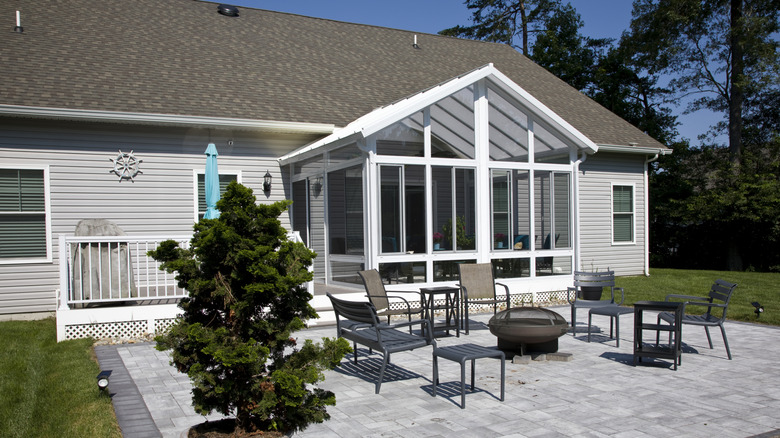
In the modern world of garden design, concrete can do more than merely retain your garden soil. You can use spare concrete blocks to build a succulent garden, or if you want a patio, you can use concrete to create a large space on a surprisingly small budget. But if you're wondering whether boomer buyers will thank you for using lots of concrete, the answer is a resounding no. At least, it is according to Michael Law, Real Estate Broker and Owner at Coulee Land Company. In fact, in an exclusive interview with House Digest, he says, "Too much concrete is one trend that often receives a negative reaction."
The reason is that, while a wide concrete patio provides plenty of space in the garden, the material can also make the space feel cold and unfinished. This is especially true if there's only a small strip of lawn or sparse plantings around it. Buyers from the boomer generation also tend to think about cracks, drainage, and the cost of removing part of the concrete if they want to change the layout, says Law. Instead, he suggests, "Most prefer enough hard surface for a table and chairs without allowing it to dominate the yard."
Over-the-top outdoor kitchens
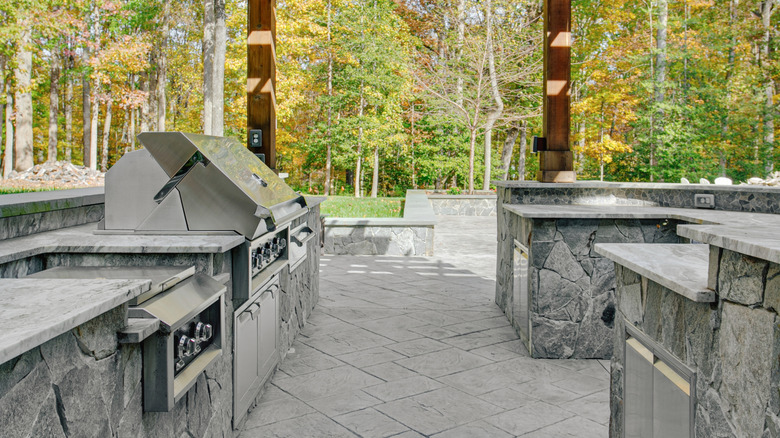
There are various things you should know before building an outdoor kitchen, like ensuring that you have the right appliances, and remembering to use weather-safe materials. But one that you may not have considered, according to Michael Law, is that future buyers, particularly boomers, may actually baulk at the sight of an elaborate outdoor kitchen. In his own words, "A built-in grill, refrigerator, sink and storage may look impressive, but every appliance adds another cleaning or repair requirement."
The way to think about it is this: just because you love the look and utility of your new outdoor kitchen, that doesn't mean that future buyers will. And it's not just true of baby boomers. One of the biggest mistakes people make when landscaping their backyards is investing in expensive features that they hope will raise their home's value. In other words, what you view as a luxury, others may simply see as a pain. For example, owners will need to remember to winterize their outdoor kitchen each year in order to protect the appliances and ensure any outdoor plumbing doesn't freeze. This, says Law, is a big consideration for baby boomers, who "often question whether they will use the kitchen frequently enough to justify the cost and upkeep."
Big, immovable firepits
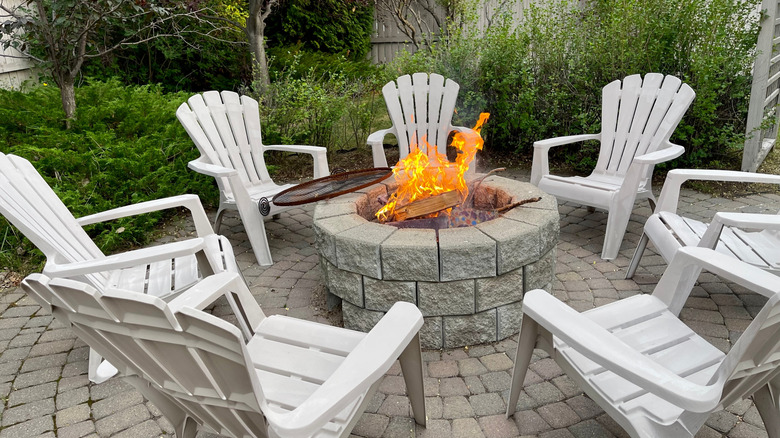
According to Michael Law, permanent backyard fire pits are another surprising off-putter for baby boomers. Which seems strange. Why wouldn't you want to DIY a cozy fire pit to have your guests sit around after dark and enjoy some toasted marshmallows? Well, it turns out that for baby boomers, the problem with large, immovable fire pits is similar to those associated with outdoor kitchens. "Built-in fire pits and long gas fire tables take up considerable space and determine where the surrounding furniture must be placed," says Law.
He also points out that some boomer buyers worry about smoke. Concerns often arise around the safety of open flames near trees, not to mention the safety of pets and visiting grandchildren. Instead, if you are considering going to market in the future but you want to enjoy the benefits of a fire pit, Law suggests opting for something smaller — and ideally portable. For baby boomers, he explains, this will feel more practical, "because it can be stored or repositioned when the yard is needed for something else."
Trendy black or charcoal fences
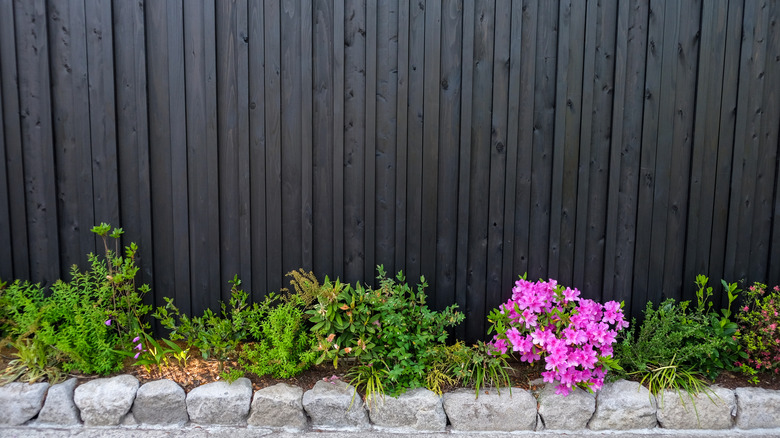
If you're curious which attribute of your fence can decrease your home's value in the minds of baby boomers, we'll give you a hint: it's not the material or height. According to Michael Law, it's the color. More specifically, fences with a trendy black or charcoal-colored finish. These, he admits, create a strong and contemporary look. However, they don't always suit the natural setting that baby boomers favor. What's more, he says, "A dark fence can make a smaller backyard feel enclosed and draw attention away from surrounding trees and plants."
Of course, like any trend in this guide, you need only worry about it if you're hoping to appeal to the baby boomer buyers' market. If you're not, then that dark finish could well be worth springing for. Then again, you may decide that you share something in common with the boomer generation when it comes to future maintenance. As Law explains, darker finishes tend to show dust, pollen, and weathering more easily than lighter, more natural paints or stains. They also tend to dominate sightlines. On what boomers tend to prefer, he says, "Many clients prefer natural wood that blends into the landscape instead of becoming the main visual feature."
Overly-designed yards with very little open space
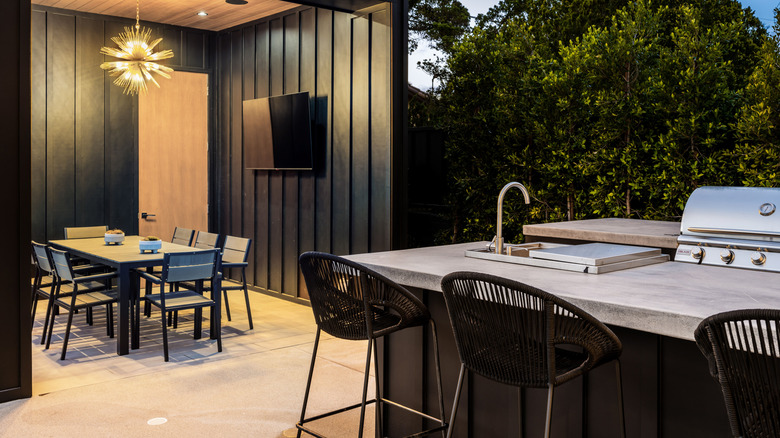
This next trend is one that more than just baby boomers can get on board with. We're talking about a preference for low-maintenance landscapes – or more than that, yards that aren't overly designed, and which feature plenty of useful open space. "A backyard divided between structures, permanent seating and large planted areas may leave nowhere for grandchildren to play," explains Michael Law. He also points out that pets will have less space to move around, and that overly-designed spaces leave little room for guests to gather.
That means that instead of building an outdoor kitchen, a hardscape fire pit, a summer house, and a shed, it's better to leave some room for your garden to breathe. Buyers from the baby boomer generation, says Law, tend to prefer at least one simple open area that they can put to various uses. "They usually respond better to a yard that can change with their needs than one in which every section has already been assigned a function."
Artificial turf
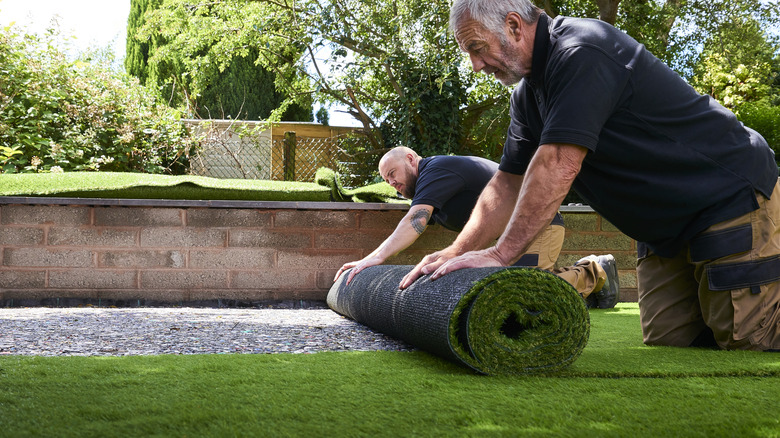
On the face of it, an artificial lawn comes with an awful lot of upside: no mowing, no overseeding, no need to aerate and de-thatch the grass. However, according to Aaron Pena, Real Estate Advisor at Florida Beach & Golf Living, baby boomers tend to focus more on the downsides of artificial turf when viewing a potential new home. In an exclusive interview with House Digest, he explains that it's one backyard trend that tends to receive mixed reactions. "It eliminates mowing," he admits, "but many of my boomer clients miss the appearance and feel of real greenery."
However, the issues surrounding artificial grass go further than mere aesthetics. "The surface can become noticeably hot in direct sunlight," Pena elaborates, "particularly when there is no shade." In his experience, boomers also often ask how well artificially turfed surfaces drain in heavy rain, and when they will eventually need to be replaced — a process that requires more than a tiller and a bag of seed. The other thing to bear in mind is that, for boomers with pets, artificial turf requires constant cleaning. Since the substrate is not soil, urine tends to collect beneath the surface, and if it's not properly maintained, it can become the source of serious smells.
Backyards that have no shade
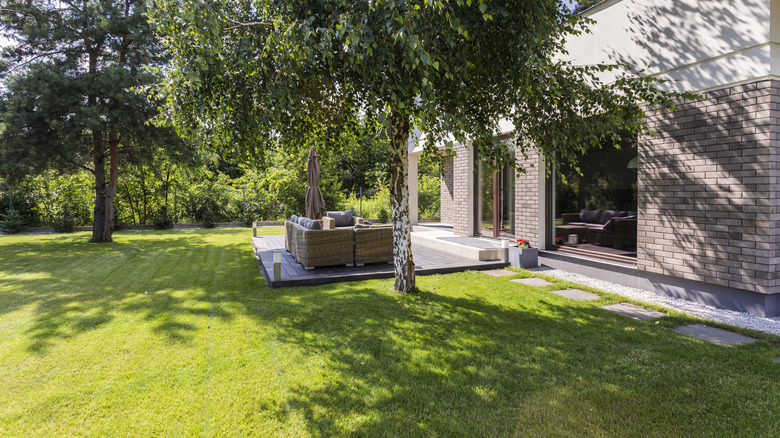
Following on from the problems surrounding artificial turf, Aaron Pena points to unshaded gardens as another potential dealbreaker for baby boomers. That doesn't mean that your entire yard has to be enshrouded by trees in order to appeal to these buyers. But if your yard is devoid of shade entirely, says Pena, it can impact your home's appeal, and quickly. "A large uncovered seating area may look open and attractive in photographs," he explains, "but it can be difficult to use during the hottest part of the day."
This means that if you want to maximize your garden's summer appeal to boomer buyers, you should look for ways to incorporate shade. Mature trees, covered patios, or a well-positioned awning can all work in your favor, explains Pena. In reality, there are lots of ways to add both shade and extra privacy to your yard, all of which could help to stack the odds in your favor of a boomer buyer showing interest. Unfortunately, says Pena, "Without shade, they may feel that the outdoor space is available only during limited hours."
Reflective surfaces that produce a lot of glare
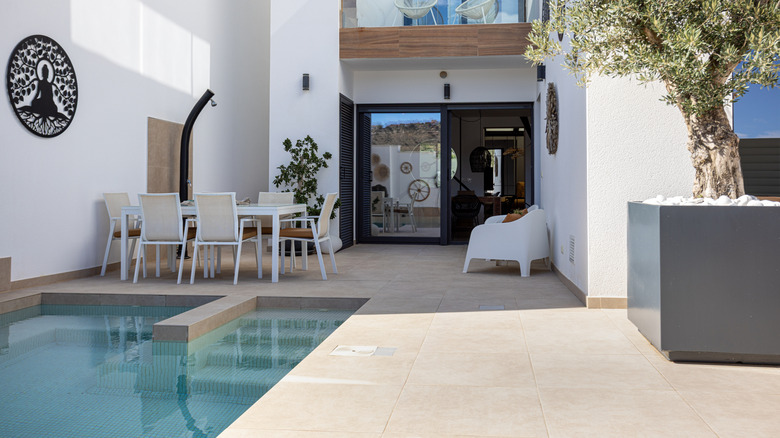
Let's face it, we all crave a little dose of the sun-soaked Mediterranean now and then. Those gleaming white walls and opalescent ocean vistas are enough to inspire anyone to book a vacation. And why not? However, if you're contemplating imbuing your own yard with similar touches, then know that you may inadvertently put off potential boomer buyers. According to Aaron Pena, highly reflective materials can create another problem. "Bright white paving, polished stone and shiny surfaces may suit a modern design," he explains, "but they can produce uncomfortable glare in strong sunlight."
The other thing to bear in mind — as much for you as for any future buyers — is that those bright white pavers and walls may require a lot of maintenance. "They may also show stains and weathering more clearly than softer, textured finishes," says Pena. Instead, baby boomers tend to prefer materials that remain visually comfortable throughout the day, and which don't require constant maintenance to keep them looking their best.
Indoor-style patio furniture
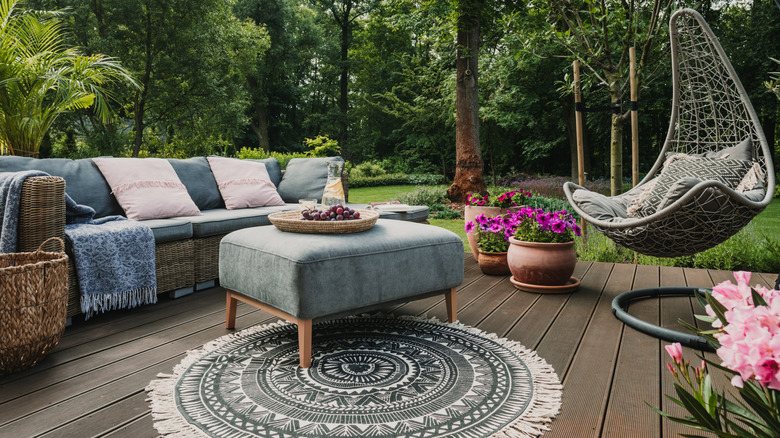
More homeowners than ever are trying to transform the patio into a cozy interior-style living space. It reflects a wider movement among home designers to maximize comfort in all living spaces of the home. And the fact that it appears in this guide as a trend that boomers can't stand isn't necessarily about the "style" of the furniture choices that arise from it. Instead, says Aaron Pena, while indoor-style furniture may look luxurious during a showing, "it can raise questions about durability."
Thick, luxuriant cushions and delicate fabrics, along with certain metal finishes, may require regular cleaning and protection from humidity and sudden rain, says Pena. He adds that boomers may also wonder whether the furniture will need to be moved or covered constantly. Now, all of this isn't to say that you can't adopt contemporary patio furniture trends if you intend to put your house on the market anytime soon. But to ensure your yard has maximum appeal to baby boomers, Pena explains, "They often respond better to pieces clearly designed for outdoor conditions."
Overly large pools
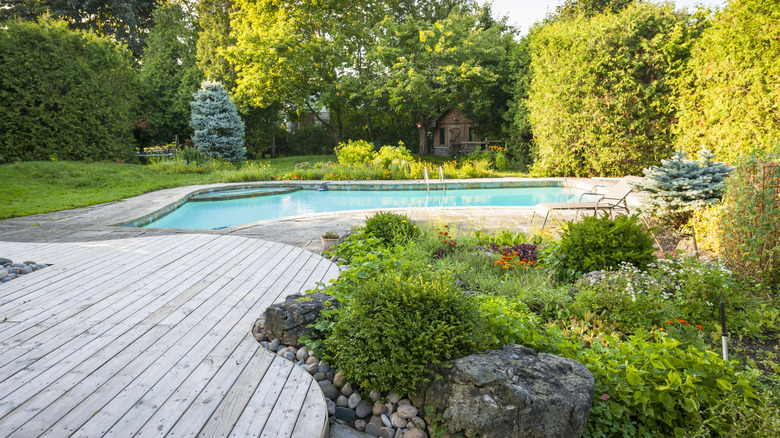
Given that boomers tend to view bright, polished surfaces as another item to clean and maintain, the inclusion of large pools in this guide is somewhat unsurprising. However, it's not necessarily applicable to all buyers from this generation. Instead, says Aaron Pena, oversized resort-style pools tend to divide opinion. Some boomers, he says, appreciate their appearance. Others, however, see a large feature that will inevitably need constant cleaning, heating, chemical care, and repairs.
It's also important to remember the natural, green spaces that baby boomers tend to prefer. "A pool that occupies most of the backyard may leave little room for quiet seating or greenery," says Pena. In other words, as far as boomers are concerned, a large pool is one of the features that could actually wreck your home's value. If you're set on a pool, then he suggests planning it on a smaller scale. Smaller pools still provide a welcome place to relax, but without dominating the entire yard. They ensure that there's room for comfortable access, plus versatile space for relaxing — whether that's by themselves or with their grandchildren.
Multi-level decks and patios
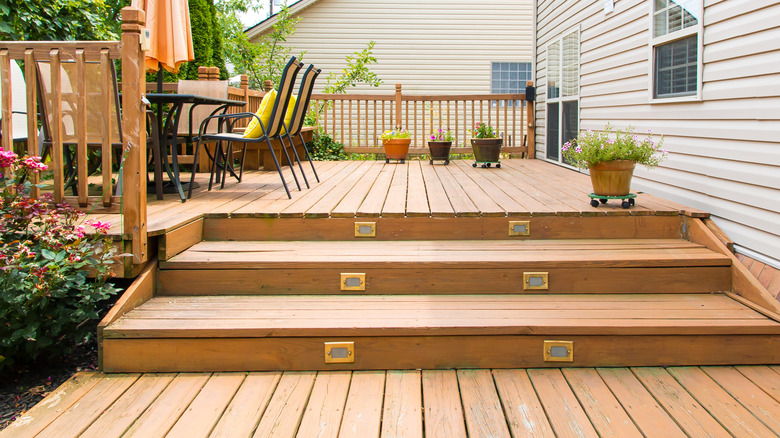
Multi-level decks are one of many design ideas that can transform a sloped backyard. They also allow you to better "zone" your outdoor space with cooking, entertaining, and relaxation areas. Unfortunately, says Nick Nastos, Real Estate Broker and Owner of Chicago's Property Shop, they can also raise immediate concerns among prospective baby boomer buyers. In an exclusive House Digest interview, he explains, "Several small sets of steps may create visual interest, but they also make the yard more difficult to move through." This is an important consideration if you hope to appeal to any baby boomers looking to buy in your area.
It boils down to future use, and how easy — and safe — the yard will be to use. As Nastos puts it, "Buyers who hope to remain in the home for many years may question whether the layout will continue to feel safe and convenient." The preference tends to be a more level route between the house, seating area, and garden. Not only does this feel more likely to be "usable" for years to come, but it also, says Nastos, feels easier to manage and maintain.
Expanses of paving with not enough drainage
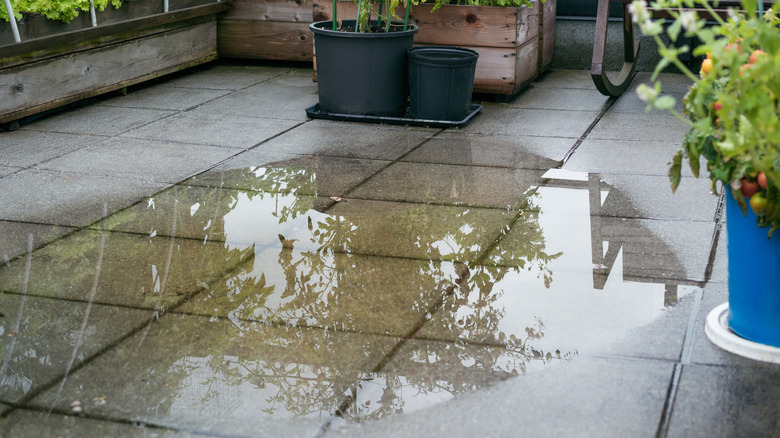
Of all the early warning signs that your patio needs an update, a lack of drainage is one of the most important to act upon. Heavy showers can leave large puddles right in the middle of the space, rendering it unusable until the water finally evaporates. If this sounds familiar, then addressing the problem with proper drainage and grading is key to extending the life (and your enjoyment) of your patio. It's also one of the things that baby boomers tend to look out for when viewing a new home. In fact, says Nick Nastos, they tend to take poor drainage very seriously.
"Modern patios sometimes cover a large part of the yard without leaving enough space for water to drain naturally," he explains. This, in turn, leads to those aforementioned issues of pooling. If that water then collects near the house or along walkways, it can become a serious mark against you and your chances of a successful sale. If you hope to attract the interest of baby boomers, then Nastos advises you to take proper patio drainage seriously. "Buyers often look for visible grading, suitable drainage systems and surfaces that direct water away from the property."
Modern materials that probably won't stand up to freeze/thaw cycles
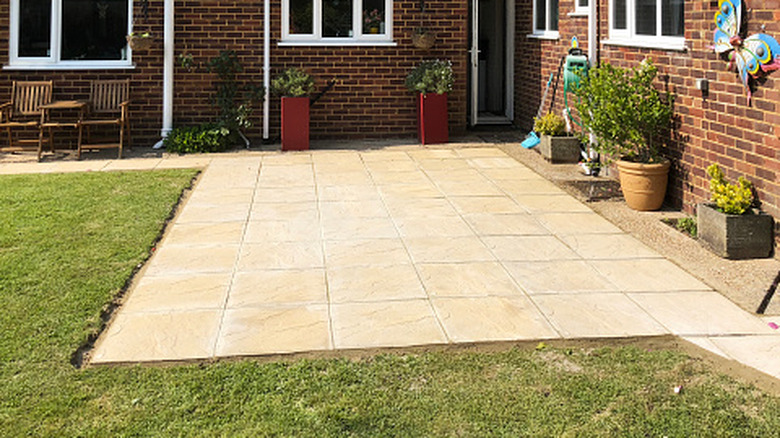
By now, we know that all-singing, all-dancing outdoor kitchens are likely to put baby boomers off. So, too, are bright, shiny surfaces. One reason that threads its way through these offputting trends is their demand for constant maintenance. And according to Nick Nastos, that same aversion extends to modern materials that may not stand up well to harsh winter weather. As he explains, "Materials that do not handle freezing and thawing well can make a stylish backyard feel risky."
In his experience, boomers often ask about certain paving choices and whether they'll crack. And if you've specified things like sandstone or limestone for your patio, then those are common culprits, especially in harsh winters. Boomers also tend to question whether particular tiles will become slippery after rain, and whether modern, unfamiliar surfaces need regular sealing. With this in mind, he suggests looking beyond what those new, modern materials look like when they're first installed. Ask yourself how they will hold up in their first winter, and how well they'll fare after several. Will they require expensive repairs in just a few years' time? Will they need treating to ensure they don't become slippery or damaged? For boomers, says Nastos, "Durability often matters more than a fashionable finish."