

The Garage Storage Safety Tip You Can't Afford To Ignore
We may receive a commission on purchases made from links.
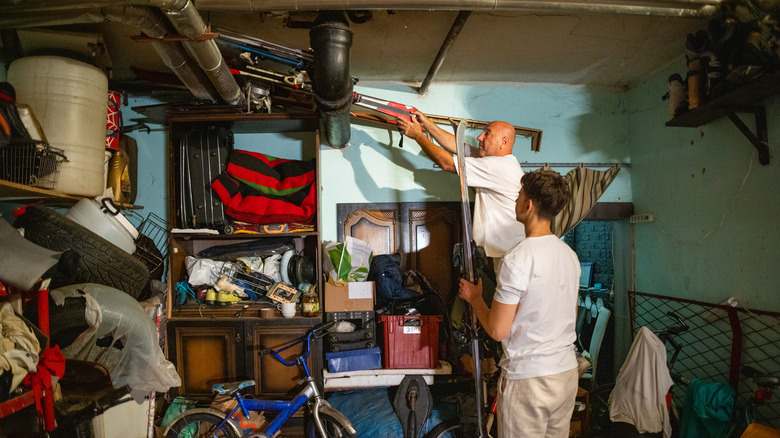
Even if you have a garden shed full of pots and compost and overwintering bulbs, there's a good chance your garage still holds plenty of household overflow, ranging from that workout equipment you were definitely going to use five days every week to random junk from your childhood that you just couldn't bring yourself to throw away. Your garage may also function as a workshop or storage area for all of your tools and garden equipment. Maybe it serves as your laundry room, and perhaps it also stores your car.
Whatever's in your garage, there are probably piles of stuff you are waiting to put on shelves that you haven't put up yet. Or there are shelves already in place but perhaps, crucially, not anchored safely to a wall. There are plenty of inspiring garage storage ideas, but safe and stable shelves are a must-have. Shelves and bookcases are the cause of around 3,200 emergency room visits annually for tip-over injuries in the United States (per United States Consumer Product Safety Commission). That's quite a significant number given that a shelving unit tipping over is an entirely avoidable incident.
If you have shelving in your garage, make sure that it is not an afterthought and that it's properly anchored to the wall. It should be fastened to the framing inside or behind the wall, not to the drywall alone. Shelving units should never be free-standing, as they can tip over if someone bumps into them too hard or if you load incorrectly or reach up and accidentally pull on the top shelves while you are trying to get something down. Play it safe. Avoid serious injury or damage to your stuff or your car, and make sure your garage shelving is properly anchored.
How to anchor shelves safely to a garage wall
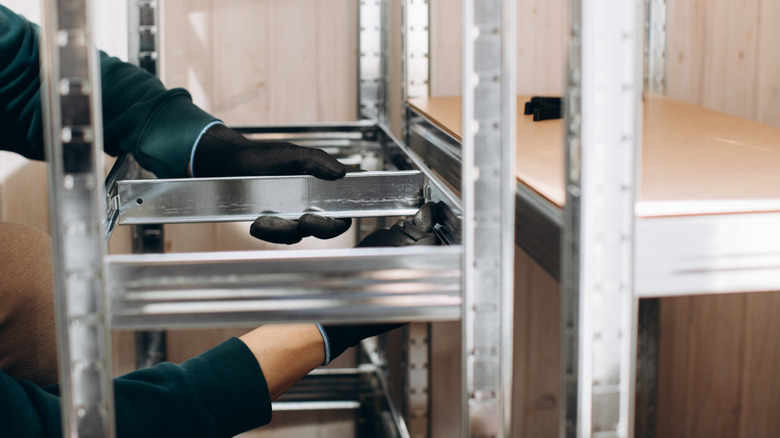
If you want to go the DIY route instead of hiring a handyman to get your garage shelving in place, make sure you use a stud finder like the Zircon Stud Sensor A100. It will quickly identify where the studs are so you can anchor your shelves securely. Don't try to save money or make the job easier by using drywall anchors or toggle bolts and skipping actually finding the studs. These fixings are for picture frames and maybe very light shelving that won't have to bear a great deal of weight. Garage shelving tends to carry heavy things like containers full of oil or unused fitness equipment.
If you're particularly handy, you could even DIY some heavy-duty garage shelves, as long as you build and anchor them safely. But if you are buying a new shelving unit, choose one that is designed to mount to studs rather than a freestanding model. Make sure you check the load rating, too. There is little point in trying to load a shelving unit with 600 pounds of stuff that lives in your garage if the unit is only rated for 100 pounds, as it will quickly collapse.
You should also make sure that the shelves are out of the way of the garage door opening. Depending on your type of garage door and the height and depth of your shelving units, there's a risk that when the door fully retracts, it could run into your shelving unit.
Even when the shelf in anchored, how it's loaded is important
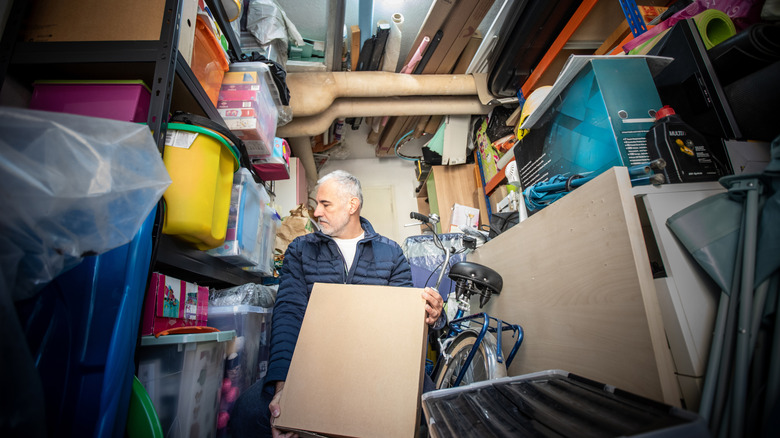
Anchoring a shelving unit properly to the studs inside the wall is the most critical first step. However, the way that you load that shelf, even after it is anchored, is important for safety and the longevity of the unit too.
Put the heaviest gear on the bottom shelves, whether that's toolboxes overflowing with rusty tools three decades past their best or the bowling balls that haven't been out of their bag in the last five years. All of the stuff with heavy mass sitting on the bottom of the shelving unit keeps the load low and means it's less likely to tip if it does get bumped hard and you haven't quite anchored it well enough. Additionally, if you store very heavy stuff high, it's much more difficult to get down. You risk dropping it on yourself or the dog or small child that's just wandered in to "help," and causing significant injury.
You also want to spread the load, so don't pile all of the heavy stuff on one corner of one shelf. Spread the load evenly across the whole surface area. That way you reduce the risk of bowing and snapping.
Also, instead of overloading the shelves, if you've got bulky but lightweight stuff, or larger items, like boxes of Christmas decorations that you only access once a year, consider adding some clever overhead garage storage space.