

12 Garage Safety Tips To Keep Accidents From Occurring In Your Home
We may receive a commission on purchases made from links.
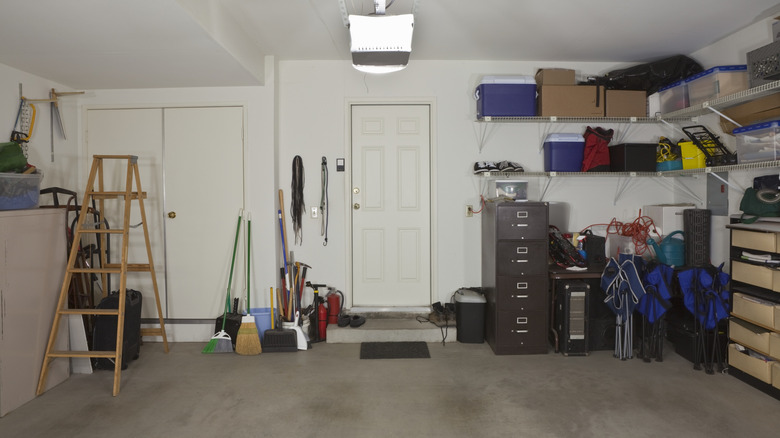
The garage has the potential to be the most dangerous space in the house. Not only is it where hazardous chemicals and equipment tend to be stored, but it's often also the place where we park our cars. Throw into the mix a few boxes of old kids' toys, your family's collection of bicycles and sports equipment, and perhaps an overflow fridge, and there's lots that can go wrong. For that reason, we decided to compile a list of tips to help prevent accidents from occurring in your garage.
Some of them boil down to keeping your garage organized and de-cluttered, which naturally improves safety by limiting the chances of trips and falling equipment. Others involve security measures to ensure your home and belongings remain safe from intruders. There are maintenance tips to keep your door in safe, working order, and if you have kids, there are some ideas to ensure they stay safe should their curiosity lead them to your chemicals and tools. From non-slip flooring ideas to fire detection and prevention, if you want to keep accidents from occurring around your garage, then you're sure to find some helpful hints and tips in the guide below.
Take care with power tool storage
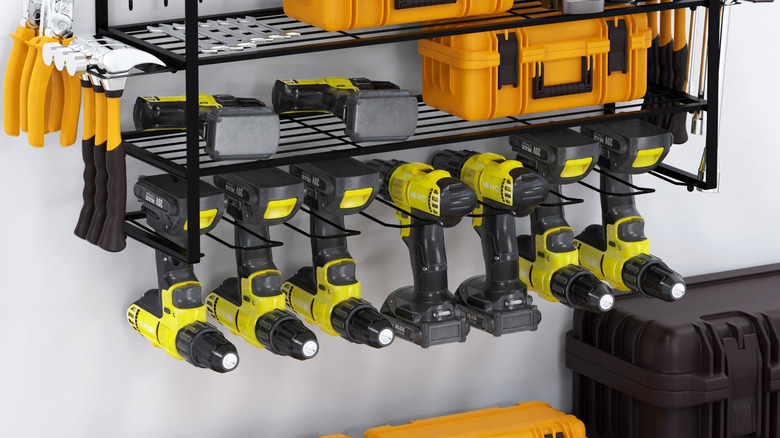
One of the primary reasons accidents are so likely in the garage is that it's often the place where we store our most dangerous tools. You may have a workbench with a power saw, a collection of drills and impact drivers, hammer tools, or a full collection including all of the above. Whether they're corded or cordless, storing them properly can help to avoid accidents. Firstly, any corded tools that are left plugged in may be picked up and switched on by curious kids, which is a recipe for danger. Depending on the nature of the leads, any errant cables could also represent a trip hazard. That means that you should aim to keep your corded tools unplugged, and ideally stored away safely.
As for cordless tools, their batteries should not be left to charge unattended. Ideally, you should aim to charge the batteries to around 40% to 60%, and then remove them from the charger. If they're left on, this can damage the battery over time. It's also possible for batteries to overheat and catch fire if left on charge without supervision, which is obviously something you'll want to avoid! Finally, never plug your chargers and corded power tools into the same, multi-plug adaptor. Each should have its own dedicated socket, since power tools tend to draw considerably more power than other appliances. It's better to install extra electrical outlets in your garage than it is to risk overloading your sockets, as this could easily lead to fires.
Keep chemicals out of the reach of children
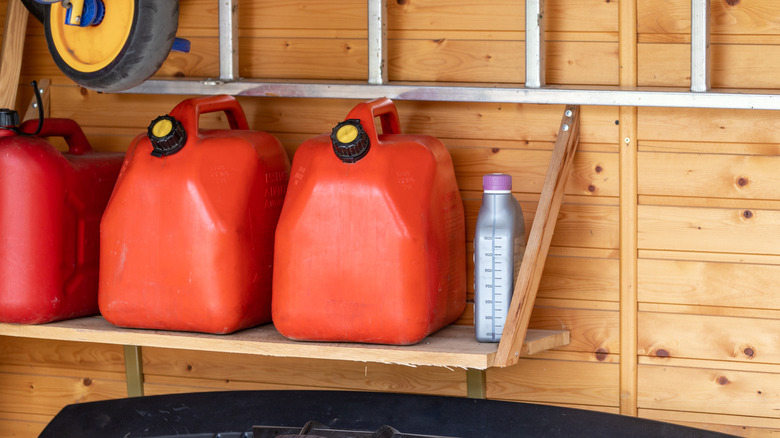
When you're looking for things in your garage to toss while you declutter, old, out-of-date chemicals should be near the top of your list. That's especially true if you have kids to think about. However, that doesn't solve the problem of storage for the chemicals you want to keep. There are a few ways to stash them out of harm's way, such as placing them out of reach on a shelf. Alternatively, for the ultimate security from curious kiddos, consider locking them inside a cabinet.
As for the kinds of products you should keep out of harm's way to avoid chemical exposure, there are several. Paint and paint stripper are both worth hiding away. If you have fertilizers, pesticides, or herbicides, then those, too, will need storing carefully out of reach. And if you have gasoline, and your garage isn't currently well ventilated (or it opens onto your house), then consider keeping the fuel elsewhere. Inhaling gas fumes can lead to airway irritation, headaches, and even nausea, vomiting, and dizziness. In other words, they're perhaps the last thing you want drifting into your family home.
Keep your walkways clear
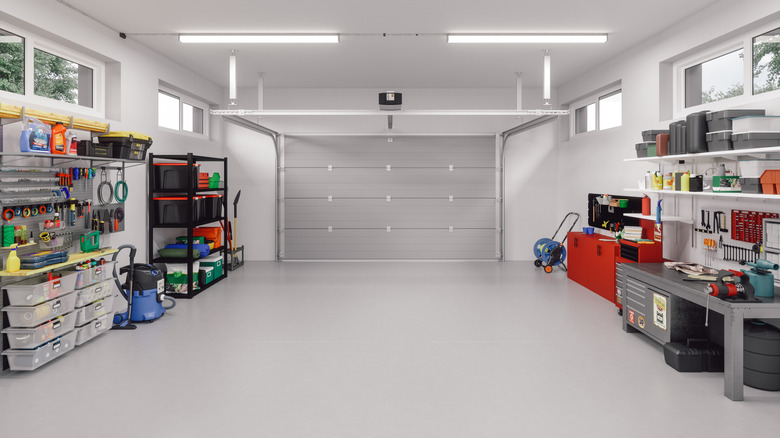
Whether you're streamlining your garage, improving your shed's storage safety, or organizing your kitchen, it's important to keep your walkways clear. It could be bicycles leaned precariously against the wall, stacks of boxes that you've yet to unpack, or car-care supplies left haphazardly around the vehicle. Whatever it is, if it's choking up the walkways around your garage — especially if you have a car to move around, too — then you're all the more likely to trip.
There are several ways to do this, although most of them boil down to making the most of your available storage space. Ensure that your cabinets are organized, and if you don't have them already, install a few shelves to keep things clear of the ground. You can buy bike racks to keep your trusty steeds out of harm's way, and if you have a collection of tools that tends to pile up in awkward places, you can't go wrong with a slatwall system or pegboard to hang them. Provided that everything has a place to live — and that you return them to said places after you use them — you should find it easy to keep those walkways clear.
Clean up spills as soon as they occur
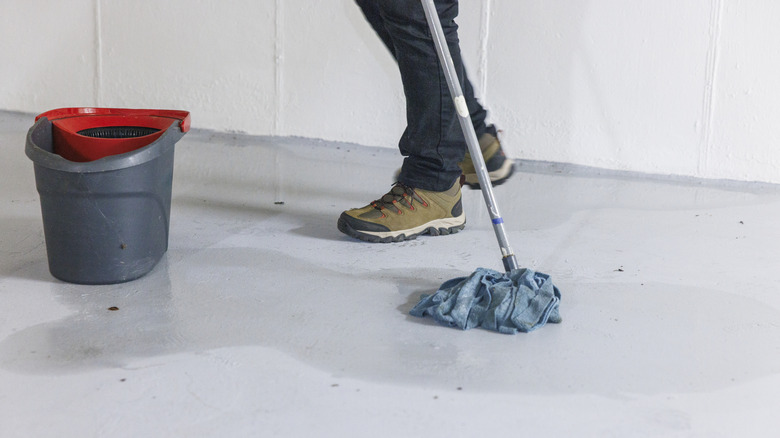
It doesn't matter whether it's oil, gasoline, paint, or even just a few drops of water. Smooth garage floors can easily become slippery, which means cleaning up spills whenever they occur is crucial to avoid dangerous falls. The last thing you want is to slip when you have an armful of heavy tools. Depending on the nature of the spill, you may need to adopt different approaches to cleaning the mess. For example, if you save it after each cycle and keep it close to hand, you could easily use dryer lint to mop up motor oil.
With that being said, you may be better off installing a dispenser for something that's built for purpose, like absorbent kitchen roll. Keeping this close to hand in the garage will ensure you deal with any spillages quickly, instead of allowing them to run away from you while you dash to grab a towel. That could lead to boxes on the floor becoming damp. Liquid could also seep beneath your shelves and cabinets, making it much more difficult to clean up. In turn, this could lead to mold growth, which is not what you want in an enclosed space that you use every day. Whichever material you use to clean spills, avoid mopping things like oil or anything with chemicals into your drains. These could clog and damage your pipes, and if you have private septic drainage, they could render the system ineffective.
Prepare for smoke and fire
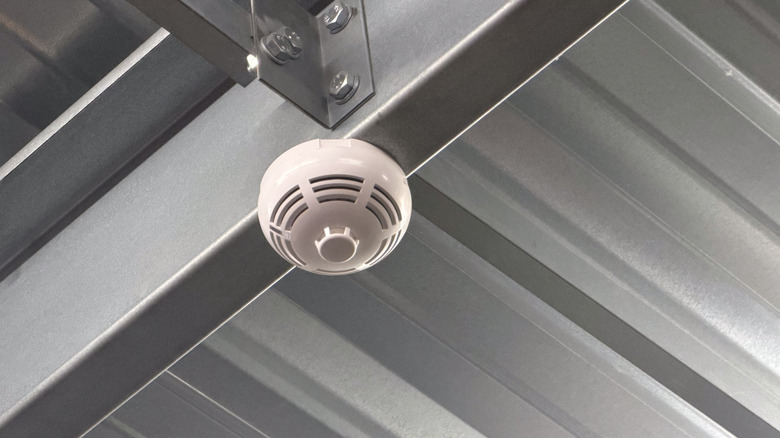
As well as minimizing potential electrical hazards and ensuring you don't daisy chain your electrical adaptors, a little extra fire safety can go a long way to avoiding disastrous accidents. And the approach is much the same in the garage as it is anywhere else in the home. By installing quality heat and smoke detectors, you'll be alerted of any fires before they get out of control. A carbon monoxide detector is also a good idea to warn you about dangerous build-ups, especially if you have a car that you run inside. As for what to do about an actual fire, the best bet is to keep a well-serviced fire extinguisher handy on the garage wall.
Speaking of servicing, this is important for any equipment that's designed to protect you — or which has the potential to hurt you. Things like sharp, thrashing power tools, for example, should be checked and maintained to ensure they're in safe working order. The same goes for your fire and carbon monoxide alarms. In fact, according to the National Fire Protection Association, the risk of dying from a fire in a home with fully-functioning smoke alarms is reduced by up to 60% versus those where they're not maintained. As for how often you should test your smoke and carbon monoxide detectors, do it at least once a month. If they bleep to signal low charge levels, make a point of changing the batteries. As an extra step, you can also buy interconnected smoke alarms that set each other off, like these Wireless Combination Smoke and Carbon Monoxide Detectors from X-Sense. That way, if your bedroom lies on the other side of the house from your garage, you'll still be properly alerted — even if you're fast asleep.
Invest in sturdy shelving
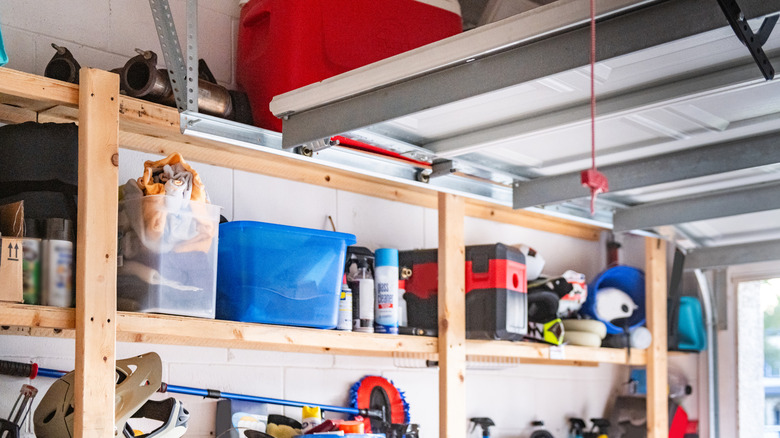
Think of garage organization, and your mind is probably filled with visions of wall-to-wall shelves. That's because shelving is perhaps the most common garage organization solution in homes across the country. However, just because it's common, that doesn't mean that it's always safe. In fact, whether you decide to DIY your own heavy-duty set of shelves or pick up a set from Home Depot, sturdiness is about more than the materials they're made from.
For example, if the floor isn't perfectly level beneath your shelving set, then that can cause the shelf to sit awkwardly and risk rocking. That, in turn, is an accident waiting to happen, especially if there are heavy items perched on the higher shelves. Even with a flat floor, shelves that aren't properly anchored can present a tipping hazard. For this reason, as well as investing in heavy-duty shelves that can withstand lots of weight, you should also invest in heavy-duty shelving anchors. There are lots to choose from; the key is to make sure your units are fastened to the wall behind, to prevent your units from accidentally toppling. Look for anchors made with tough-to-break materials, like these Steel Cable Restraints from KRYVLEXA. For optimal stability, ensure that they're installed directly into the studs.
Ensure proper lighting
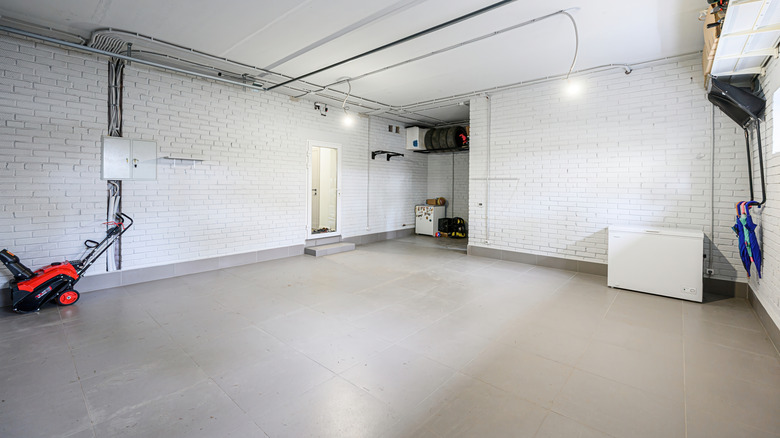
If you're planning to fix your dark and gloomy garage, then good idea! If you can't see what you're doing when you're working with tools, accidents are far more likely to happen. There are various ways that you can improve the lighting situation; the best really depends on what you use your garage for.
Generally speaking, a bright ceiling light is a good choice in most spaces for providing general-purpose lighting. You may also want to consider task lighting over specific areas where you tend to use tools, like a spotlight above your workbench to ensure you can see what you're doing. If you also use your garage to perform maintenance underneath your vehicle, then it's worth keeping a portable light handy — perhaps a magnetic flashlight or a headtorch. Another way to make your garage safer with lighting is to ensure the main ceiling lights come on automatically — perhaps with motion sensors. This is handy should you need to wander into the garage after dark, or if you arrive home in the evening with bags full of groceries. Instead of fumbling for a switch and potentially tripping in the dark, your garage will "let there be light" just as soon as you step inside.
Equip yourself with protective gear for DIY and car maintenance
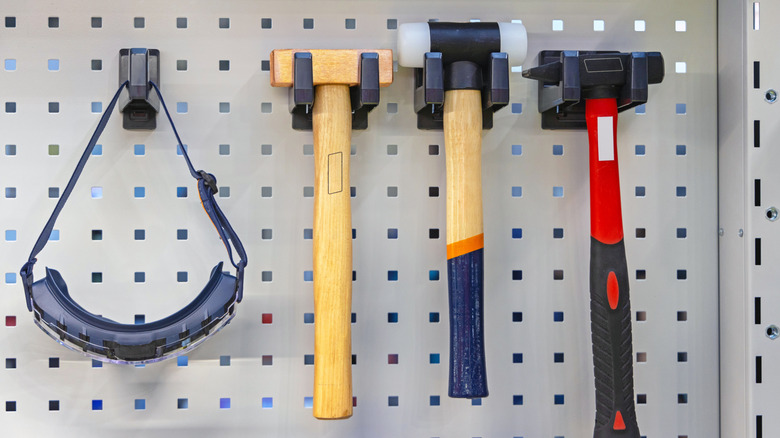
The garage is often the base of operations for DIY and home improvement projects. It's where we keep our tools and materials, and for things like woodworking, it's often where we locate the workbench. Whatever you use it for, protective equipment is important to ensure you don't end up taking an unnecessary trip to the emergency room. And since the garage is your home-improvement HQ, that's where you should aim to store your protective gear.
As for what to keep handy, that depends on the job. Generally, it's best you have the basics, like protective safety glasses, gloves, and dust masks — to protect your eyes, hands, and lungs from harsh dust and chemicals. Safety hats are a good idea if you're doing demolition work or working on anything with heavy equipment overhead. Arm guards can extend your gloves' protection when working with hazardous or harsh materials, and ear defenders will keep you protected from noisy power tools. Finally, ensure that you have a pair of non-slip, hard-toe-capped safety shoes. These will help to prevent slips should you spill anything, and you'll be glad of those toe caps should you accidentally drop something heavy on your hooves.
Store your sharpened tools safely

Even in the safest garage, sharp tools have the potential to be dangerous. However, provided that you follow some basic safety principles, it's possible to minimize the risk of nasty cuts and accidents. If you have tools like axes, saw blades, drill bits, utility knives, and other sharp equipment, the first thing to do is ensure you never leave them out on a workbench or sticking out of drawers. This is especially true if you have kids with access to the garage. Instead, you're better off hanging them from a dedicated tool rack or pegboard — ideally somewhere that curious children can't reach them.
As an alternative, you could lock smaller sharpened tools inside a cabinet or drawer, which will also prevent unwanted hands from finding them. The trick to making sure this storage method is safe is to not just toss sharp tools aimlessly inside a cabinet or drawer. If you do, then you can easily cut yourself when you go to fish your tools out. Whether you're storing on the wall or inside a locked cabinet, the best practice is to keep bladed tools in sheaths. If your tools come supplied with covers, use them. If not, consider fashioning some yourself out of cardboard or duct tape. Utility knives should be fully retracted, and any spare blades should be stashed in a box (not loose!) and ideally locked away.
Maintain your garage door
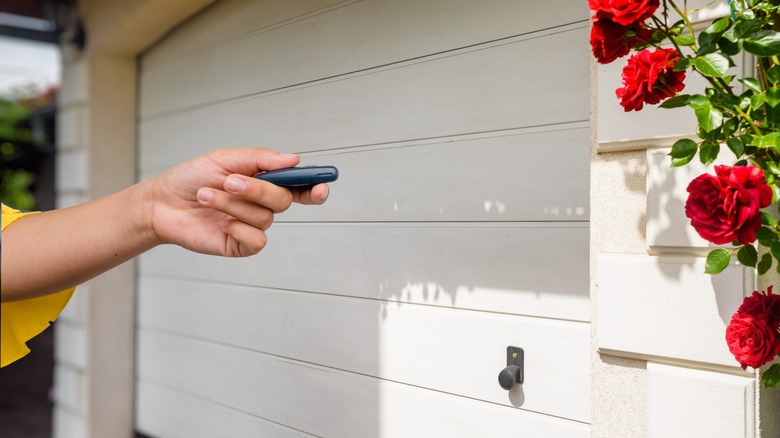
Garage doors require regular maintenance to keep them in good, working order. They also require maintenance to keep them safe. They're heavy, for a start, and if they're not looked after, could accidentally fall onto you or one of your family members. They're also often fitted with high-tension springs, which, if they break, can ping out at high speeds and represent a serious risk of harm. With all of that in mind, there are several things you should check regularly to keep your garage door in shape.
Firstly, ensure that the moving metal parts are suitably lubricated, referring to your manufacturer's guide for lubrication type and instructions. Test any safety features regularly, too. For example, some modern doors have motion sensors that make the door reverse if it senses something in the way — like you or your children — so having it in working condition is important. Finally, keep your eyes and ears open whenever you use your door. If you hear creaking sounds or notice that it's not operating smoothly, then that usually points to a problem. Whatever the issue, if you're unsure how to fix it, then it's always best to err on the side of caution and contact a professional to inspect and repair your door.
Install anti-slip floor coating
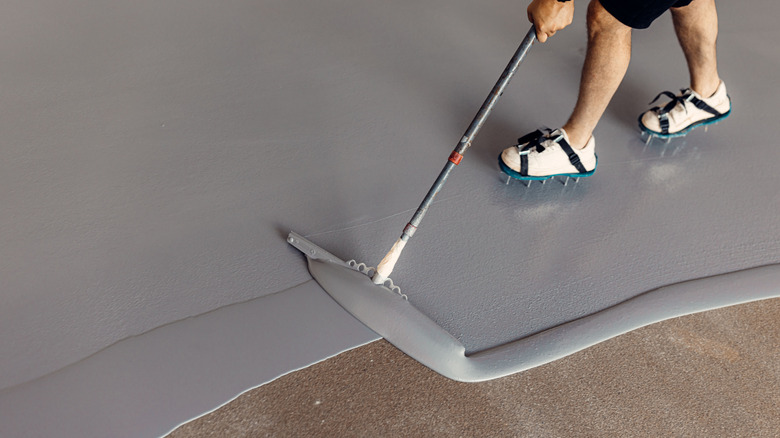
As well as cleaning up spillages quickly and wearing anti-slip footwear, it can also pay to improve your garage flooring. Especially if you regularly work with things like oil or other liquids that could spill on the floor, some extra purchase on your floor can ensure that you stay upright and on your own two feet. Fortunately, it's quite an easy job, and yet it's one of the most effective ways to reduce the chance of accidents around the garage.
As for how to do it, the easiest way is to paint your floor with a dedicated non-slip coating. There are lots of these to choose from, like this Epoxy Colored Sand Floor Paint from Flurose. It features a high-gloss finish, but includes sand in the mix to provide extra friction and thus prevent slips. You can use it on various floor types, too, including wood, concrete, tile, and more, meaning it's also ideal for slip-proofing areas like your basement.
Secure your garage with lights, cameras, and a deadbolt
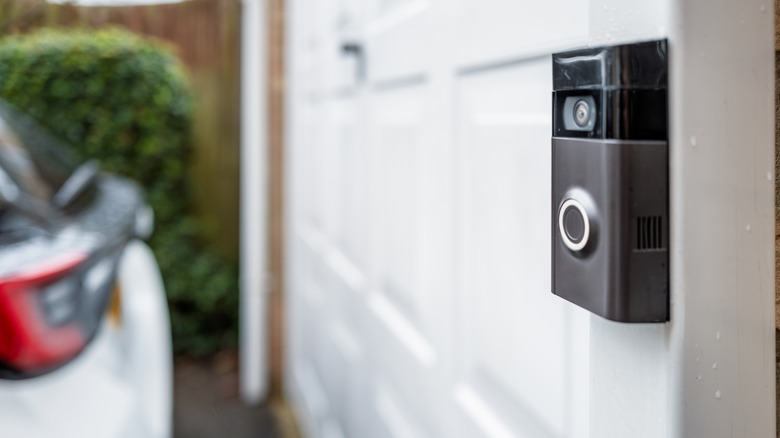
If your garage is attached to your home, then as far as security is concerned, you should treat it with as much importance as your front door. In other words, ensure that it locks securely. Unfortunately, while modern garage security door systems are fairly reliable, they're not entirely infallible. With specialized tools, they can still be bypassed, which means it's important to add another layer of security to your door. One of the smartest ways to protect your garage from break-ins is to install a deadbolt. Since these are off-grid and entirely manual, no fancy tool or digital contraption will be able to get past them.
You can further bolster your electrical garage lock system by improving your home WiFi security. Ensure your passwords are secure, and enable two-factor authentication to help prevent unwanted intruders gaining access. You could also add a motion-sensor light to the exterior of your garage, and perhaps a security camera, which will add a visual deterrent to any suspicious people patrolling your neighborhood.