

What Is The Best Type Of Wood For Raised Garden Beds?

Raised garden beds are the best solution for so many different types of gardeners. They allow you to control the soil environment, add height for comfort, and just look great, no matter what type of outdoor space you have. While there is a range of different materials and designs for raised garden beds, wood remains a popular choice. But you have to select the type of wood you want to use carefully if you want your garden bed to last for many years. To that end, most experts would recommend cedar and redwood, followed by cypress and white oak, with pine being more budget-friendly but not very long-lasting.
The problem with using wood for your raised beds is that the timber is going to be exposed to damp soil constantly, and this will result in rot and decay. So, you want to select a type of wood that's going to be the most rot-resistant, which is why cedar makes the top of the list. It contains a substance called thujaplicin, which acts as a natural fungicide and preservative. If the original tree that provided the wood was old enough, the milled timber could have this protection for many years. On the other hand, redwood contains a compound known as tannin, which provides resistance to rot and decay. In other words, tannins help protect trees from being infected by fungi and bacteria, thus preserving the timber for longer.
Other types of wood you can use for raised garden beds
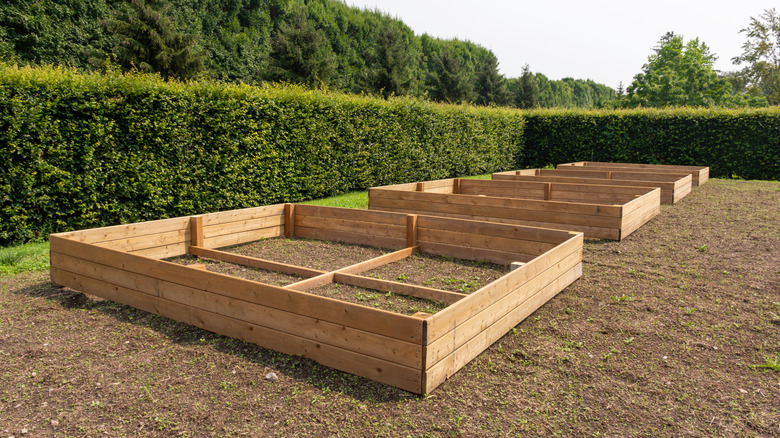
Depending on where you live, you might find that cedar or redwood aren't readily available or that the wood is just too expensive to fit into your budget. These woods are more commonly available in the Midwest or western states. If you happen to live in the southeastern United States, you might find that cypress is a good choice. This wood contains oils known as cypretine, which offer natural resistance to rot and decay.
White oak is another species that grows around the eastern U.S., and it's a good choice for raised garden beds. What makes this wood rot-resistant is structures known as tyloses, which are found around the ends of the timber pieces in the last growth ring. These swell up when in contact with water and prevent moisture from going through the remainder of the wood. As a last resort, you could use pine if that's the only wood that you can afford, but bear in mind that your beds won't last as long and you'll need to replace the wood in just a few years. This is one of the disadvantages of wooden raised garden beds if you don't choose more durable timber.
Could you use pressure-treated wood?
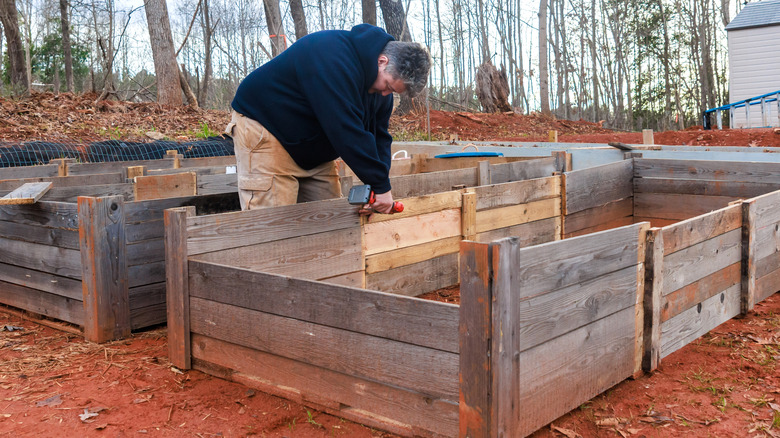
You may also be wondering whether pressure-treated wood is something you could consider. This type of wood is treated with a copper preservative (bearing in mind that treatments containing arsenic have not been in use for over 20 years) to make it resistant to rot, decay, and certain insects. To test whether pressure-treated wood was safe for raised beds that grew edible crops, the extension service at Oregon State University has done trials over four seasons, using beds made from the treated lumber. The researchers grew a range of crops in these beds, including radishes, kale, carrots, beets, peas, tomatoes, peppers, lettuce, and turnips.
After testing the soil in each bed, the researchers found that although there were raised amounts of copper in the soil, this was only found within one inch of the wood. There were no instances of raised copper levels found three to four inches away from the timber or in the center of the bed. Similarly, no increased levels of copper were found in any of the vegetables that were grown over the four seasons. So, if you do decide that pressure-treated wood is an option you want to consider, select timber that has been treated with copper azole and is intended for ground contact use. Finally, after you've made your wood selection, you'll want to know the ideal size for a raised garden bed before making any cuts in the timber.