

What Does A Pink Ribbon On A Tree Mean?
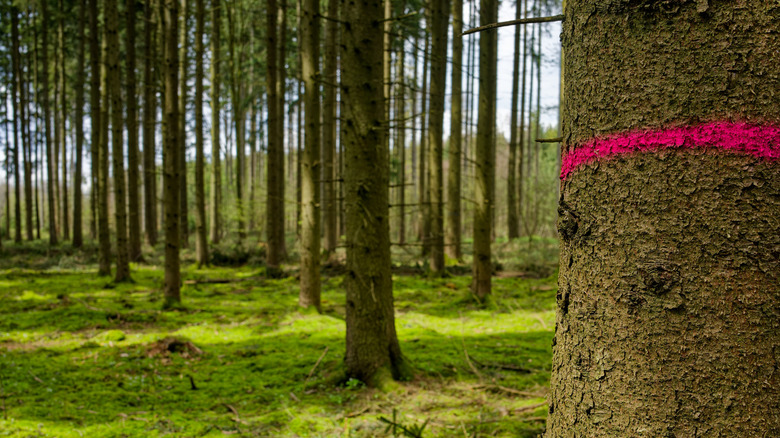
If you noticed a pink ribbon tied around a tree when strolling through your neighborhood or walking along the edge of your property, you might have wondered about it. In landscaping and land management, high-visibility flagging tape usually carries a practical message. From property boundary disputes and upcoming utility projects to saving a prized oak from timber crews, that pop of pink on a tree is rarely random. Knowing how to decode it can tell you a lot about what's happening right in your backyard.
Most commonly, a pink ribbon on a tree means a professional land survey is underway or a specific tree has been singled out for protection. Bright pink flagging tape is often a land surveyor's go-to tool for marking property corners, boundaries, and temporary reference points. Pinpointing those exact lines early on can save homeowners trouble down the road, like making sure a contractor doesn't set a wood fence for a private yard six inches over onto the next lot. In many areas, crews also use pink tape to outline temporary work limits or survey rights-of-way before municipal or utility construction begins.
That said, a land survey isn't the only reason a tree might end up wearing neon tape. Arborists and city foresters might tag "keeper" trees with pink ribbons to flag them for construction crews. It's a quick, high-visibility signal that says, "Do not touch this tree." In other instances, arborists use the tape to keep tabs on specific trees being treated for invasive pests homeowners and gardeners are seeing or monitored for structural disease.
What to do if you find a pink ribbon on your tree
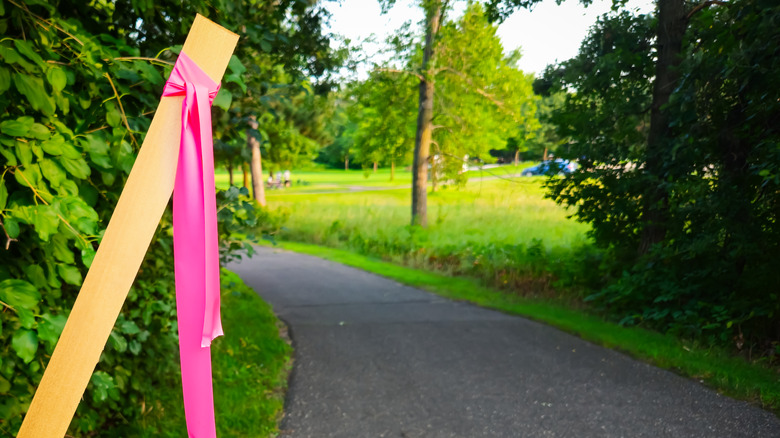
If you find a mysterious pink ribbon tied to a tree on your property, resist the urge to snip it off. Tearing down flagging tape too soon can stall a project, invalidate a fresh survey, or leave your mature trees vulnerable to heavy machinery. Take a few minutes to figure out who put it there — and why — to spare you a headache later on.
Leaving the tape alone should always be your first move. It might look like an eyesore on your front lawn but ripping it down can cause real hassle. If a licensed surveyor put it there to stake out property boundaries, pulling it off the means someone might have to redo hours of tedious measurements. That's a bill you don't want to pay and a quick way to sour things with a neighbor if a surveyor was hired for the job. If a contractor wrapped that branch to protect it from nearby bulldozers or excavators, taking it off leaves your tree completely vulnerable.
Scout the surrounding area for other clues. Take a look at the curb, driveway, or grass for bright spray-painted lines or symbols. Pink paint on the ground indicates active survey work or temporary project boundaries. Though overall, finding your home's property lines is easier than you think once you know what to look for. It's also worth checking if neighbors are breaking ground on a project. If they're putting in a pool, replacing a fence, or repaving their driveway, survey work may have spilled slightly over into shared territory to make sure everything stays accurate.