

What To Do If You Spot Termites Living In Your Mulch Pile
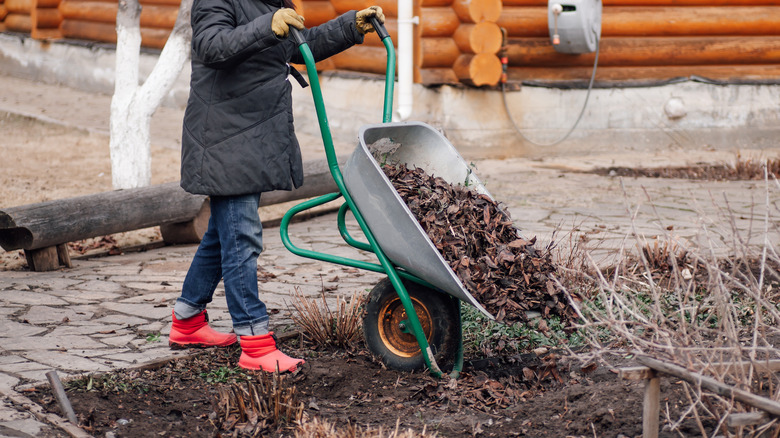
Any homeowner will panic when they see small, pale bugs writhing through their mulch pile. But before you run out to buy a jug of heavy-duty chemical spray, take a breath: finding termites in a pile of mulch is actually quite common, and it doesn't mean your house is doomed. Subterranean termites are naturally found underground and spend their lives breaking down dead wood, plant stems, and fallen branches. To them, a damp layer of mulch isn't an attack on your property — it's just a free, shaded buffet.
Because mulch offers food, shade, and trapped moisture all in one spot, termites will gladly move right in. Sadly, they can quickly get out of control and destroy your mulch in the process. The real secret to handling them isn't just killing the bugs you see on the surface; it's making sure they can't use that mulch layer as a hidden highway straight to your house. As long as the colony is confined to the garden, you can easily protect your home by pulling back active beds, drying out the soil, and swapping in termite-resistant landscape barriers if needed.
That said, some situations call for calling in the pros right away. Take a close look at your foundation line — if you see thin, pencil-like mud tubes creeping up the concrete, notice a termite swarm in your yard or home, or spot bugs inside the garage, skip the DIY methods and book an inspection immediately. Knowing the clear signs that it's time to call in a professional for termites can save you thousands in structural repairs. While mulch itself won't attract a full-blown infestation out of nowhere, leaving a direct bridge between damp wood and your siding is a gamble you don't want to take.
How to take control of your mulch bed
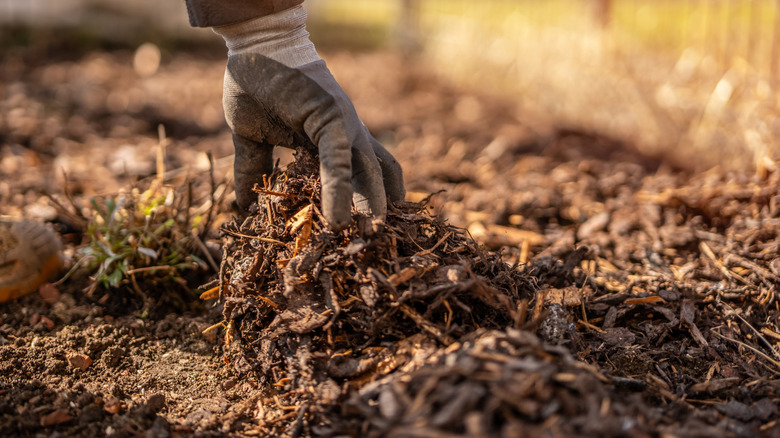
It's tempting to grab a can of Raid or dump a jug of bleach on the pile, but hold off. Surface sprays only kill the bugs you can actually see. Even worse, harsh chemicals irritate the rest of the colony, causing the underground workers to scatter and potentially head straight for your house. Start by checking where the infested bed sits. If the mulch is touching your siding or foundation, you need to act fast. In an isolated bed 20 or more feet away, you have a bit more breathing room, but you still need to address it.
If the foundation looks clear, your main goal is creating a gap the bugs won't cross. Shovel the mulch back to leave a 6- to 12-inch bare strip of dry dirt or gravel right against your walls. Termites hate open, sunbaked ground because they dry out quickly, so a dry gap acts like a natural moat. For any mulch that's crawling with activity, whether it's adjacent to your foundation or not, shovel it straight into heavy-duty trash bags, tie them tight, and send them off with the regular trash. You can also spread the infested wood thinly over a tarp in full, direct sun for a day to kill off the bugs before bagging it up. Whatever you do, never recycle or reuse infested mulch elsewhere in your yard.
Steps for after you've cleared the termites
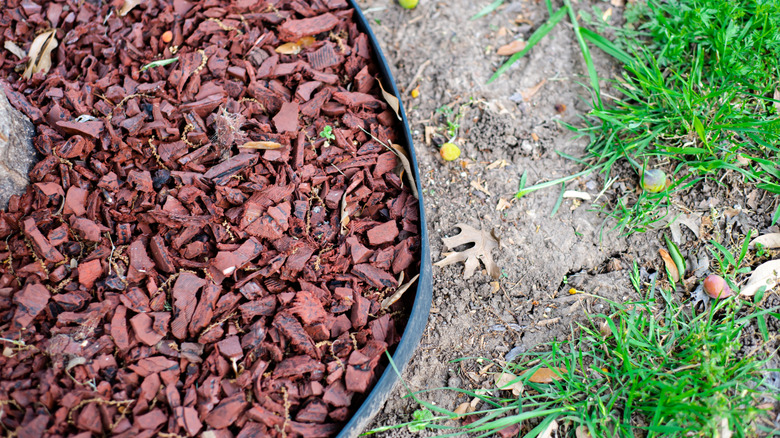
Termites care about moisture even more than wood, so fixing leaky spigots, cleaning overflowing gutters, and easing up on the hose will do wonders to keep them away. When it's time to top off your beds with fresh mulch, keep the layer thin — about 2 to 3 inches deep. Piling it 4 or 5 inches thick creates a cool, damp blanket underground that termites absolutely love. If the bugs were active anywhere near your house walls, consider setting out perimeter termite bait stations or exploring other proven ways to get rid of termites around the foundation line to catch the underground colony at the source.
To keep your yard off their radar for good, make a few smart landscaping tweaks. In beds where termites have been an issue, consider switching to fresh cedar, cypress heartwood, rubber mulch, or stone. Cedar and cypress heartwood carry natural resins that bugs dislike, while rubber and rock give them nothing to eat. Lastly, keep things like firewood piles, wooden garden stakes, and lattice trellises off the ground or pulled away from your mulch so you aren't building a convenient ladder straight into your yard.