

Easier Than Heavy Equipment: The Better Garden Tool For Aerating Soil
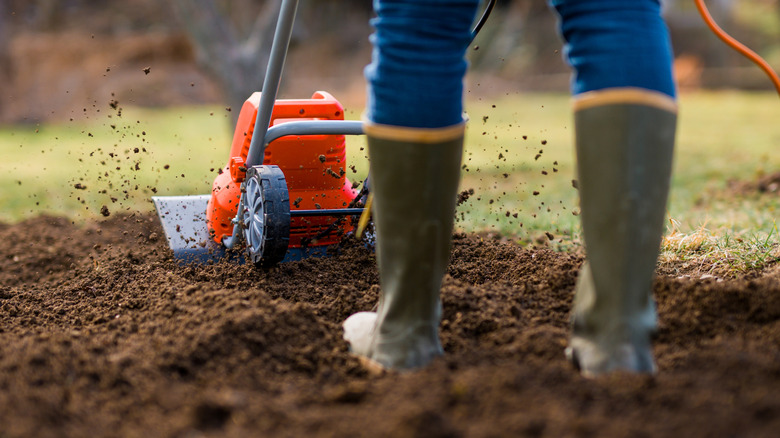
Even if you've chosen the perfect crops, taken steps to protect your outdoor space from pests, and created a functional irrigation system, there's a high chance your garden will be a flop if you don't properly prep your soil for successful planting. This process sometimes includes amendments and fertilizers, but one of the most overlooked steps is aeration, which loosens the existing soil, allows water to soak in deeply, and makes nutrients more accessible for your plants. For many, a tiller is a go-to tool for this process, but as it turns out, this hefty piece of equipment isn't ideal for every situation. Want to take a gentler approach? Consider using a broadfork instead.
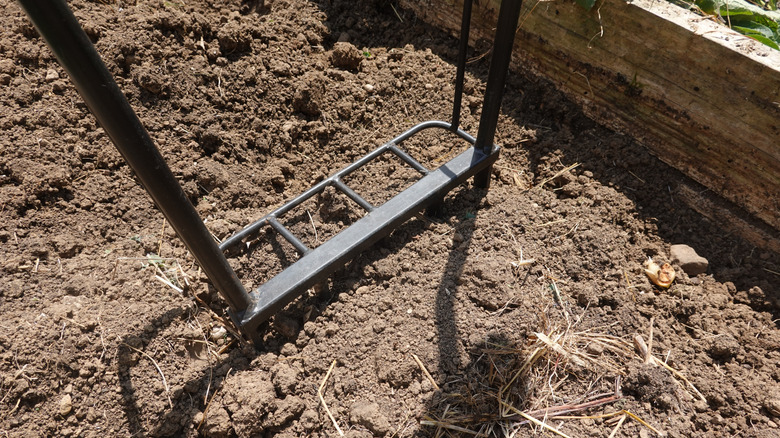
The broadfork has been around since the '50s, but if you're not familiar with its history, it looks like a tool that could've been helping out gardeners since ancient times. Designs vary slightly, but most follow the same basic structure: A U-shaped frame featuring multiple angled blades or tines at the bottom. Some also have a handle across the top, turning the U into more of a rectangular shape, but the functionality remains the same. Gardeners dig the blades deep into the soil before pulling back on the handle, lifting the top layer. As they move down the bed, repeating this process every few inches, once-compacted soil becomes fluffy, aerated, and easy to work with again, all without having to rent or buy heavy and expensive power tools.
The benefits of using a broadfork
While tillers are a great choice if you're trying to make a new garden bed in a previously grassy area, they're not the best option for regular maintenance. Tillers dig very deep into the soil and destroy just about anything in their path with their spinning, large tines, which can kill worms, damage fungi, and disrupt microorganisms that help to bolster your soil's health. As these die off, your soil can become more prone to pests, compaction, and issues absorbing water. As a result, many have opted to start a no-till garden, instead using manual tools that aerate the soil more gently.
While broadforks do still disrupt the soil, their lack of chopping action and simpler blades ensure that they only reach the top layer of the garden bed, protecting microorganisms, fungi, and worms. Because aeration is often a regular chore that needs to be performed multiple times to yield lasting results, you can imagine the amount of damage that consistently going in with a gas-powered tiller can cause and why it's recommended to use a broadfork for upkeep instead.
Compared to other manual aeration methods, like double digging, broadforks are also much less effort to use, making your regular maintenance much less strenuous. If you're dealing with smaller beds, hitting every nook and cranny with a large tiller is a frustrating job, too, if it's even doable. Broadforks are efficient, gentle, and low-profile, making them a valuable addition to your garden tool collection.