

Stronger Than Wood: The Metal Material You Should Use For A Gate
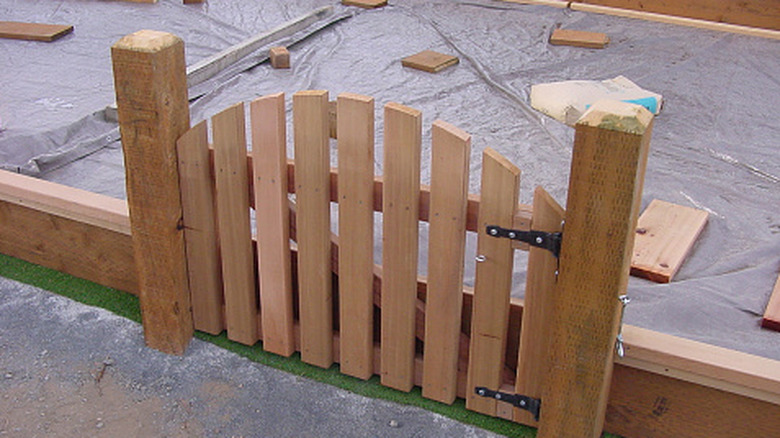
When preparing to give the landscaping and outdoor areas around their homes a material upgrade, many people initially look at wood. A fence made from cedar or treated wood is a common sight throughout neighborhoods. If you want a more distinct fencing material than wood that can help your home stand out from the crowd, though, Corten steel is a unique option.
Corten steel, also called weathered steel, consists of a mixture of copper, chromium, and nickel. It's mixture helps it resist corrosion and allows use outdoors, where it takes on a naturally rustic appearance within a few months. (Its durability and weather resistance is one reason why Corten steel can be installed as a retaining wall instead of boring concrete blocks.) Even if you don't want to construct an entire fence out of Corten steel, you can use this material as a design accent while taking advantage of its functionality and durability by installing it as a gate for a fence on your property.
A Corten steel gate can last 50 to 100 years when properly installed, giving it a longer lifespan than what's typically available with most types of wood because the steel won't rot or suffer insect damage over time. Additionally, using steel in the gate means its frame will resist twisting and wind damage, which is important for a piece of hardware that experiences a lot of stress every time it opens and closes. Wood gates are likely to sag as the years go by, but a Corten steel gate should better resist drooping issues (although they aren't immune to this problem if mistakes occur during installation).
Advantages of using Corten steel on a fence or driveway gate

Beyond its improved durability compared to creating a wood gate, Corten steel has several other advantages. You don't have to worry about performing regular maintenance on Corten steel because it doesn't need painting or staining like a wood fence. Instead, its appearance improves as it ages, as it becomes weathered by developing a patina that resembles rust. The mixture of copper, chromium, and nickel in Corten steel causes the outer layer (or patina) to form and provide protection. In almost any climate, including one with frequent precipitation or temperature extremes, Corten steel's patina protects the material underneath. If you use mild steel in your installation instead, it would need a coating added to protect it from corrosion.
Adding cutouts to your Corten steel is one way to incorporate unique ideas into your fence gate to make a stylistic statement on your property. Adding perforations allows light to pass through, which creates an interesting look that changes throughout the day as the sun's position in the sky changes. Dozens of common cutout shapes and designs are available, and some professionals can even create custom shapes for you.
Experts can design almost any shape of gate when using Corten steel, allowing you to receive the exact look and feel you want. Professionals can create a custom size of gate, too, even if the ground has an unusual slope. If you're placing the Corten steel gate over a driveway, installers should be able to connect it to a motor for automatic opening and closing.
If you want a Corten steel gate, understand the drawbacks
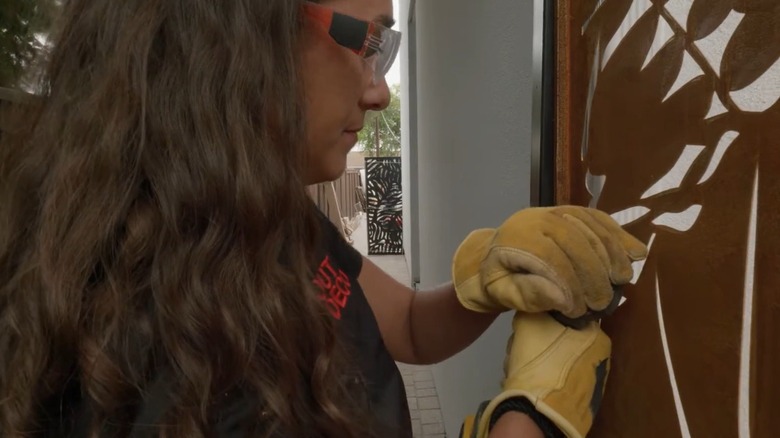
If you're going to add a Corten steel gate over a long span, such as a driveway, you need to be certain the gate's frame structure, posts, and anchoring are able to support the weight of the panels without sagging. You may need heavy-duty welded hinges to support the gate, but your professional installer can make recommendations. As the rust patina forms, you may notice rust-colored runoff around the gate on the ground. Some people may dislike this mess. It can stain concrete or other surfaces, meaning you may need to pay several hundred dollars or more to have nearby surfaces sealed or cleaned to remove the rust color. The development of the patina (and the timeframe during which rust runoff could occur) may be as long as two years after installation, which may frustrate some homeowners. Some installers recommend putting a gravel base around the Corten steel gate, which will catch the runoff before it can stain other surfaces. (However, depending on the location of your gate, adding gravel may not be practical.)
Although Corten steel is usable in a variety of climates, if you live near the ocean with salt spray, the rust-colored patina often cannot protect the steel like it does in other climates. With exposure to salt water, the Corten steel may corrode and show damage instead of developing the desired patina as it ages. Because manufacturers can't control where the Corten steel installation will occur, they rarely offer a warranty regarding corrosion of the material.