

Ditch Landscape Fabric For A Biodegradable Alternative That Retains Moisture
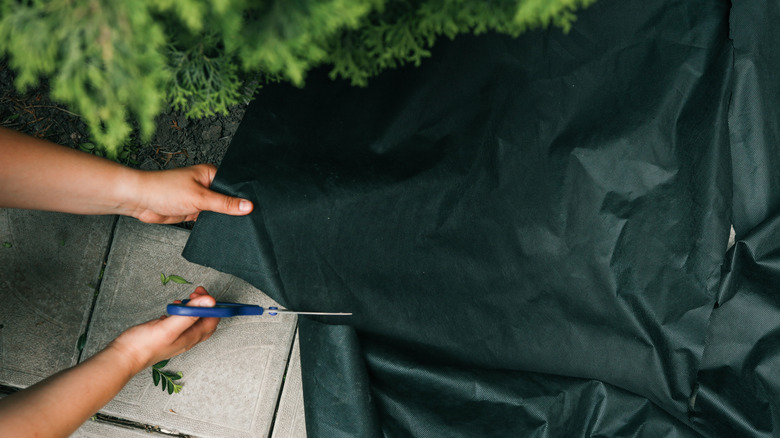
The news is in: There's simply no need for landscape fabric anymore. While it's been a go-to weed prevention tool for decades now, many gardeners are starting to come to the realization that this material doesn't always deliver on its promises. Originally used primarily in commercial applications, landscape fabric was first touted as a way to reduce reliance on potentially harmful herbicides. By minimizing the amount of sunlight that gets through to the soil below, weeds don't get a chance to grow. This sounds great, but over time, the downsides to using landscape fabric became more apparent. Synthetic landscape fabrics can leach microplastics and chemicals into the ground, damage the health of the soil below, and become a hassle to remove. After a few months, it turns out that they're not even that great at preventing weeds! So what's the solution? Straw-coconut blankets can provide a much more effective and eco-friendly alternative.
These "blankets" are made of wheat straw and coconut fibers, held together using biodegradable netting. Compared to traditional landscape fabric, which is most commonly made of woven petroleum-derived fibers, this is a much more sustainable choice. Convenience isn't sacrificed, either — because straw-coconut blankets are bonded with netting, they can be transported easily and rolled out just like you would with normal fabric. Over time, they'll break down, but this isn't necessarily a con. While it will take some effort to keep your garden beds weed-free year after year, you won't have to deal with removing ratty, damaged fabric. Instead, this brown material will become a beneficial soil amendment that can give your beds a serious carbon boost.
How to use straw-coconut blankets in the garden
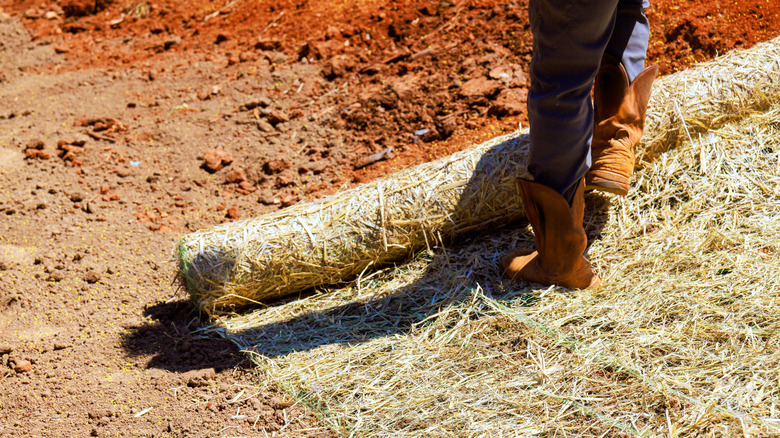
Straw-coconut blankets can be used just like you would traditional landscape fabric. By rolling them out over an exposed bed, you'll be able to minimize the growth of weeds and keep in moisture, all while creating a more finished look. They're also great for helping to prevent soil displacement on sloped surfaces — a major consideration if you haven't filled your yard with plants and trees that can reduce soil erosion. While it's being rolled out, this material will stay together, but over the course of a few months, the netting will start to degrade. This means you won't be able to adjust it or remove it in large chunks, but because the end goal is for it to be naturally composted into the garden bed anyway, this shouldn't be an issue.
The exact time these blankets take to decompose will depend on their makeup. Some include both straw and coconut fibers, while others are made of 100% coconut. Straw generally decomposes faster, breaking down within three to 12 months, while coconut can last for two to five years. Because of this, coconut is usually a bit more expensive per square foot, but it's great for those who don't want to have to deal with maintenance on a more regular basis. Either way, your garden will be left happy as your blankets break down — both coconut fibers and straw are beneficial additions that can help to improve your soil nutritionally and structurally, so you won't have to make a trade-off between a weed-free space and healthy dirt.