

15 Things You Had No Idea Your Drill Could Do
We may receive a commission on purchases made from links.
If you're browsing top-quality cordless drills and wondering whether you'll use one to its full potential, you should know they can do way more than just drill holes. In actual fact, there's loads that a simple cordless drill can do, which is why they're widely considered one of the must-buy tools that every homeowner should have. Yes, they'll make light work of drilling pilot holes and securing your new shelves to your walls, but they'll also assist you with a range of tasks throughout the home and garden.
It could be that you have a problem with backed-up plumbing, or have noticed signs that your lawn mower blades need sharpening. Alternatively, you may need a simple but super-effective solution to clear rust from your patio furniture, or a way to remove annoying, stripped screws from your fencing. Even if you need help peeling your produce, guess what? Your drill is there to help. In the guide below, you'll find 15 tasks that can be made infinitely easier with a simple cordless drill. Whether you need to strip paint, sand wooden furniture, or peel an entire sack of Thanksgiving potatoes, if you want to get more out of your drill, then definitely check out the sections below.
Mix paint and plaster
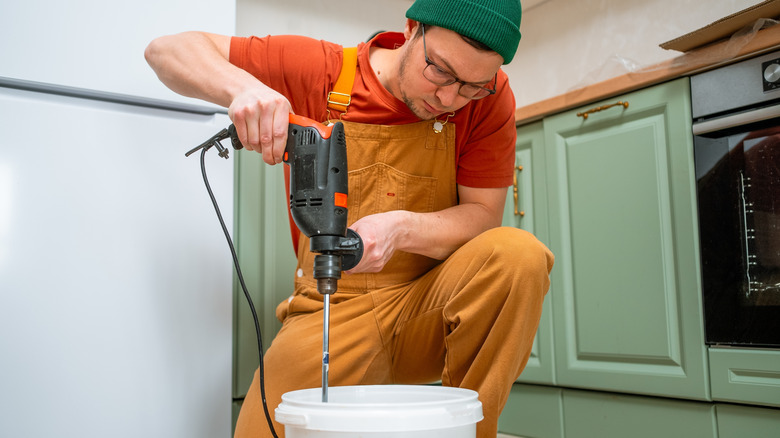
When you've finished fastening those drywall boards in place and are ready to paint, don't retire your drill to the garage just yet. Whether you're mixing plaster, or are ready to add the finishing coat of paint, you'll find that a drill and paddle mixer attachment are seriously useful to have on hand. If you're opening a fresh can of paint, you can avoid dirtying the kitchen whisk or relying on a few good shakes to mix the separated liquids together. If it's plaster, you'll be glad that you have some mechanical power to lean on to ensure that everything's properly combined.
You can also use a mixer paddle attachment to mix up your grout and make your tile installation easier, and if you're wallpapering with paste, the same goes for that, too. There are various types of mixer paddles to choose from, and ultimately, the best depends on what you're mixing. The MorningRo Paint Mixer for Drill features three for various materials, including paint and cement. This is far from the only option, and it's just one affordable Amazon find of many that can turn your drill into a paint mixer. Wherever you source yours from, the initial expense (which is fairly low) will save you time and hand-fatigue for years to come.
Sharpen your tools
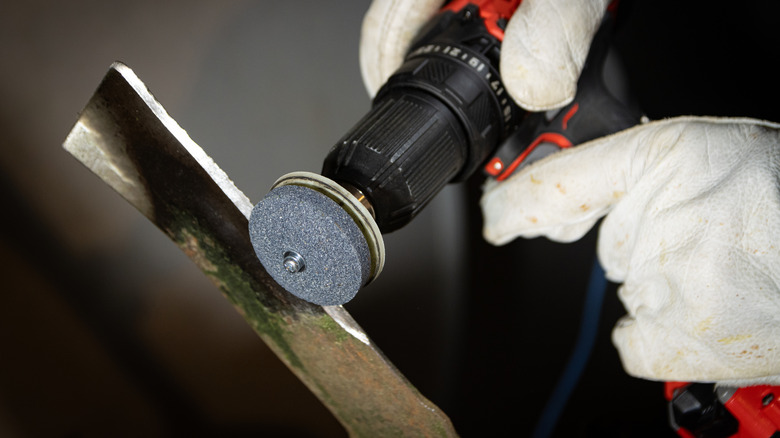
Whether it's a lawn mower blade, a gardening knife, your shovel, axe, or hoe, a sharp blade is the difference between happy horticulture and gardening that feels like hard work. It's important to keep your lawn mower blades sharp to avoid damaging your lawn, and if you have dull blades on your axes or knives, they can be downright dangerous to work with. Fortunately, if you have a drill, then all you need to buy is a grinding attachment and you'll be able to improve those edges. You can even buy dedicated sharpening bits for cordless drills, like this ¼-inch-bit Diamond Lawn Mower Blade Sharpener from Kurstol.
Whatever you use on the drill, you should also ensure that you have a vice or another way to securely clamp the blade in place. This will prevent accidents and slips, and make sure that you can maneuver the drill with two hands for precise sharpening. It's also important that you wear protective equipment, like safety goggles, gloves, and a mask, to prevent harm from metal particles.
Remove rust
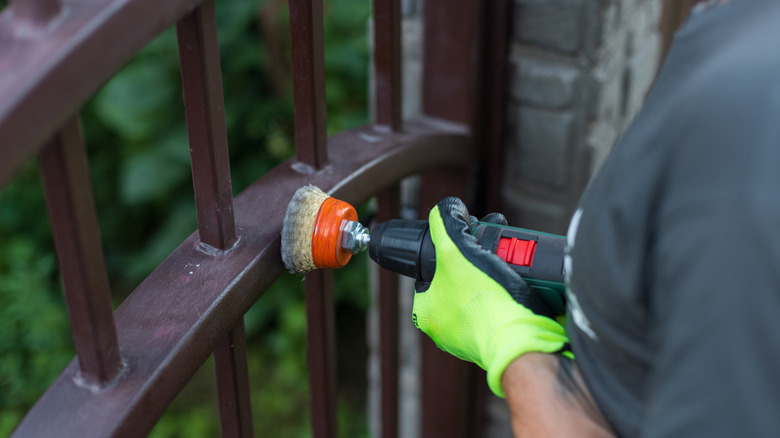
As you'll discover later in this guide, one of the humble drill's most useful extra-curricular pastimes is cleaning. In the case of rust, all you need is a wire wheel attachment, like one of the six included in this Carbon Steel Wire Wheel Brush Set from Rocaris. These come in different shapes for handling various types of surfaces, but in general, they're all useful for stripping surface rust from tools and other metal surfaces. With that being said, it's not the best solution for decorative surfaces that you won't later refinish, since the wire wheels tend to scratch the surface.
However, if, say, the finish has started to peel from your patio furniture and the metal beneath is rusting, then this is a fantastic use of your drill. It allows you to strip away the surface rust and prevent it from spreading, before adding a fresh coat of paint, which is far better than locking the rust in and allowing the problem to worsen. Just be sure to check the kind of metal that you're cleaning — whether it's ferrous or non-ferrous — and ensure that your chosen wire wheel is suitable. Generally speaking, stainless steel brushes are best for non-ferrous metals like aluminum, while steel is best for ferrous metals like cast iron. Ignoring this can lead to corrosion by mixing different metal types.
Polish metal
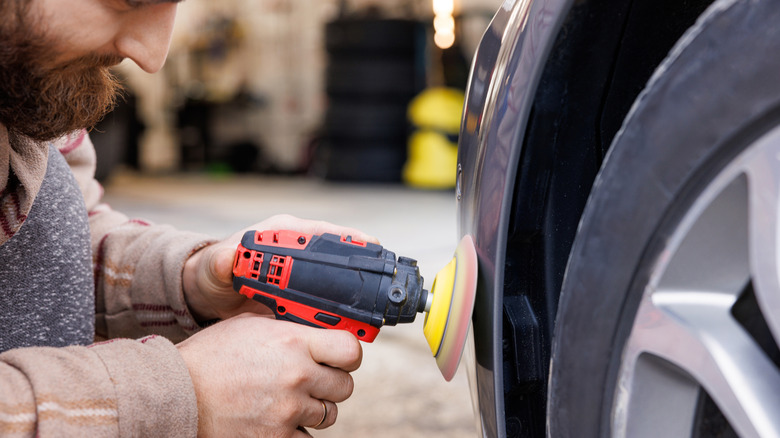
Another useful drill attachment to add to your DIY toolkit is a polishing wheel. Again, it's easy to find these, and there are plenty available online, such as this 6-Piece Buffing Wheel Set from Tworider. They're great for restoring a lovely, like-new sheen to your metal surfaces. And the number of items around the household that you can polish with them are surprisingly numerous.
For example, you could use a polishing wheel to restore a lustrous shine to metal hardware and faucets, like in your kitchen or bathroom. Decorative copperware in the kitchen can benefit from a good polish every now and then, and anything in your home that's made with chrome or stainless steel can be buffed using this method. Oh, and if you prefer to handle your car washing at home, there's no reason that you can't enjoy a shiny set of rims with the help of a polishing wheel. As with sharpening your tools, wearing appropriate protective gear is important, whatever you're polishing. Even if you're not grinding the metal away, bits of polish and dust can still fly off the surface, and it's always better to be safe than sorry.
Clean grout
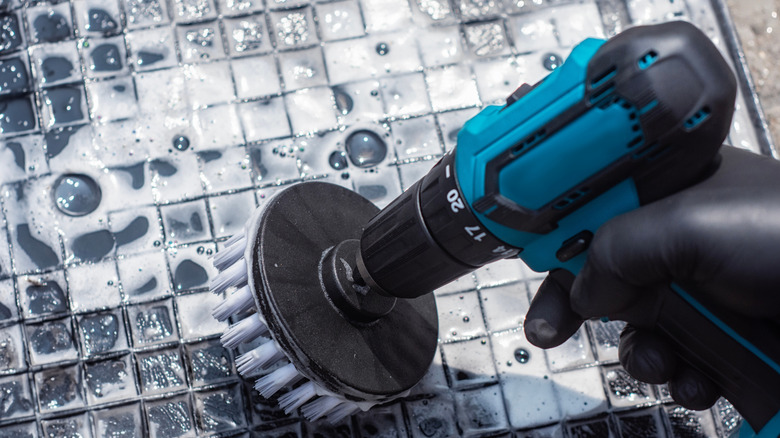
One of the easiest hacks to clean your tile grout is to use your drill with a brush attachment. You'll need to buy a brush made from appropriate materials, so that you don't accidentally chip the grout away. These Power Cleaning Scrub Brushes from SHIELDPRO feature medium-stiffness plastic bristles, which are ideal for scrubbing various surfaces around your home — tiles and grout included.
The method is similar to using a wire wheel for surface rust. You simply load your drill's chuck with your chosen brush, then allow your drill to apply the required amount of elbow grease. Use an appropriate cleaning solution, ensuring that it marries up with your tile grout manufacturer's recommendations. And if you can, start with slower rotations, remembering that the less pressure you can put on the grout, the less likely you are to damage it.
Unclog a drain
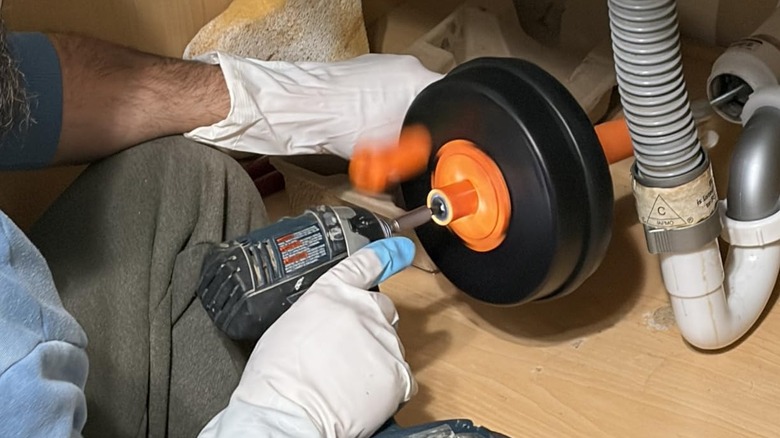
If you constantly find yourself needing to unblock hair-clogged drains, then you've probably at least considered investing in a powered drain auger. It's one of the best tools for unclogging sinks without chemicals, however, you don't actually need to invest in another power tool in order to alleviate those annoying blockages. Instead, provided that you already own a cordless drill, you can buy drill-ready drain augers to solve the problem for you.
Take this Drain Auger from BACEYIOU, for example. It's designed, first and foremost, as a manual drain auger — the sort that you have to crank by hand. However, you can also slot a power drill onto the back of it, then simply pull the trigger of your drill and let its mechanical power take care of the hard yards. It's easier on your hands, for one, but using your drill in this way actually makes the auger more powerful when stubborn blockages call for maximum force.
Sand awkward, hard-to-reach areas
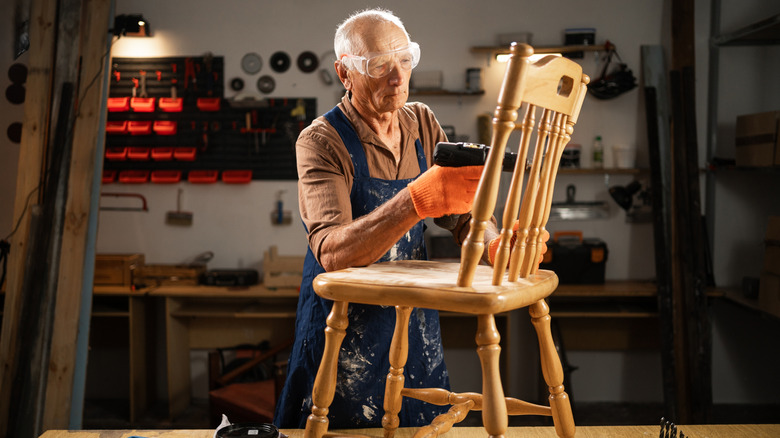
There's much to be said for upcycling old wooden furniture. But it can be a pain, especially if you need to sand away the old finish first in order to impart your own personal stamp with stain or paint. For the most part, random orbital sanders are the best type of sander for woodworking. But when you come to try and access those awkward, hard-to-reach areas between wooden spindles or on awkward curves, they can quickly come unstuck.
Using a sanding attachment, you can easily transform your drill into a detail sander that'll reach those annoying nooks and crannies. These attachments are easy to find, and you can buy kits, like this Sanding Drum Kit with Sandpaper Sleeves from HANPINYUAN. The drums come in diameters as small as half an inch, making them useful in tight spots. Most sets also come with a selection of sandpaper sleeves and grits, too, ensuring you achieve a professional finish without the need to buy dedicated, additional power tools.
Remove stripped screws
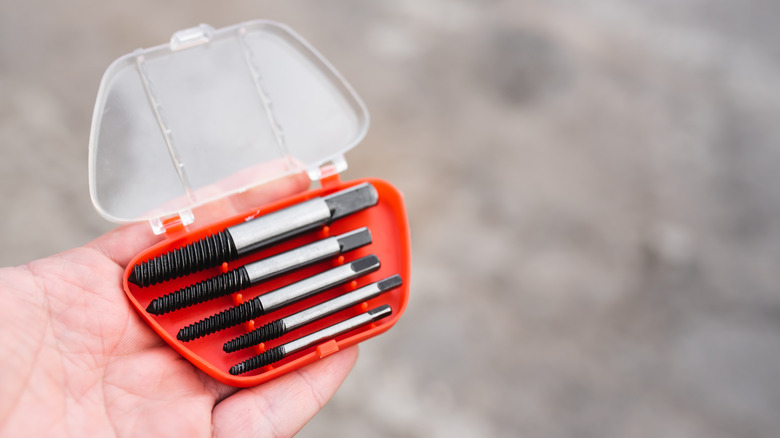
In actual fact, there are several ways to remove stripped screws by using your cordless drill. One is to simply use a larger driver bit than you usually would, which can sometimes help to find the purchase required to pull the fasteners out. If this works, then chances are you won't need to purchase additional bits. Even if it doesn't, you won't necessarily need to spend a fortune in order to equip your drill with the bits it needs to remove stripped screws.
You'll need to buy a dedicated set of screw remover bits, which, once you have them, are likely to come in handy over and over again. This 22-Piece Damaged Screw Extractor Set from Roll With Us Depot currently retails for $29.99 (and is also rated 4.7 stars with more than 12,000 reviews). Whichever set you go for, the bits typically work the same way. You first drill a small hole with a regular drill bit — just enough for the extractor to gain purchase. You then add the extractor bit to your chuck, pop your drill in reverse mode, and then drill back into the screw. It's a super handy trick to have up your sleeve when you're removing old, worn-out fasteners. And it's great for things like fences and deck boards, allowing you to pull them out without damaging the surrounding material.
Cut a perfect circle
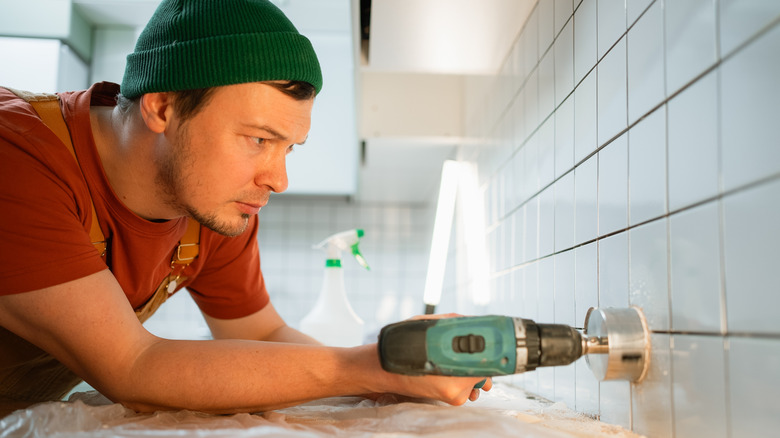
Weekend DIYers and home renovators alike will have noticed by now that there are plenty of drill attachments that are worth buying. However, it's fair to say that one of the most handy is a hole cutter. These can be used, per the name, to cut a perfectly-circular hole in just about any surface. As for where they're handy, you could use them to cut holes for running new pipework or electrical connections around your home. You could even use one to cut a hole in your home office desktop to tidy up those annoying cables.
Again, these attachments come in different sizes and materials. In turn, this makes it easy to find one that's best-suited to the size of hole you need, and the material you need to cut through. You can buy them in sets, too, like this 24-Piece Hole Saw Kit from Luckyway, which is designed for softwood, drywall, and PVC. As for how you use them, they typically feature a central bit, which you center on wherever you want the hole. This helps you to gain purchase and stabilize the drill, before engaging the actual hole cutter.
Clean your grill grates
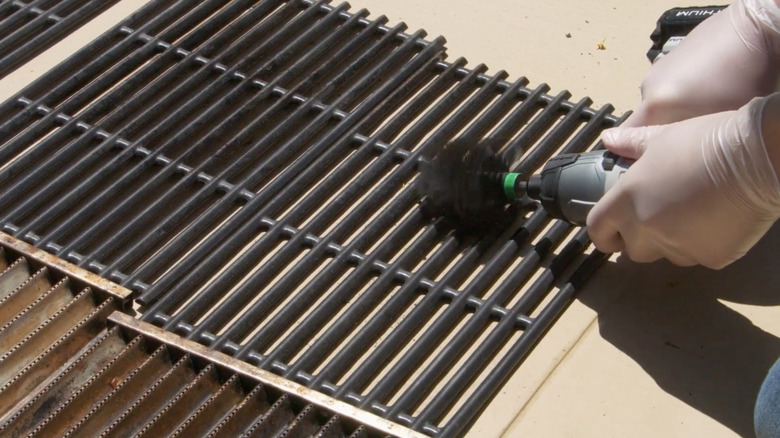
If you've ever had to clean grill grates after a long summer of outdoor cooking, you'll know how stubborn that burnt-on, carbonized food can be. And while it is entirely possible to scrub it off by hand, it's hard work, and often very tough on your hands. Instead, using a nylon wheel attachment, like the ones included with this Grill Cleaning Brush Set from Vizava, you can make life so much easier by busting out your trusty drill. Simply load the brush into the chuck, then begin scrubbing away at your grates.
Alternatively, if the grime is seriously stubborn — or refusing to come away in the corners of your grates — you can also use a metal wire wheel. However, this method comes with added risks that need to be carefully managed. For example, pieces of metal can come away from the brush while you're cleaning, so you'll need to wear protective gear. For the same reason, you'll also want to remove the grates and clean them well away from your grill — and then thoroughly rinse them after. If you don't, you risk contaminating your food with metal, which is hardly what your guests had in mind when they agreed to come to yours for dinner.
Remove old mortar or grout
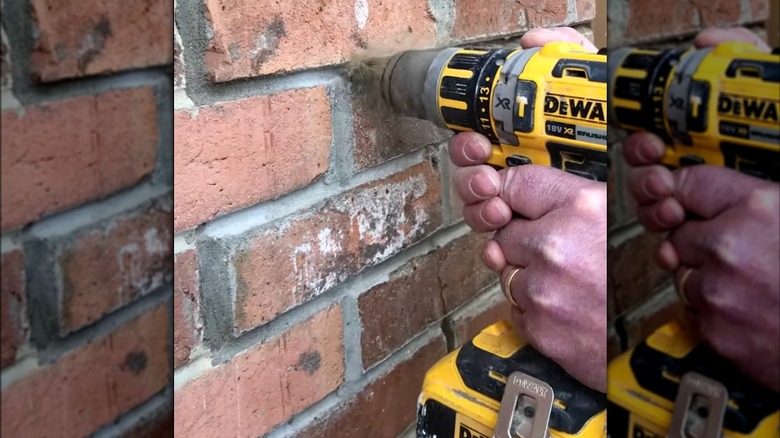
If, instead of cleaning it, you wish to remove your old grout or mortar entirely, then there is a handy drill attachment for that, too. Grout removal bits, like this 3-Piece Grout Removal Bit Set from Flutesan, are designed to precisely remove the grout while minimizing the chances of scratching, or worse, breaking the actual tiles. They're much easier to use than a classic hammer and chisel, and certainly bring more finesse to the task than a regular hammer drill.
Holding your drill with two hands for stability, gently run the drill over the surface of the grout. Just remember that the goal of using your drill isn't necessarily to finish the job quickly. Instead, it's to be precise, avoid damage to your tiles, and reduce fatigue with your hands. Always remember to gear up with safety goggles to prevent injuries, and most importantly, take your time. Once the bulk of the grout is removed, you can use a utility knife or a regular screwdriver to pry away any remaining stubborn pieces before cleaning the lines with a shop vacuum.
Plant bulbs in your garden
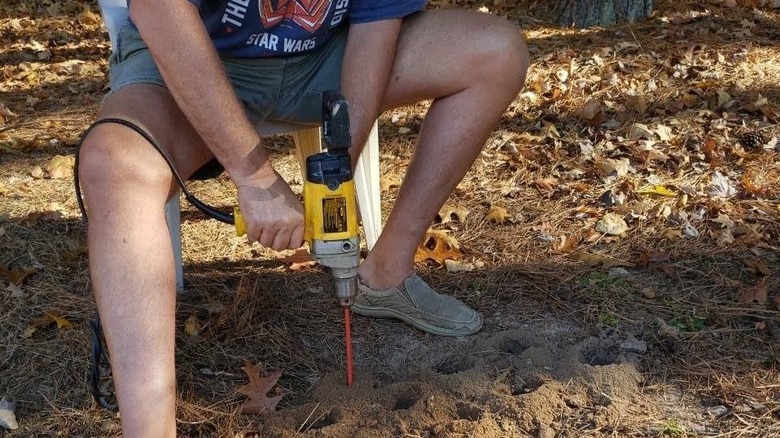
If you have hundreds of bulbs or seeds to plant, then a drill can make light work of the hundreds of holes you'll need to dig. To benefit from this trick, you'll first need to grab yourself an auger bit. Get one that's designed for gardening, like MAXCCINO's 4-piece Auger Drill Bit for Planting Set, as larger augers may be too big to dig the small holes you need for your plantings.
Of course, it's easier to measure hole depth with a dedicated dibber. However, there's nothing to stop you from either marking the depth on the auger blade with a sharpie, or with a small piece of masking tape. Either will serve as a visual guide to ensure you don't dig too deeply. With your marker in place, just drill down into the soil, ensuring that you "flush" excess soil from the holes by working the drill up and down in a reciprocating motion. Place your bulbs or seeds inside, then simply replace the soil.
Peel fruit and vegetables
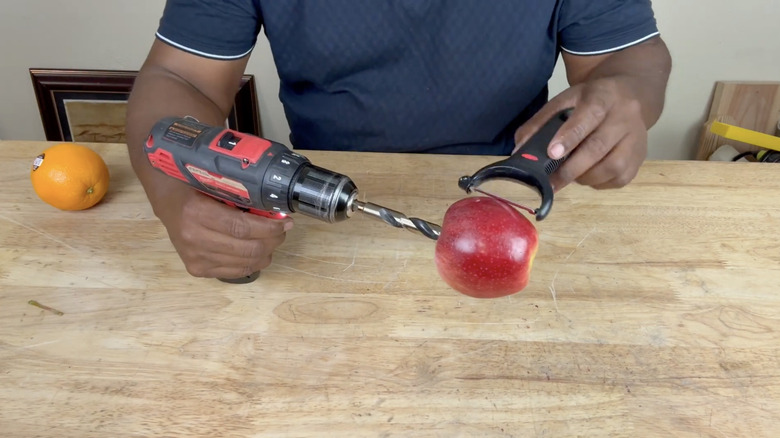
For hosts who dread the prospect of peeling an entire sack of Thanksgiving potatoes, a drill can be a surprisingly handy culinary companion. Now, before we go any further, we should say that you'll need to clean your drill thoroughly first to ensure you don't contaminate your food. You'll also need to clean your chosen drill bit. However, on the plus side, that's all you actually need: a drill and standard bit.
All you have to do is skewer your chosen peelables with the bit, and then use the drill as a sort of lathe. Go slowly at first to avoid flying produce, hold your peeler to the skin, and apply light pressure. You should find that the skin comes away surprisingly easily. You may need to peel the odd bit of skin by hand, like the pieces at the end and around the bit. However, you should be able to shave considerable time off your prep by assigning your drill to dinner duty.
Convert your drill into a paint sprayer
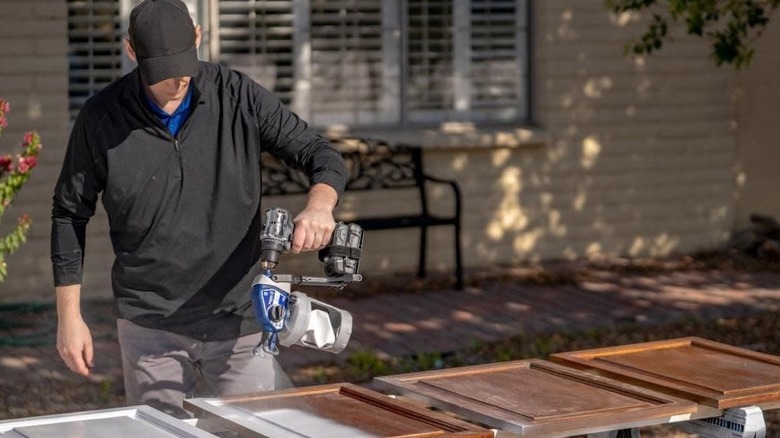
If you're decorating a large part of your home, then using a paint sprayer is a great way to achieve a professional finish. However, the outlay for dedicated tools can get steep, especially if you also need to buy an air compressor, hoses, and other paraphernalia. Instead, you could grab yourself a drill-ready sprayer attachment, like the Graco TrueCoat 360 Drill-Powered Paint Sprayer.
These tools are precisely what they sound like. They turn the mechanical power of your drill into spraying pressure, allowing you to apply a thin, even coat to your walls, ceilings, and other household surfaces. Again, you may need to use more traditional painting tools like brushes to add finishing touches. But if you have lots of large surfaces to coat — and would prefer to avoid the outlay of a full paint-spraying set-up — then this could well be a budget-friendly, effective, and time-efficient way to do it.
Clean your paint rollers
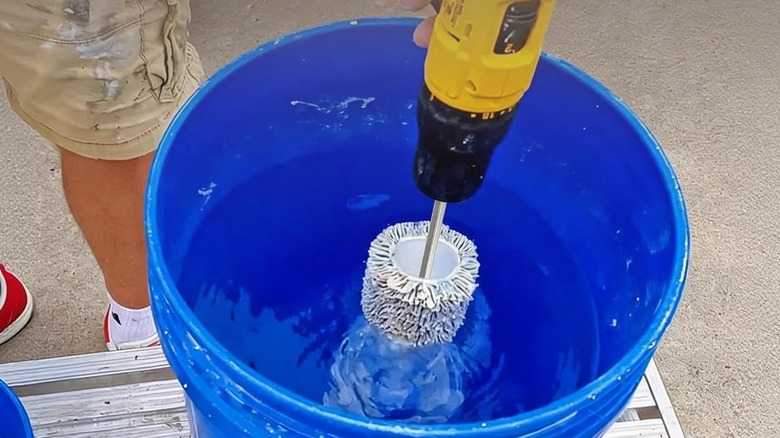
For those who prefer to paint their homes the old-fashioned way, then more power to you! Using paint brushes and rollers is certainly the cheapest way to go about it. However, if you've ever tried to clean a dirty paint roller, you'll know how hard it can be to get the paint out. It doesn't need to be, though. In fact, if you have a drill, it can be surprisingly easy — so easy that you may well wish you'd known about this trick years ago.
There are, believe it or not, dedicated drill attachments designed precisely for this purpose. This paint roller cleaning tool from SCOTTCHEN, for example, slides neatly into rollers up to 9 inches in length. Once it's fitted, you first spin the roller inside an empty bucket to shake loose as much paint as you can, then spin it inside a bucket of water. This flushes the roller clear of the remaining paint, leaving it clean and ready for the next job.