

Is It Okay To Hose Down Wicker Furniture?
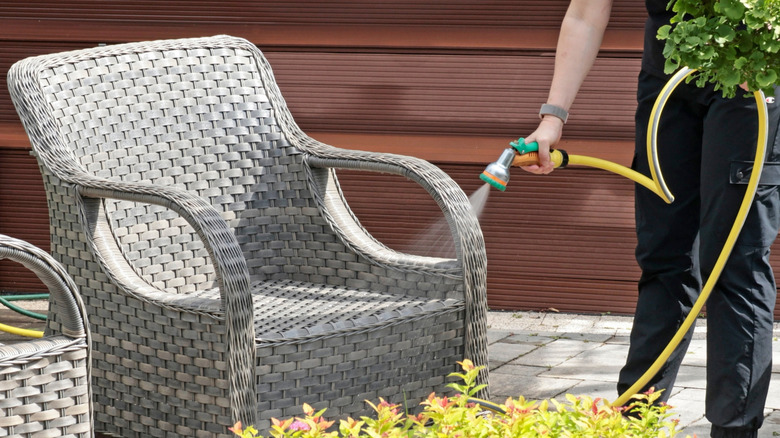
Wicker outdoor furniture takes a beating year-round. In summer, it endures heat and sunlight, while winter brings cold and snow. Depending on where you live, wicker furniture must also withstand humidity, rain, or dryness. Indoors, wicker furniture fares better, but one of the downsides to wicker furniture is that it requires cleaning and upkeep to help it retain its appearance. Dirt, mildew, and harsh weather all contribute to wicker losing its attractive appearance, and can even cause damage if not well-managed.
Unfortunately, cleaning wicker furniture may not be as straightforward as taking it outside to hose it down. Wicker isn't a material, it's a weaving technique. That means there are different ways to clean wicker furniture that will vary depending on what your wicker is made of. Wicker woven from natural materials like bamboo, rattan, grasses, or even paper is porous and must be cleaned carefully to prevent excess water from damaging it. Synthetic wicker, sometimes called outdoor or all-weather wicker, is more resistant to splintering or rotting and is overall easier to clean.
How to care for natural wicker furniture
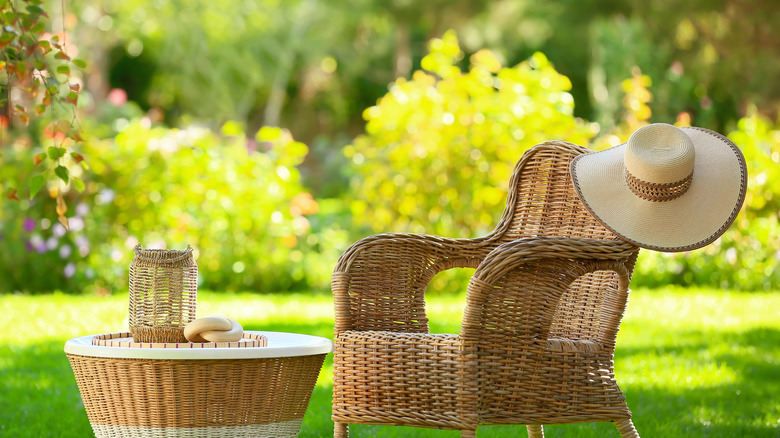
If your wicker furniture is made from natural materials, hosing it down is out of the question. Too much water will lead to mold, discoloration, and odors. Instead, clean it carefully with a soft brush and soapy water. Try to use only the soap bubbles as you gently scrub the wicker, minimizing the amount of water that gets on it. If you notice areas of mold or mildew, spray them with a mixture of equal parts water and vinegar and let it sit for about 15 minutes. Gently scrub the area with a toothbrush, then wipe with a clean cloth and let it dry fully. You may want to set up a fan to help it dry faster. To restore the warm appearance of unpainted wicker, experts recommend applying lemon oil or boiled linseed oil twice a year.
Not only should you not hose down natural wicker, you should store those pieces indoors when they're not in use — exposure to the elements will cause the materials to fade and dry out, leading to cracking and unraveling. In fact, natural wicker is generally better suited to indoor-only use. Left outdoors, natural wicker furniture can only be expected to last a year or two, while properly maintained indoor wicker furniture can last decades.
Synthetic wicker is easier to maintain, but not totally hands-off
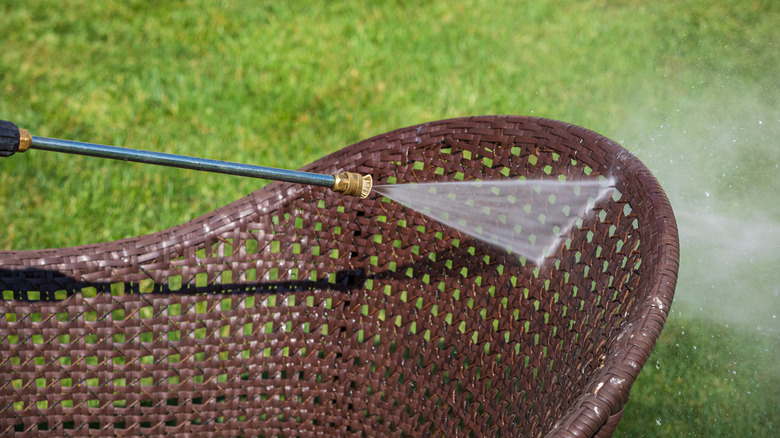
Synthetic wicker is constructed to withstand the elements better than natural wicker. It's safe to hose down because it's made from non-porous resin or plastic. Still, even synthetic wicker can develop mildew if moisture and debris get trapped in the weave. Double-check your furniture's care requirements, but in many cases it's safe to clean synthetic wicker with mild soap and a hose or even a pressure washer on a low setting.
To help your furniture dry thoroughly and prevent mildew, air-dry it with the assistance of a fan, or bring it into an air-conditioned room if it's very humid outside. If you notice bits of debris still stuck in the wicker weave, try dislodging it with blasts of compressed air. Synthetic wicker furniture is durable enough to last outside for 10 to 15 years, assuming it's properly cared for. To help it last longer, cover it between uses and bring it inside if you live in an area with extreme weather.