

Is It Okay To Hose Down A Riding Lawn Mower?
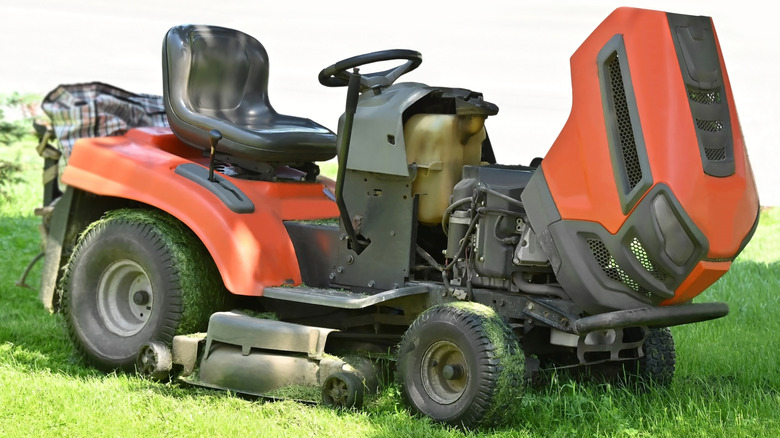
When you're trying to figure out how long your riding mower might last (and how to maximize that length of time), performing regular maintenance tasks will help. Sharpening blades, changing the oil, and cleaning the air filter on the correct schedule are important. Keeping the machine clean is another key step. Removing debris from the deck, including grass clippings and dirt, can reduce stress on mower components and help extend their lifespan. Some mower manufacturers recommend cleaning it before and after each time you use it.
Because removing debris and grass clippings across the entire machine can be a challenge, you may wonder whether you can use a hose on the riding lawn mower for cleaning. Washing the mower with a hose is possible, but you have to be careful where you spray the water. Figuring out how to clean your lawn mower the right way gives it the best chance of remaining in prime operating condition. For example, you need to use different washing techniques on a battery-powered riding mower compared to one that runs on gasoline.
Before using a hose on the riding lawn mower, you should take a few preparation steps. Park it in a flat location, preferably on concrete. Allow the mower to cool before cleaning it, but don't wait too long, or any wet grass on the underside of the deck may stick and harden against the metal. Use a brush or broom to sweep away any dry grass and other debris that you can see.
How to use water to clean your riding lawn mower
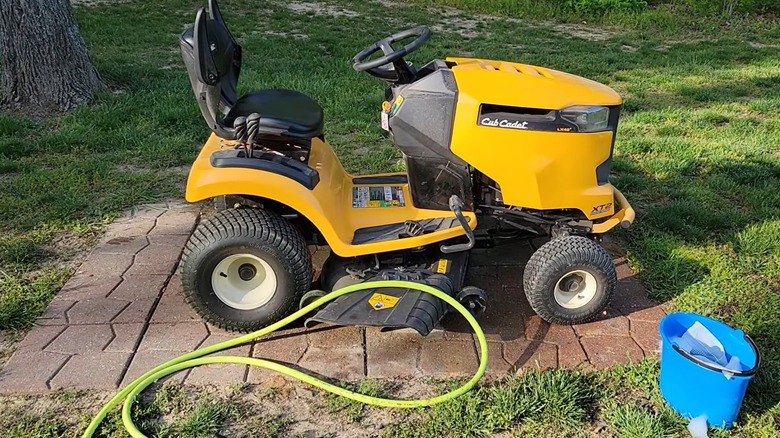
If you have a gas-powered riding lawn mower, you can use water from the garden hose to remove dirt, grass clippings, and other debris from the body of the machine. However, avoid spraying water near the engine, especially around the spark plug, ignition socket, air filter, oil filter, electrical wiring, battery, and similar areas. If these areas need cleaning, use a brush or leaf blower and dry clean them instead.
Before using a pressure washer on a gas-powered riding mower, check the manufacturer's cleaning instructions, as some manufacturers advise against pressure washing altogether. Follow the previously discussed rules for using a garden hose by avoiding the electrical components and other areas of the engine, as the certain parts of the engine aren't made to withstand the force of the water from the power washer. Perhaps the best way to utilize the force from the pressure washer is to dislodge grass clippings from the blades and the underside of the mower deck after safely lifting the machine.
If you use a battery-powered riding lawn mower, though, you should not use a hose or pressure washer. The electrical components that run the battery-powered lawn mower may suffer damage if they're exposed to significant moisture that's under force from a hose. You can use a hose to wash the underside of the deck to try to eliminate grass clippings and dirt, but follow the instructions for first putting your model in service mode. You can use a brush or a damp towel on other areas (while avoiding the battery compartment).
Utilizing the hose attachment on the mower deck for cleaning
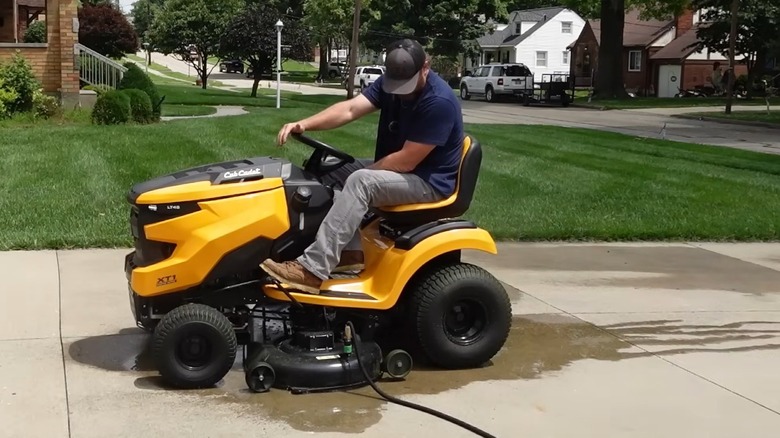
Some riding lawn mowers have a hose attachment port, also called a washout port, on the top or side of the mower deck. You should use this port after every mowing and wash the deck with a hose to prevent the loose grass from hardening and sticking to the metal of the underside of the deck.
Tuse the washout port, park the riding mower on a flat area of your lawn or driveway. (This washing process can create a mess, so choose the location carefully and align the riding mower so the discharge chute is not near your car, garage, or house.) Connect the hose to the washout port using the appropriate nozzle or adapter and lock it in place. Turn on the water. Sit on the riding lawn mower and start the engine. Then engage the deck's blades and start spinning them like you do when you're mowing the lawn. As the force from the spinning blades moves the water throughout the underside of the deck, grass clippings and other debris should wash away. Some manufacturers recommend lowering the mower deck during the process, but check your owner's manual for the proper deck position and washout procedure for your model. When the water starts running clear, disengage the blades, turn off the engine, and shut off the water.
When you have wet grass sticking to your lawn mower tires or the top of the deck, the hose attachment isn't going to help. The attachment port only focuses the water spray underneath the mower deck. You'll have to clean the tires and top of the deck another way.