

How To Sharpen Manual Lawn Mower Blades?
We may receive a commission on purchases made from links.
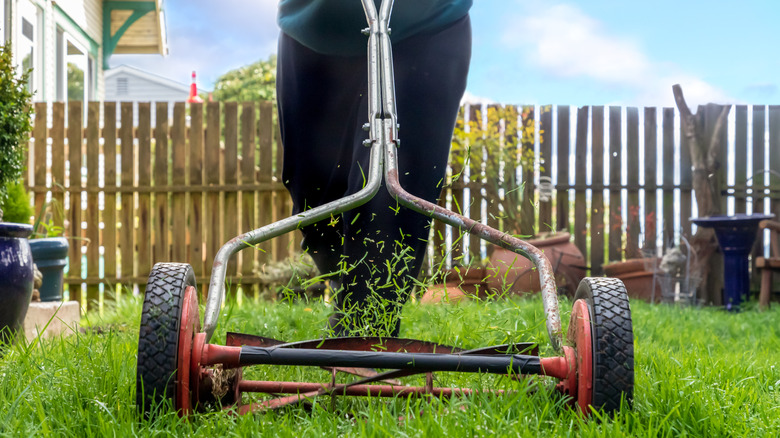
Push reel lawn mowers might not boast as much power as a gas or electric model, but they certainly have their pros. Beyond the fact that they provide a more affordable alternative to other options on the market (a decent riding lawn mower can cost several thousand dollars), they're also safe to use, incredibly quiet, and a great source of exercise. Another massive benefit is the fact that they're easy to maintain. Because you're not dealing with complicated machinery, fickle batteries, or a gas-powered engine, all you really need to do is keep the wheels turning and the blades sharp. This is where things can get intimidating, however — unlike other kinds of lawn mowers, the blades on push reel mowers are spiral-shaped, which can cause confusion. Luckily, all you need is a few minutes, some basic tools, and a reel blade sharpening kit or some valve grinding compound.
Unlike other kinds of mower blades, you won't need to sharpen them directly with a file. Instead, you'll apply a compound to the cutting edge and run the mower backwards to essentially sharpen itself. As a general rule of thumb, this task should be completed after 20 to 25 hours of use, which translates to around once per season for the average mower. Warning signs that indicate that your lawn mower blades need sharpening include frayed or torn grass, an uneven cut, or the inability to cut through a piece of paper cleanly. If you stay on top of this maintenance, your push reel mower will remain in good shape for decades to come.
Adjusting your reel mower's cutting bar for proper sharpening
The materials necessary to complete this task won't cause much damage to your bank account, but the job will take some effort to complete. Pick up a compound like Permatex Value Grinding Compound for $6.99 on Amazon or a complete sharpening kit like the American Lawn Mower Company Sharpening Kit for around $14 if you don't have a drill. You'll also need a flathead screwdriver, a paintbrush, and a ½ inch drill (if applicable). The drill method will help to get the job done with less work, but it's not an absolute need if you don't have one on hand. Before you get started with this process, make sure to check your mower's manual to confirm that there aren't any brand-specific quirks you need to take into account. This sharpening method is pretty standard for most push reel mowers, but of course, there are always outliers to the rule.
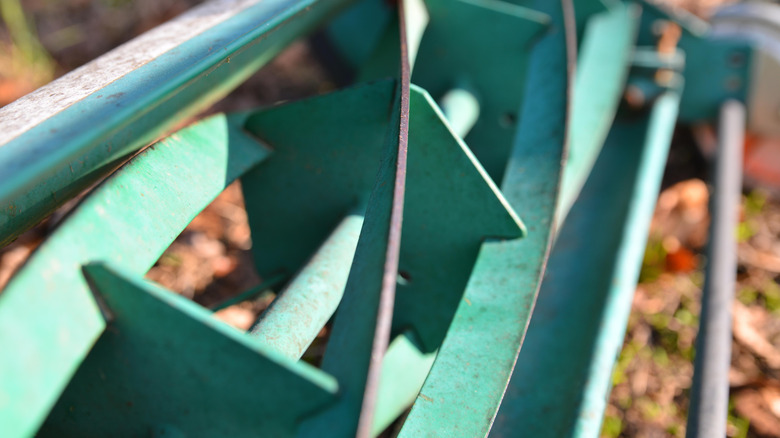
Once you're armed with knowledge, start by taking a look at the bottom of your lawn mower and adjusting the cutting bar — the straight bar that runs directly in front of blades. Adjust the screws holding it as needed until the bar is angled in a way that it barely brushes the blades, making sure to tighten and loosen the front and back screws the same amount. The blade should still be able to rotate fairly freely, but it needs to come ever so slightly in contact with the cutting bar. This adjustment is important for the sharpening process, but it will also give you cleaner cuts once it's actually time to mow.
Sharpening the blades using grinding compound
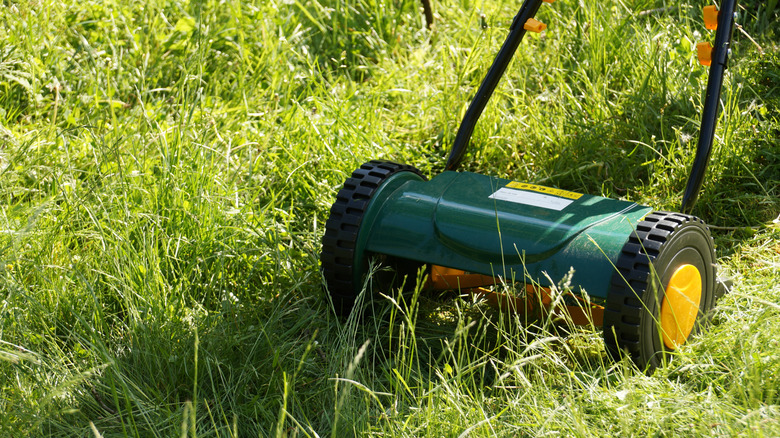
From there, apply your grinding compound to the blades using the paintbrush. This doesn't have to be particularly precise, but make sure the cutting edge is evenly coated all around. Pop off the wheel on one side of the mower using your screwdriver, and follow up by removing the gear that's now exposed. This connects to the drive bar, which is what turns the blade. Either attach your drill to this bar or use the manual handle from your sharpening kit. For about 10 minutes, rotate the drive bar in reverse, making sure the still-installed wheel is hanging off the edge of a table or platform so it can spin freely. As the grinding compound-coated blade comes in contact with the cutting bar, it will gradually start to sharpen itself, ensuring that you get cleaner cuts when it's actually time to mow.
Reassembly is simple — just pop the gear back on and reattach the wheel using the same screwdriver. While you're here, it's also a good time to lubricate any moving parts to keep the machine running smoothly. Test it out on your grass to see if you're getting cleaner cuts, and if you're satisfied with the results, you're ready to go. If things are still looking a bit uneven, give it another round of sharpening or adjust your lawn mower's blade alignment until you're satisfied.