

The Highly Fragrant Hosta Variety You Could Still Plant In Early Fall
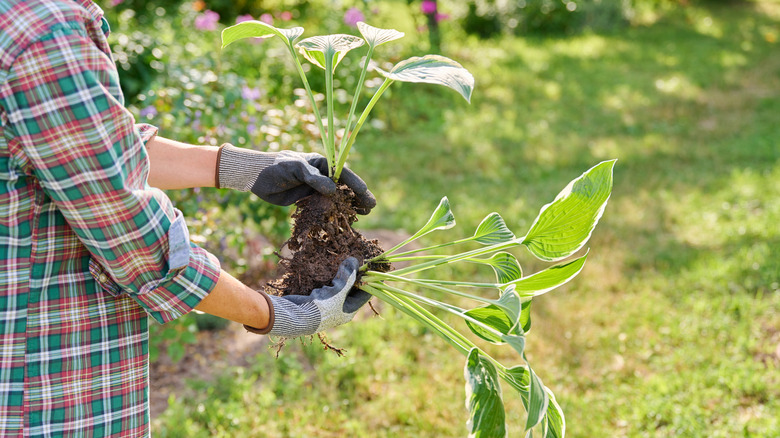
Summer might be coming to an end, but that doesn't mean you have to give up gardening for the year. Fall is the perfect time to add some low-maintenance perennials to make your garden look fuller on a budget. In particular, you still have room in the gardening calendar to plant a few 'Royal Standard' hosta (Hosta 'Royal Standard') crowns. This early hosta cultivar — it was released way back in 1965 — is best known for its showy, fragrant white flowers on tall stems and huge, wavy green leaves. A 'Royal Standard' hosta makes an attractive addition to your garden. It's fairly versatile, design-wise, and can be used in a border, planted as a ground cover, or grown in a large container. All in all, it's a beautiful perennial that hummingbirds love, too.
If you plant this hosta in fall, it's likely to emerge from the soil earlier than its spring-planted counterparts. Fall-planted hostas have more time to establish their root systems. In this cooler shoulder season, the soil is still warm and moist following the hot summer months, and that's beneficial for root growth. In spring, the ground is still recovering from chillier winter temperatures, so it can take longer for plants — and their roots — to start growing. Plus, the roots of a fall-planted hosta have months to soak up lots of moisture and nutrients before winter dormancy takes hold, giving the plant a healthy head start. Remember, hostas die back completely in the winter and sometimes need overwintering indoors.
Best practices for planting a 'Royal Standard' hosta in fall
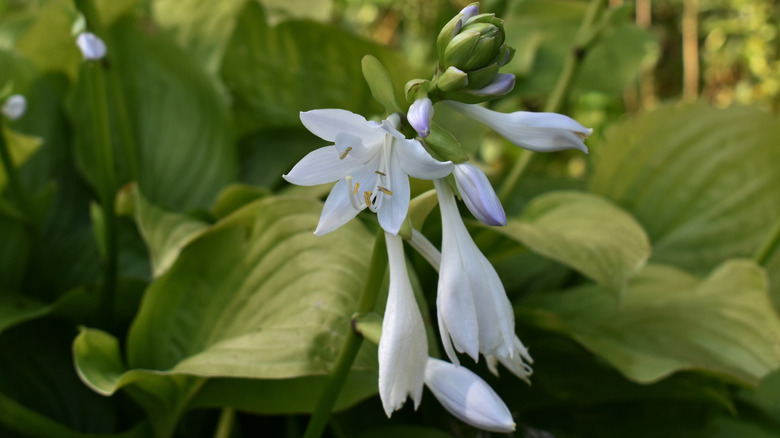
First things first, you need to check whether you can grow hostas in your region. Hostas thrive in USDA Plant Hardiness Zones 3 to 9, and those zones encompass the vast majority of the U.S. However, fragrant hostas — like 'Royal Standard' — tend to tolerate heat better than other varieties. They grow well in warmer southern climates.
Once you've decided that 'Royal Standard' is the right hosta for your garden, you need to plant and care for it correctly. This hosta grows best in partial or full shade, so choose a site in your yard that doesn't receive a ton of sunlight. 'Royal Standard' hostas can reach 2 feet tall and spread up to 5 feet; they need space in a garden bed. To care for your new fall-planted flowering perennial, water the base of the plant often, especially if the temperatures are still high — don't let the soil dry out. Once it's established, this classic hosta cultivar will bloom in late spring and summer. Eventually, your 'Royal Standard' hosta may grow too big or its growth may slow. If that happens, forgetting to divide these perennial plants in spring is a mistake you don't want to make.
You can buy 'Royal Standard' hostas from nurseries and garden centers year-round. In fact, buying your hostas in fall can mean lower prices since it's considered late in the growing season. If you can't find this particular cultivar, there are lots of other hosta varieties with striking leaves and flowers that should do well planted in fall. For example, 'First Frost' has lilac flowers and is a hardy cultivar that can survive until the first frost of the year. Another option is 'Empress Wu,' a hosta with impressively large leaves and lavender flowers.