

Use Plain Glass Jars To See If Your Sick Plants Have A Bacterial Infection

A suddenly ailing plant can lead you down an online rabbit hole of confusing articles, quick-fix solutions, and impulse purchases. Until you're able to definitively diagnose the problem, nothing's going to get solved. Unfortunately, reaching a diagnosis isn't always easy. For example, the symptoms of bacterial wilt, a common plant disease you don't want ruining your plants, can be very similar to issues caused by pest infestations, fungal infections, or improper care. These issues don't all require the same treatment. You don't always have to send samples to a clinic for professional testing. A clever way to reuse a glass jar for diagnosis is to fill it with water and place a cut plant stem inside.
An old pasta sauce or jam jar is perfect for determining whether a plant has a bacterial disease. However, anything that's made of clear glass, like a tumbler or bottle, will also work. Remove any labels before attempting this test so you have an unobstructed view of the interior. Fill the glass vessel halfway with fresh, clear water and place your cutting inside. Give it a few minutes, and you may spot milky material streaming from the end of the cutting. It's a sure-fire sign that your plant is suffering from bacterial wilt. Wait a few minutes longer (up to 15 minutes total) and check the jar again. If all the water in the jar has turned cloudy, your plant likely has a severe infection. While the result may make you feel despondent, it actually provides you with a clear answer to your problem. Now, you have a chance to stop the infection before it spreads to the other plants in your garden.
Signs of bacterial wilt in plants and how to manage the disease
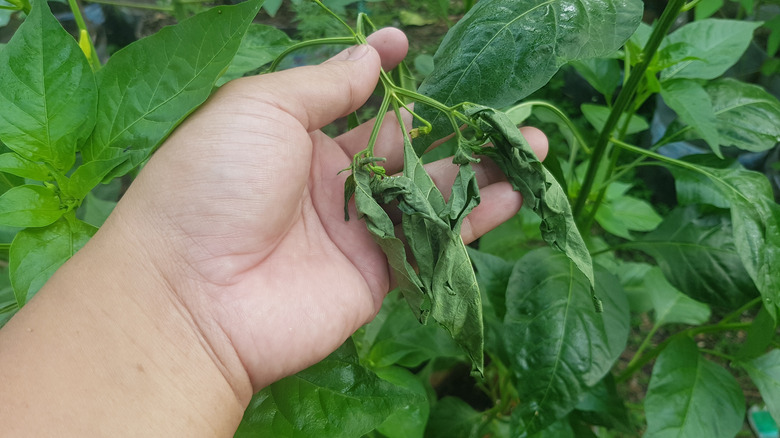
Ralstonia solanacearum is a common cause of bacterial wilt, and as the name implies, it targets plants in the nightshade family (Solanaceae). Tomatoes, eggplants, peppers, and potatoes can all become infected — in fact, it's possibly the reason your tomato plants are wilting. Cucurbits like cucumbers, melons, and pumpkins aren't safe from this notorious infection either. They're targeted by Erwinia tracheiphila. Both of these bacteria destroy the vascular system of the plant, causing the infected stems and leaves to droop. This doesn't happen all at once. A few patches of curled and floppy yet still-green leaves on an otherwise healthy plant could indicate that there's a problem. If, however, the entire plant is wilting, it may just need a good watering.
No matter which bacterium you're dealing with, it will release milky material into a glass jar half-full of water. If you're dealing with multiple infected plants, test each one in its own jar. Unfortunately, there's no way to save the plant once the bacteria have taken hold. As soon as you determine that a bacterial infection is the culprit, dig up the infected plant and either burn or bury it. You should never add diseased plant matter to your compost pile. If you have a garden full of vulnerable cucurbits, take steps to keep cucumber beetles out of your garden. These pests spread the bacteria among your plants even after you've removed a diseased specimen.