

Put Down The Coffee Grounds: The Useful Scrap You Can Use As A Natural Wood Stain
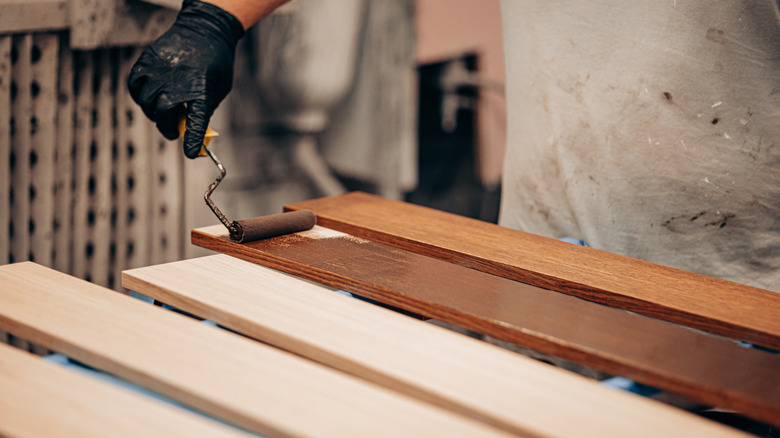
You may be considering wood staining if you're embarking on a wood DIY project with color customization, such as your wooden kitchen worktops, floors, or picture frames. If you want to avoid using chemicals, ditch traditional wood stain and think about natural alternatives, which gives your work an environmentally-friendly spin. There are lots of natural ingredients you can use to stain wood, with coffee grounds being one of them. However, there's another kitchen scrap you can use: pecan shells!
It's ever so simple to create a pecan wood stain. All you're going to need is a good amount of pecan hulls (without the nuts inside), a pot to boil water, a colander, a bowl, and a mason jar or two to store your finished stain. It's wise to exercise some patience when embarking on this DIY task. You can't predict the color you're going to achieve, so be prepared for some trial and error.
How to make a natural wood stain from pecans
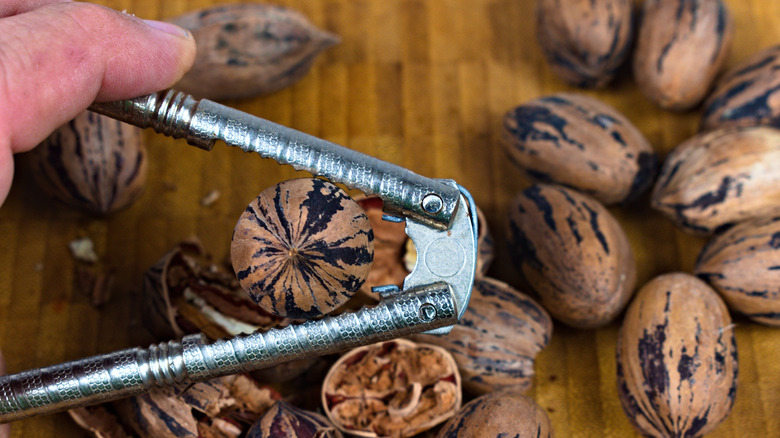
To make the stain, gather your pecans. You're going to have to separate the nut from the hull, as the hulls are where all the color comes from. Complete this process using a nut cracker, or go the more manual route and place two pecans lengthwise in your palm and squeeze to crack, continually rotating and applying pressure. Next, grab a pot and place your hulls inside of it, fill the pot with water, and bring it to a boil. Allow it to simmer for up to two hours, occasionally stirring with a wooden spoon. Once it's done simmering, strain the hulls using a colander and bowl. Transfer the dark liquid into a jar and allow it to cool. You now have your natural wood stain made out of kitchen scraps.
When it comes to applying your stain, use a soft bristle brush and make sure to follow the grain of the wood to achieve a professional looking finish. Since you can never guarantee what color your stain will be, if you're not a fan of surprises, a good trick is to test the mixture as you go. For example, you can dip a cotton ball into the stain to check how dark it looks. Store the leftover stain in an airtight container for the next time you're ready to give your wooden projects a nice nutty tinge.