

Trying To Remove Weeds In The Fall Isn't Always Worth Your Time — Here Are Some To Leave Alone
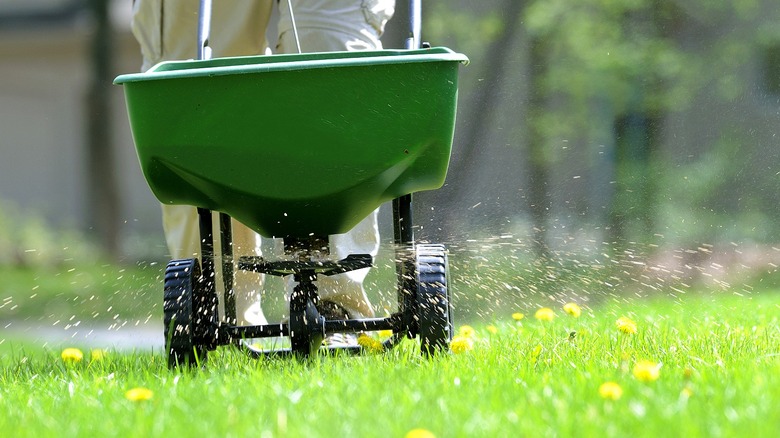
If you notice weeds thriving in your yard in the autumn, it can be frustrating as the growing season seems to be coming to an end. However, some weeds (and other plants) actually become stronger at this time of year, creating a situation where you may want to banish all weeds from your lawn now so they don't become a bigger headache in the spring. However, you also don't want to waste time and money trying to kill off weeds if it won't actually help your yard next year. For example, some weeds are summer annuals, and will die on their own as winter approaches or as the first hard frost occurs, meaning you can just let Mother Nature do the work for you. Some of these weeds include spurge, yellow nutsedge, crabgrass, purslane, and foxtail.
However, it's important to note that many of these plants will return in the spring or summer even if they die after the first freeze the year before. Crabgrass, for example, produces seeds that it drops before the first freeze kills the plant. These seeds remain dormant until spring temperatures warm the soil and allow them to sprout. So, while killing these summer annual weeds in the fall doesn't prevent them from potentially sprouting the following growing season, there are other preventative measures you can take — at the right time in the spring – to try to prevent them from showing up again.
Leave crabgrass and yellow nutsedge alone in autumn
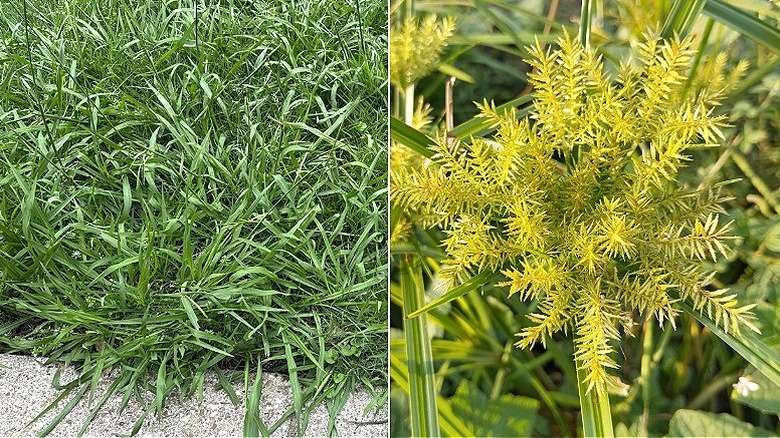
Crabgrass is one of the most common weeds found throughout the world, and it dies at the first freeze, so it's a weed you can leave alone in the fall. You can recognize crabgrass from its stems that spread across the ground with thicker leaf blades than bluegrass, measuring about one-fourth of an inch wide. Crabgrass is a warm-season grass plant that starts from seed again the following spring. Before the grass sprouts in spring from its dormant seeds, apply a pre-emergent herbicide. Without taking these measures, you will probably see crabgrass come back strong in August and September and cause problems for your lawn.
Yellow nutsedge is another summer annual grassy weed that will die off on its own once the cold arrives. The plant does leave behind tubers and nutlets in the soil, though, allowing the plant to sprout again when temperatures warm. Killing it in autumn won't stop the nutlets and tubers from sprouting. Nutsedge growing in your lawn may have shiny, lighter-colored leaves compared to the rest of the turf; it also grows faster than other turf after mowing.
After nutsedge dies in autumn, treatments for spring can include pre-emergent applications, post-emergent control with a turf-safe product, or manual removal immediately after the plants sprout. Note that pre-emergent treatments rarely deliver complete eradication, meaning you'll probably have to treat it with herbicides after it comes up in spring and summer. Even if it doesn't sprout one year, it can come back the next year, making it an extremely difficult weed to eliminate.
Broadleaf weeds include foxtail, purslane, and spurge
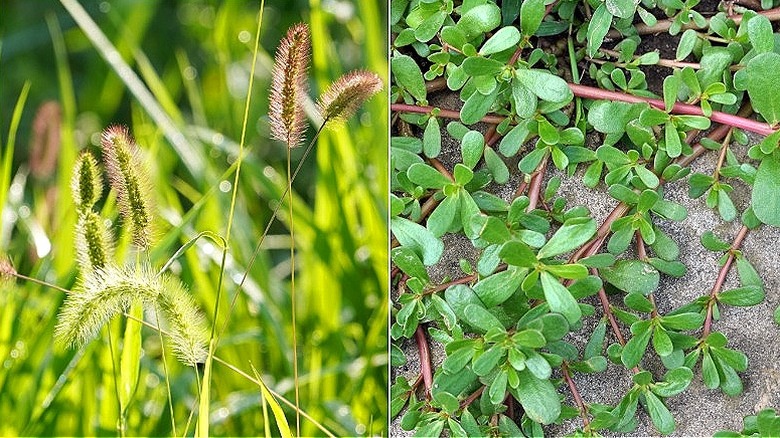
Some people may believe they can keep invasive green foxtail weeds at bay by killing them in the fall. However, there's no reason to spend time treating them now because their leaves turn brown and die after the first frost. By that time, though, the plants have already produced seeds that will lie dormant until the following spring, meaning applying a pre-emergent herbicide in spring is important to prevent new plants from appearing in your lawn. You can recognize foxtail after it sprouts as it develops a seed head that looks like a fox's tail. Before then, it resembles more desirable types of grass, making it difficult to spot in a lawn.
Purslane is another broadleaf weed where the leaves die once the weather turns cold. You can recognize it by its stems, which are reddish purple and spread close to the ground. Purslane's leaves are succulent and oval in shape. Before the first freeze, the plants drop seeds that sprout in late spring. You'll likely need both pre-emergent and post-emergent treatments to control this weed during the growing season.
A similar broadleaf weed is spurge. Most varieties of spurge are summer annuals and will die after the first freeze. Low-growing spurge spreads across the ground, leaving it below the cutting blades of most mowers. Before spurge plants die off after the cold sets in, they can produce thousands of seeds that lie dormant until germinating the following spring (or even years later). Don't waste time eliminating resilient spurge plants in autumn, but apply a pre-emergent herbicide in spring.