

DIY Durable And Rot-Proof Raised Garden Beds With An Overlooked Scrap
We may receive a commission on purchases made from links.
Raised beds are a gardener's best friend. They drain well, allow for easy soil building, and increase planting space. If you're currently working your way through a guide to starting a raised bed garden, you probably already know all this. The only real downside is that they can get expensive, especially if you need something on the larger side. Hiring a company to install raised beds starts at about $100 per square foot. Generally speaking, using recycled wood for DIY raised garden beds is a good idea — it's certainly cheaper. You may, however, end up with rotten walls in three to six years, especially if you live in a humid climate. So what's the alternative? If you want long-lasting raised beds on a budget, consider building them from scrap corrugated metal.
If you're able to repurpose a material and go the DIY route, you will slash your upfront costs. Plus, unlike wood, metal should stay in good condition for more than 20 to 30 years — even outdoors. For this project, you'll need some corrugated steel or iron sheets that have been galvanized, which means they have a coating of zinc that slows corrosion. This material is frequently used for roofing and siding on commercial and industrial buildings, and it is often sold at local scrap yards, recycling centers, and salvage auctions. If you're lucky, you could get some scrap pieces from neighbors who are installing a new roof. You'll need a bunch of fasteners and support pieces, which can be salvaged, too, but the exact types and quantities will depend on your design.
Build a simple raised bed from reclaimed corrugated metal
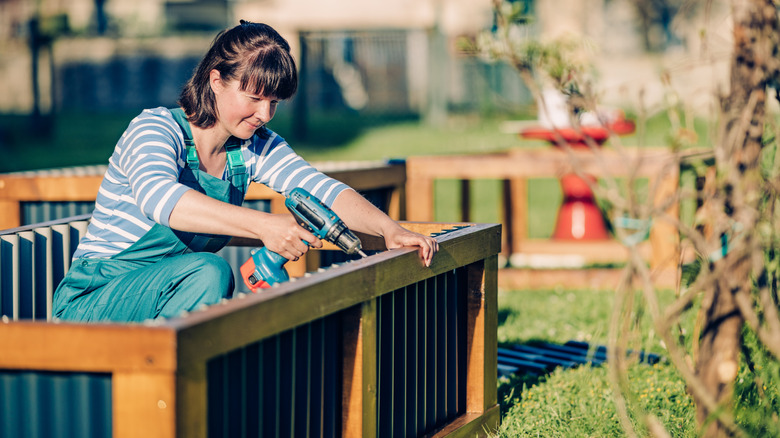
You could attach galvanized sheet metal to the interior of a simple wooden frame. Alternatively, you can skip the wood and secure the sheets with metal brackets and screws. The aim is to create a durable garden bed, so tweak your design based on the materials, parts, and tools available. Regardless of which design you choose, you'll need two sheets of galvanized metal that span the length of your proposed garden bed and two more for its width. The ideal height for a raised garden bed is 16 to 18 inches, so keep this in mind when shopping for your metal sheets. Though new, this 20-pack of 18-inch-wide Hdstorzon Galvanized Metal Roof Panels is a good example. If you're working with larger pieces of reclaimed metal, you may need to cut them to size using a nibbler or a circular saw.
The build is simple — you're really just constructing a box. You create a rectangular frame with timber planks, cut the metal sheets to size, and secure them to the inside. Or you attach the metal sheets together at the corners using Zshiganma Metal Raised Garden Bed Corner Brackets or a similar product to form a rectangular shape. If you're building a particularly long raised garden bed from just metal sheets, you'll need to install Belnotelt Metal Garden Bed Support Poles Anti-Deformation Reinforcement Rods at regular intervals. Unless you've used rolled-rim sheet metal, you'll need to finish the bed with some trim. Something like ToLanbbt Black Rubber U-Channel Edge Trim or some electrical conduit will protect you from the metal's sharp edges. Fill the bed with some good-quality soil and you're ready to plant!
Caveats to using reclaimed metal for raised garden beds
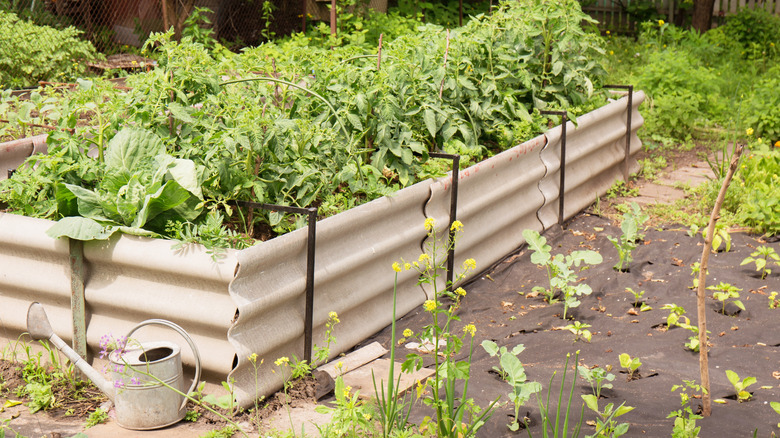
While galvanized metal garden beds are highly durable, there are a few things you should consider before committing to this material, especially if you want to grow edible plants or garden organically. As mentioned, galvanized metal has a zinc coating, and this mineral can leach into your soil. Zinc is naturally found in soil and is an essential micronutrient for plants. However, acidic soil can wear away the coating more quickly, potentially releasing more zinc into the soil than is safe.
Additionally, while scrap roofing metal turned into a raised garden bed might boost curb appeal, it can also compromise plant health. Metal doesn't allow the same airflow as wood or brick, so ventilation can be limited. Plus, if you tend to overwater your plants, excess water can pool in the bottom of the bed, potentially leaving roots waterlogged. Metal also heats up quickly in the sun and retains heat for a long time. That's a benefit if you live somewhere chilly where your plants may need extra warmth, but a major con if you're already fighting to keep your plants healthy during the dog days of summer.
Finally, there's the safety of using reclaimed metal to consider. Using scrap metal is a great way to cut costs and keep the material out of the landfill. It's arguably a very eco-friendly choice. However, if you don't know where the material came from, it's difficult to tell if it's been contaminated with anything toxic. You also need to choose metal sheets in good condition — that is, free from rust or deterioration — if you want your new-to-you raised garden bed to last.