

The One Type Of Weed You Should Never Remove With A Tool And The Solution To Try
We may receive a commission on purchases made from links.
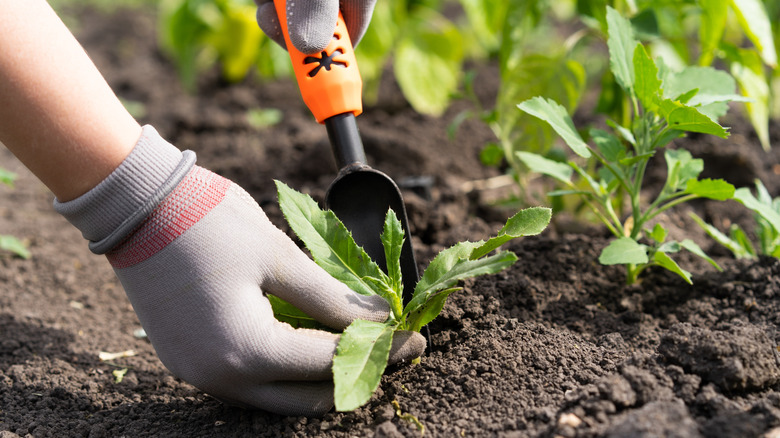
It's no secret that weeds are the bane of every gardener. In fact, you could say that if you don't have weeds, you don't have a garden. For many, pulling up the weeds using whatever tool you've taken a fancy to is the most environmentally friendly way to rid your garden beds, lawn, and driveway of weeds. The trouble is, they will keep coming back. It's even worse if you have a problem with one type of weed, which you should never remove with a tool if you really want to get on top of the issue. We're talking about creeping weeds like creeping Charlie, wild violets, clover, or wild strawberry.
These types of weeds spread around your yard through either underground rhizomes or above-ground stolons, and they can do so quite aggressively. The problem is, even if you pull them out by the roots, leaving even the smallest section in the ground means the weeds can continue to regrow, and before you know it, the weeds are running rampant over your garden again. While you could ditch toxic chemicals for eliminating weeds and eventually get almost on top of the problem by persistently removing these nuisance plants by hand, the more permanent solution is to resort to using a selective herbicide that contains triclopyr. This is going to be the best way to get rid of these types of weeds in your garden.
What is triclopyr and how does it work?
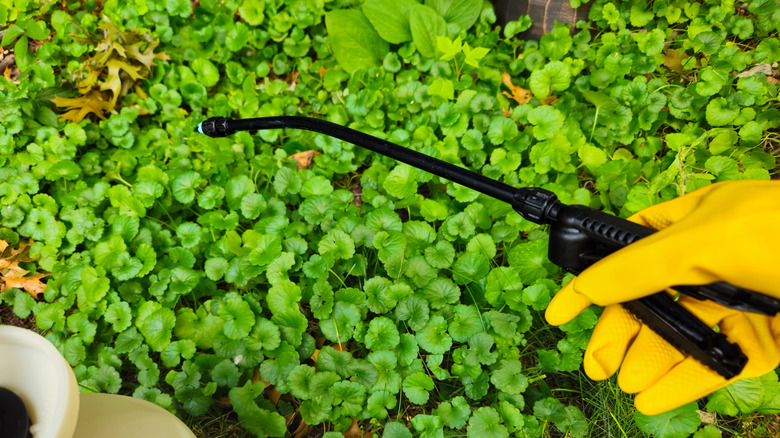
Triclopyr is a selective herbicide that's designed to kill many types of broadleaf weeds. It's systemic, which means that it is taken up by actively growing weeds. It mimics auxin, which is a plant growth hormone, and causes abnormal plant growth and eventual death. It will usually take a few weeks for affected weeds to die. Herbicides that contain this ingredient are often used commercially, with some available for home gardeners, such as Roundup Dual Action Weed and Grass Killer. You'll find that this is most likely one of the most effective ways to get rid of creeping Charlie in your yard.
When using any type of broadleaf herbicide to kill creeping weeds, it's important to remember that the product is likely to cause harm to the plants you want to keep if it inadvertently gets onto them. That's why you should always follow the directions on the label, only spray your weeds on a still day, and find a way to protect your treasured plants from any overspray. You could use a shielded sprayer or place a hood over the nozzle, which would allow you to better aim the herbicide at the weed. Using low pressure is also a good way to reduce drift because it increases the size of the individual droplets, allowing you to aim the weed killer directly. For even more intensive care, you could mix up the herbicide according to the directions and apply it to the weeds using a paintbrush or sponge. And remember: always make sure you wear protective gear such as gloves when handling herbicide products.