

The Aromatic Herb To Grow That Knocks Parsley Down A Peg
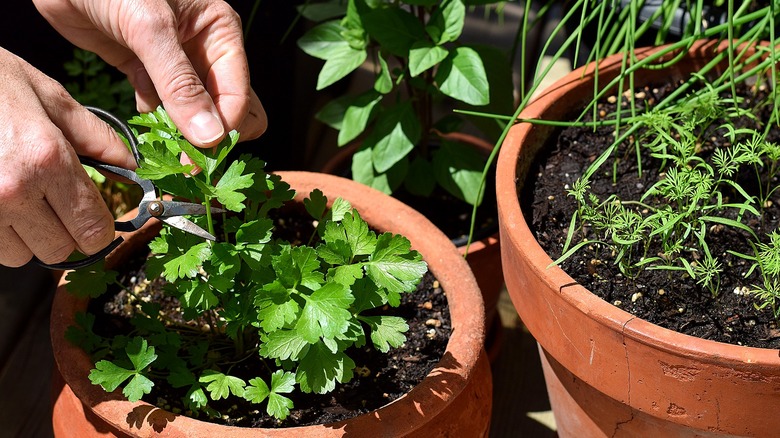
Chervil (Anthriscus cerefolium) is often compared to parsley in both appearance and taste. Yet chervil undeniably has a bit more "bite" to its flavor than mild-mannered parsley does. Imagine the freshness of parsley amped with the extra zing of anise, and you'll see why adding this culinary herb to your garden can do wonders for your cooking. It's truly one of the most underrated herbs to try planting either in the autumn or the following spring.
Chervil is an annual plant in most parts of the U.S. It grows about 12 to 24 inches tall, and up to 18 inches wide. The herb, which imparts something of the exotic taste of its native Middle East and Eastern European origins, has flavorful leaves and aromatic stems. Both can be used in a range of dishes, including salads, sauces, and soups. Some cooks also purposely let some of their chervil plants "bolt," or go to seed before harvest time, in order to use the seeds and flowers.
One of the fast-growing herbs to grow in your garden this year, chervil matures about two months after sowing, and comes in a few different "moods." Select the chervil cultivar, or cultivars, that most appeal to you. Like parsley, chervil comes in both flat and curly types. 'Crispum' is a curly variety with a mild taste. 'Plain chervil' is flat-leaved, as is 'Vertissimo.' The latter, however, is a more compact plant, with darker green leaves. 'Vertissimo' is also slower to bolt in hot weather.
Sow chervil every few weeks for a continuous harvest
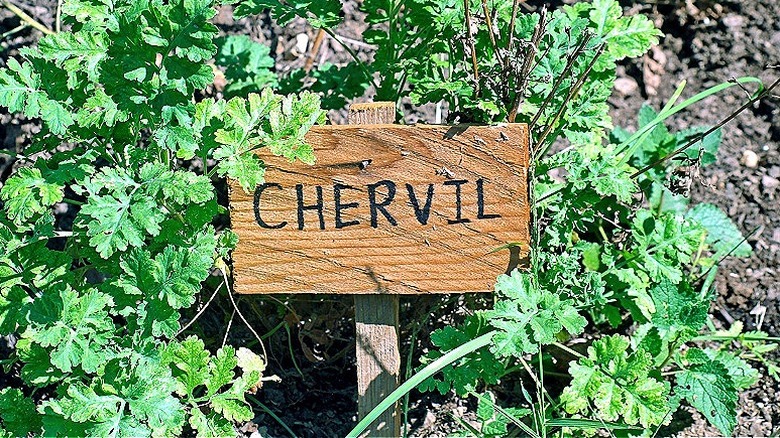
One of the most helpful tips for growing a thriving herb garden is to prepare the ground properly prior to establishing herb seeds and seedlings. Before planting chervil, take the time to ensure the soil is free of weeds, competing vegetation, and rocks. Meanwhile, chervil prefers cooler conditions (remember, warmer temperatures can cause it to bolt), so sow it in the spring or fall; when you sow in the fall, the seeds will be set to germinate next spring. Choose a spot where the plant will get partial shade during the day.
When you sow chervil, do so every three to four weeks; this can help ensure months of continual fresh leaves to harvest. The seeds themselves are long and narrow, making them relatively easy to place by hand. Rows should be 12 inches apart; account for 15 inches of space for the plants once they're grown. To germinate, the seeds will need light, so don't bury them in the soil. During this early growing period, the ground should remain moist. The soil should support good drainage.
Chervil doesn't transplant well (specifically, it's the aromatic herb's taproot that doesn't respond well to the relocation), which is why experts recommend direct sowing seeds in the ground. That said, seedlings can be started indoors; if your region requires this method, begin the process four weeks before you plan to relocate chervil outside, timed with the last frost in the area.
One more seed note for chervil, but it self-seeds. So, after its first growing season, chervil's self-seeding habit could save you from having to plant this annual again — by simply letting some seeds (but not all seeds) grow where they land after bolting.