

What Is The Best Time Of Year To Seal Your Driveway?
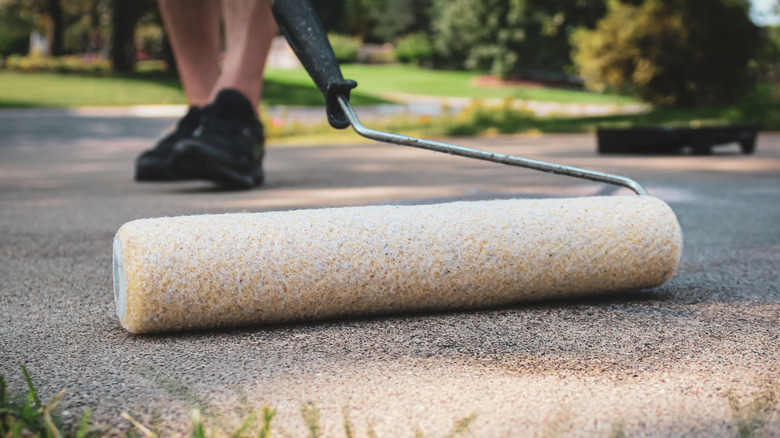
Driveways aren't quite as impenetrable as many of us expect them to be. Over time, wear and tear comes for just about every material — cracks form, water seeps in, and even the strongest surfaces start to crumble — but when it comes to driveways, sealants can provide an extra layer of protection that helps to significantly increase their lifespan and minimize the negative impacts of weather and vehicle traffic. Another major bonus? Sealants can give a worn-down driveway a fresh look without spending a fortune. Both asphalt and concrete driveways can benefit from these treatments, but if you want a smooth, long-lasting finish, it's important to get your timing right. Both types of sealant will set best when the weather is somewhat warm and dry, though specific timing will vary based on the sealant itself, when you installed the driveway, and the typical weather conditions in your area. For most locations, this means a moderate day in late spring or early fall.
Luckily, sealing your driveway isn't a particularly expensive or time consuming task, especially compared to performing a complete replacement. Sealants for concrete driveways just need to be rolled or sprayed on in a thin layer, similar to a coat of paint, while sealcoating asphalt typically involves using a squeegee to spread around a more rubber-like layer to top the material. Preparation is very important in both cases, however. After you've chosen a day to take on the project that won't ruin your results with rain or extreme temperatures, make sure you perform any necessary repairs, thoroughly clean the material, and give everything time to fully dry out before getting to work.
When to sealcoat an asphalt driveway
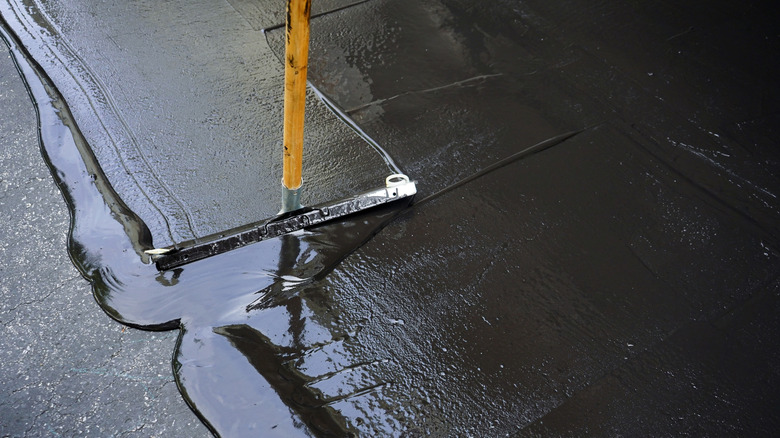
While asphalt driveways have some disadvantages, one of their major pros is how easy they are to repair and keep looking smooth. One of the most important steps in this process is applying a seal coat to minimize damage — small cracks and potholes can easily become bigger problems if left untreated, and water seeping into the material can lead to further issues as weather starts to fluctuate. Make sure to patch the surface, thoroughly clean the driveway, and perform any necessary repairs before laying down your sealcoat. It might make things look pretty, but a sealcoat over an unrepaired pothole is like putting a bandaid on a bullet hole.
The ideal weather to apply a sealcoat is when temperatures are above 50 degrees Fahrenheit, conditions are sunny, and there's no rain or high levels of humidity on the forecast for a few days. Late spring to early fall is recommended, but if you live somewhere with plentiful summer storms, you might have to dodge wet days in the forecast. This time frame can also be shifted if you have to deal with more extreme summer temperatures. Working in 100 degree conditions certainly isn't fun, but it can also cause issues for your asphalt — if temperatures are above 90 degrees, the extra-hot surface of the asphalt can cause the sealcoat to flash dry. This will leave you with a finish that looks cured on top but still has a layer of wet sealcoat underneath. As you can imagine, this situation is far from ideal, especially when you start to pull vehicles in and out of the driveway.
When to seal concrete driveways
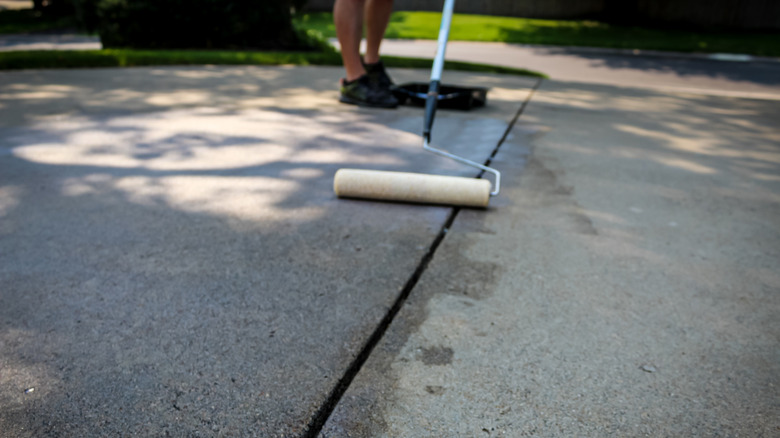
Sealing concrete driveways isn't quite as important as sealcoating asphalt, but it can still help to improve their lifespan, especially if you live somewhere that experiences frequent freeze-thaw cycles. Sealant protects the surface from moisture and minimizes the amount of water that's able to seep in, which helps to prevent frustrating cracking, but it also provides a barrier against UV damage and staining. There are a few different types of sealers you can use on concrete, but penetrating, acrylic, polyurethane, and polyaspartic sealers are the most common choices for outdoor use. Epoxy concrete sealers are popular, but they're typically used for indoor settings like garages.
Regardless of which product you choose, it's necessary to get your timing right. Concrete sealant should also be applied on a dry day above 50 degrees, so the window from late spring to early fall is a good time depending on your local weather. If your main goal is to protect against cracking during freezes, resist the urge to put off this task until after winter rolls around.
It's necessary to factor in the age of your concrete as well. While asphalt is quick to pour and sets up fairly rapidly, concrete takes some time — it might be able to be walked on a few days after pouring, but it's not ready to be treated quite yet. If you've just installed a new driveway, be sure to wait at least 28 days until you get to sealing.