

Not Mums: The Softer, Blue Flower That Adds Mosquito Protection To Your Fall Garden

Mosquitoes have a way of sapping all the fun out of your favorite outdoor activities. What's even more frustrating? Sometimes, no matter how much bug spray you apply or how many citronella candles you burn, it seems like they just won't leave you alone. In that case, it might be time to use a different combination of methods to keep mosquitoes away from your home. Having floss flower (Ageratum houstonianum) in your garden could come in handy, especially if you know how to take advantage of its mosquito-repelling compounds. Also known as blue billygoatweed or bluemink, this annual has cheery, fluffy flowers that look similar to pom-poms. Blue tends to be the most popular and recognizable hue, but you may also find it in other colors, including purple, pink, and white.
Its attractive look is only one part of its overall appeal. The plant contains several natural compounds such as chlorogenic and rosmarinic acid, phytol, and coumarin, which have the potential to repel mosquitoes and other insects. A 2022 study published in Scientific Reports found that an extract made from the flowers was extremely effective at repelling mosquitoes and killing larvae.
Keep in mind that while the extracted compounds can make your yard less inviting to mosquitoes, there's no guarantee that the plant itself will deter them completely. But still, if you spend lots of time in your garden, growing floss flower might be worth a try. If nothing else, you can at least enjoy the vibrant colors when they bloom from summer through fall. Floss flower can be grown almost anywhere in the United States, happily ranging from USDA Zone 2 through 11, but timing is key when sowing this plant.
Tips for planting and caring for floss flower
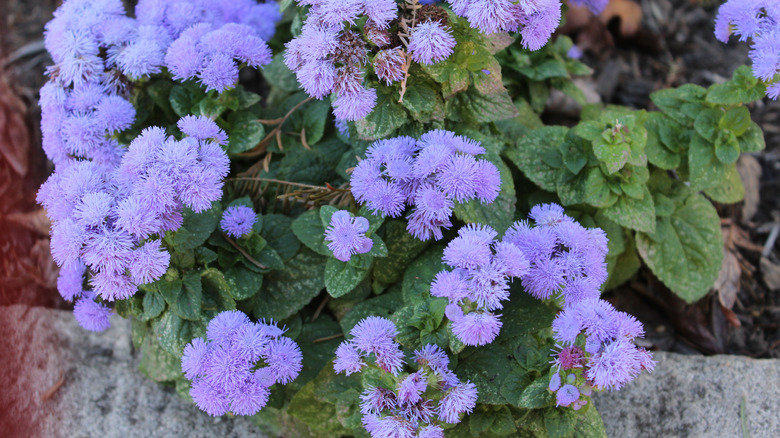
To enjoy floss flower in your fall garden, it's best to plan ahead — almost a whole year ahead. When growing these plants from seed, they should be started indoors in late winter, a couple of months or so before the last frost of the season. Another option is to sow them directly in your garden after the final frost in early spring. Either way, you'll want to avoid exposing floss flower to the extreme cold. Don't bury the seeds into the soil; they need light to germinate.
These plants like to get full sun — or at least six hours of direct sunlight daily. However, they can also tolerate partial sun, which means two-to-six hours of sunshine per day. Along with proper sunlight, floss flowers also like rich, well-drained soil. There are plenty of ways to use them, too, including in garden beds, containers, and borders. Plus, floss flower will attract butterflies and bees, so they're a beautiful way to bring more pollinators into your garden.
With that said, there are some things to watch out for as you're caring for your floss flowers. It should be noted that rubbing the plant or its extracts on your skin may cause irritation, so wear gloves when handling. Pests and disease aren't too much of a concern, but spider mites can sometimes pose problems. You'll also want to keep an eye out for powdery mildew, a fungal disease that can affect the leaves and other above-ground parts of some plants. To protect your floss flowers, it's best to avoid overhead watering and leave plenty of space between them to promote proper airflow.