

They Were Big In The '60s — Now It's The Valuable Cookie Jar Collectors Dream Of Finding
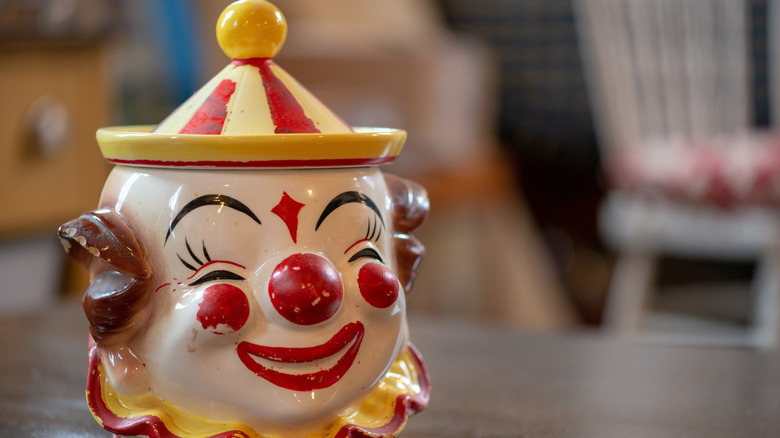
In the 1960s, cookie jars with playful motifs were a popular fixture in American kitchen decor. There's something nostalgic about them — even if you didn't grow up with a dedicated countertop vessel filled with delectable after-school treats, the idea of cookie jars probably looms large in your awareness. It lives on in pop culture references, stories, and songs about honesty, fairness and a reward for a hard day's work of play or school.
As there's nothing new under the sun, the cookie jar and other nostalgic home decor is experiencing a resurgence as maximalist aesthetics and grandmillennial home design embrace curated, wistful chic. Today's collectors are always on the hunt for vintage jars, and one stands out among the rest. If you come across the McCoy Coalby Black Cat Cookie Jar, it's best to snap it up; this American-made treasure is a rare and valuable one. The cheeky black cat design is especially sought-after, partly because of the McCoy brand's prestige, but primarily for the rarity of the mold from which it was made and its limited one-year production run in the late 1960s. According to WorthPoint, the jar's value is estimated at $350.
How to spot a real McCoy Coalby black cat cookie jar
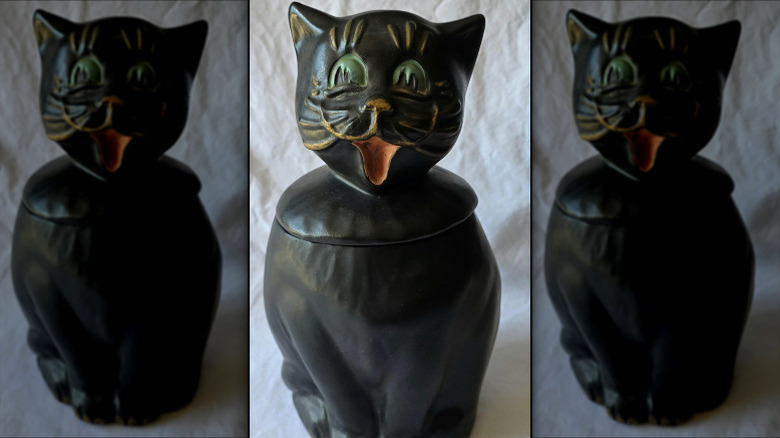
In the 1950s, the now-defunct Nelson McCoy Pottery Company was in its heyday, producing 10 million items each year in its Ohio facility. This wide circulation means some McCoy items are fairly common to find secondhand today, but that doesn't apply to the Coalby black cat cookie jar, which was only produced from 1967 to 1968. While you may still be able to spot "real McCoys" at thrift shops, antique stores, and garage sales, beware of fakes.
If you spot a Coalby jar, first, flip the jar and look for the most common mark: an incised (scratched into the clay) "USA" and mold number 207 on the bottom. The piece should be 11 inches tall with a weighted feel, and the base should show an unglazed clay ring, which is a remnant of kiln-firing. The glaze should be muted, not shiny, and the small details — like Coalby's golden and whiskers and eyebrows —should be in sharp, raised relief. Imperfections will bring the price down, but if perfection isn't your goal, looking for one in non-mint condition may help with affordability. If you know what to look for and you keep an eye out for this vintage pottery, you just may be lucky enough to find one secondhand.