

Don't Toss Old Pallets — Reuse Them To Make An Incredibly Easy-To-Build Herb Garden
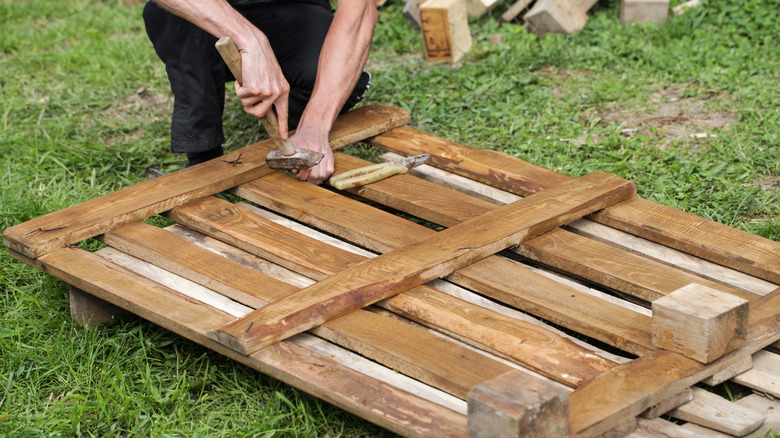
Are you looking for a creative way to upcycle wood pallets for your garden? There's a beginner-friendly idea that works well in the smallest of outdoor spaces. You can convert an old pallet into a thriving vertical herb garden with minimal tools and supplies in a spare afternoon. Bonus: Since you're using plain ol' pallets, you can decorate your new planter to match your existing exterior decor. Once you're done with this DIY conversion, you'll have nine pockets that are helpful for growing a thriving herb garden as soon as you fill them with soil.
Look for pallets stamped with the letters HT (heat-treated) or KD (kiln-dried). Neither of these processes use chemicals, making them safe for use in gardens. Pallets marked DB are safe to use for lumber but not necessarily for gardens, while pallets stamped with the letters MB have been treated with methyl bromide, a pesticide that's toxic to humans. Avoid these pallets at all costs. You don't want that chemical seeping into the soil your herbs are growing in. You can get pallets from a friend in construction, ask a local warehouse for them for free, or purchase them from a company like BASCO for about $24 each.
You'll also need some landscape fabric, a nail puller, and either a staple gun or U-shaped nails and a hammer. Start with the easiest herbs to grow from seed that are perfect for beginner gardeners and appreciated by busy, experienced gardeners, such as mint, parsley, oregano, and dill. Some herbs sprout from seed in just a handful of weeks, including basil, dill, chives, and lemon balm. Or, if you prefer instant gratification, purchase herbs from your local garden store.
Transform a pallet into a vertical herb garden
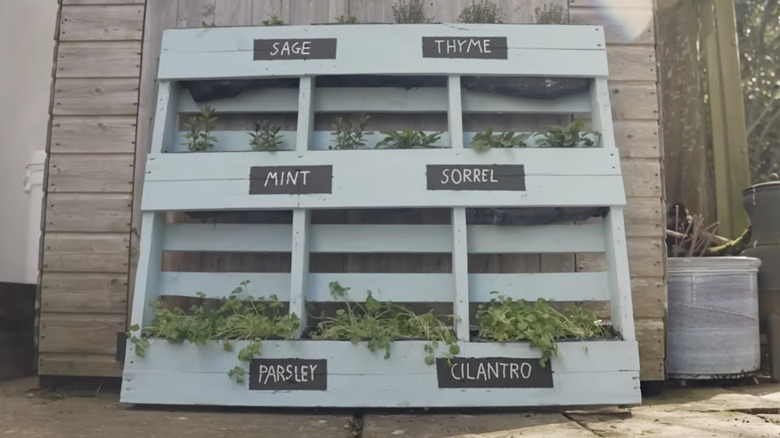
Remove every other horizontal plank from the pallet and reposition them to create three rows of double-depth planter pockets. Use your nail puller to remove protruding nails, or hammer them into the wood. Cut landscape fabric to fit the pockets and use your staple gun or U-shaped nails to attach it to the inside of the pockets. It will keep the soil in place while allowing drainage. If there's any overhanging fabric, tuck it into the spaces between the pallet boards. As mentioned, you should end up with nine pockets. Mount your completed pallet garden to an outdoor wall using screws, or lean it against the wall if you prefer. Bury the base of the pallet garden a few inches into the ground or hold it in place with rope. Take sunlight and water needs into consideration when deciding on placement.
To personalize this wall-mounted pallet herb garden, sand the wood smooth and brush or spray on a non-toxic, VOC-free exterior paint in a single color or a rainbow of hues. Add a rectangle of chalkboard paint to each pocket so you can write the name of the herb growing there. If you replace the plant, simply wipe off the name with a rag soaked in a 70:30 water-to-white-vinegar solution. If you have little gardeners at home, give them a row all to themselves. They could choose a color to paint it and make plant labels from popsicle sticks. Potted herbs generally need watering more often than those in garden beds because the shallow soil dries out quickly. If you're worried about watering, choose herbs with woody stems, like rosemary, thyme, and oregano, which are more drought-tolerant.