

Don't Use Concrete Blocks: The Stone For Retaining Walls That Has Superior Erosion Control
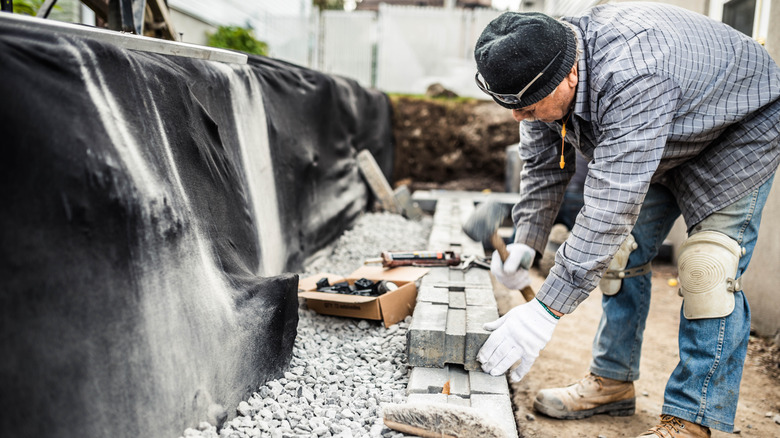
Retaining walls aren't something you want to mess around with. These structures are very important, especially if you're dealing with a sloped lawn, and they can play a major role in protecting your outdoor landscape. They help to create even areas for planting, can be used to more effectively direct water away from your home, and, if you haven't tried the living solution that prevents erosion in a sloped yard, act as your first line of defense against displaced soil. Supporting tons of dirt and undergoing consistent pressure for years on end is no simple task, and while concrete blocks are a common pick for the job, they're not always the best option. Want an upgrade that's both sturdy and stylish? Consider opting for greywacke sandstone.
Concrete is certainly a useful and strong material, but it has its cons. It can experience damage and cracking during freeze-thaw cycles and often wears down over time, especially with consistent use. Another major detractor is the appearance — there's nothing wrong with concrete per se, but it's not all that interesting, either. Because it's a fairly durable and affordable material, it can be found absolutely everywhere, which can become a major note on the cons list if you're looking for landscaping ideas that will liven up your yard. If you're using your retaining wall to help minimize erosion, plan to have the design in place for decades, and care about the appearance of your outdoor space long-term, a natural stone alternative like greywacke sandstone could be worth the higher upfront investment.
What is greywacke sandstone?
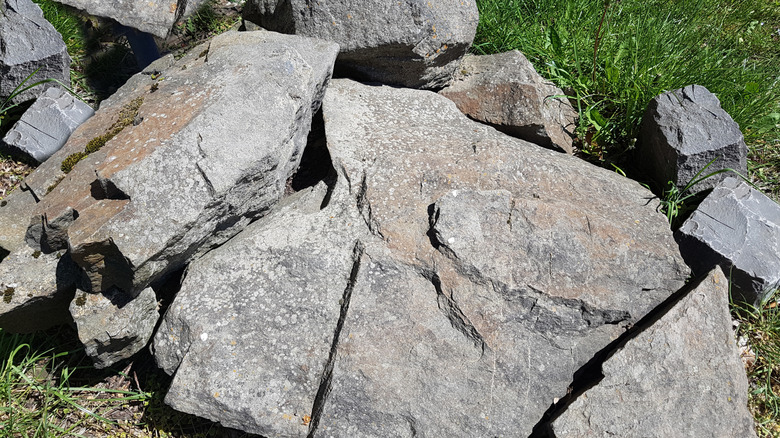
Greywacke sandstone is old — and we mean really old. Deposits of this material formed 440 million years ago, and it has a long history of usage in construction and art, even popping up in the form of ancient Egyptian artifacts. It's an incredibly durable material that doesn't see much weathering over time, even when exposed to high levels of pressure or changes in temperature. It's also quite pretty — with an overall gray color that includes natural sediment variations and even quart veining. It also has a similar, neutral palette to concrete but provides much more textural interest. All of these characteristics make it a great choice for an erosion-control retaining wall, especially if you need the structure to last for decades, but there's one major con to consider, too.
The main drawback of greywacke sandstone is the cost. Exact pricing will depend on your location, the availability of greywacke in your area, and how much material you'll need, but as an average figure, you can expect to spend between $30 to $50 per square foot on a natural stone retaining wall (with installation). Concrete block walls, on the other hand, come in at around $20 to $35. Between the two, greywacke should last longer and provide better resistance to erosion, meaning a decreased spend on repairs down the line. If you're planning to sell your home soon or are working with a tighter budget, however, this upfront investment might not feel like it's worth it.