

What Causes An Uneven Flame On A Gas Stove?
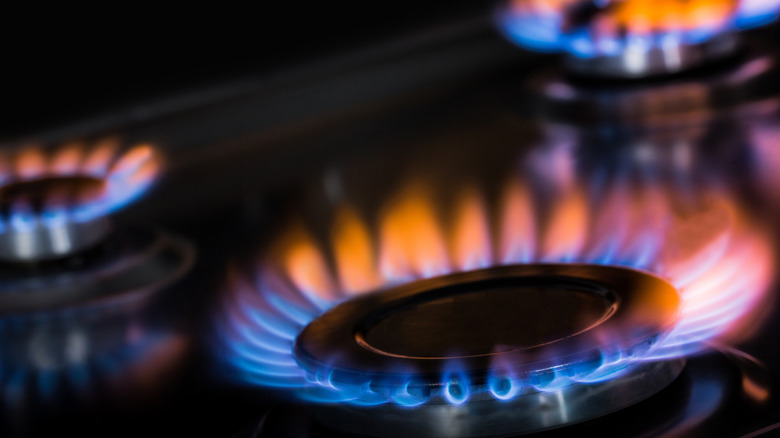
According to 2025 market research from Fotile America, about 47 million American households own gas stoves, representing about 38%. A natural gas stove delivers precise temperature control, instant changes in heat generation, cost efficiency during operation, and evenly distributed cooking patterns. As long as it's running properly, that is. If you own an older gas stove, you might wonder whether your gas stove is going bad — and one potentially problematic sign is an uneven flame.
While some causes of an uneven flame are easily fixable — such as incorrect assembly of the burner caps or heads or clogs in the unit's flame holes or heads — some burners have uneven flames because of the way they're designed. Uneven flames are sometimes an intentional design feature in some gas stoves. However, an uneven flame can also be undesirable for several reasons, such as wasting energy, damaging the appliance, or causing soot to build up on the surface.
Ultimately, an uneven flame on your gas stove could lead to problems with uneven cooking. It may even lead to higher levels of carbon monoxide. It can be helpful to know which cases of uneven flames are cause for concern and how to avoid or mitigate them.
Situations where you can ignore an uneven gas stove flame
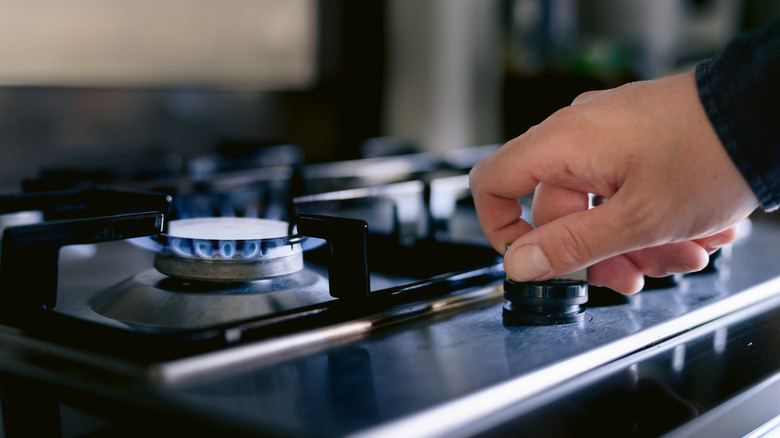
In some natural gas stoves, an oddly colored or shorter flame in one area of the burner may not be a concern. For example, some designs use an uneven flame on purpose to reduce the risk of a gust of air from a nearby open window or door extinguishing it. The same burners may also use this asymmetrical design to improve cooking results at high heat. Specifically, some GE stoves call this design the Center Oval Burner, while some Whirlpool designs call it the Power Boil Burner. Before calling for service for your uneven gas stove flame, check the user manual of your specific gas range model to see if you have one of these specialty burners.
If you have a gas stove burner with three rings, often called a tri-ring design, the rings may appear to have an uneven flame height. This design ensures less gas reaches the inner ring, which allows more stability for cooking. While the flame may appear uneven, this design isn't actually causing a performance issue. In other words, it's more of a problem with the flame's appearance than its performance. You may also have an uneven flame in the area of the burner near the igniter, which is not a reason for concern. This may appear as a gap in the ring of flame near the igniter, as it blocks some of the flame.
If you've checked your user manual and confirmed that the uneven flame on your gas stove is, in fact, a cause for concern and not just a design element, don't panic. You may just need to clean the burner caps.
How adjusting the burner caps or heads on a gas stove helps
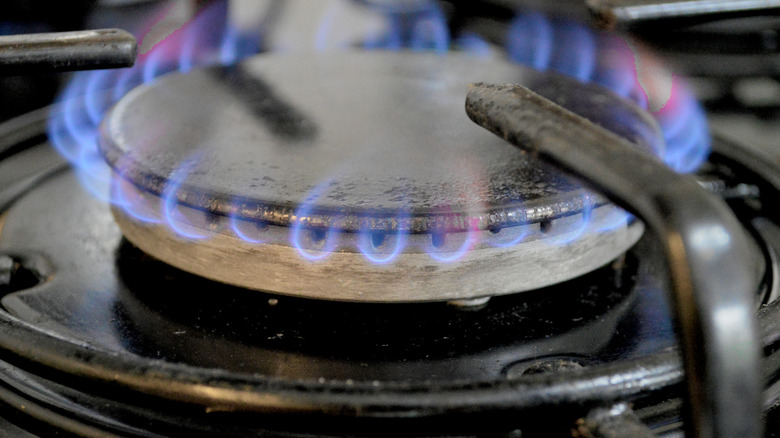
A common reason you have uneven flames on your gas stove is because of the burner cap. For example, if someone replaced an old unit with the wrong-size burner cap, or didn't install it to fit properly on the base, you may notice uneven flames. This round piece sits flat over the stove's burner head, ensuring the even movement of gas on all sides. The cap should fit tightly atop the base, or you risk having uneven flames. Burner caps can wear out, so you should inspect them for rust formation, cracks, or warped materials if you see uneven flame distribution.
A dirty burner head can also cause an uneven flame. To clean the gas stove burner and head, allow the stove to cool, unplug it, and turn off the gas. Then remove the head and let it soak in a bowl of dish soap and warm water for 30 minutes. Use a soft brush or sponge to wipe away any grime, soot, or debris that could be blocking the proper flow of natural gas. Rinse the piece to remove all debris and dry it with a towel to remove any remaining moisture before reassembling. The head should have a tiny hole that lines up with a pin in the base for secure installation.
If the flame is still burning unevenly on your gas stove after cleaning and reinstalling the burner, avoid using it until a professional can come in to assess the situation. Safety comes first, so take note of what you should do if there is a gas leak in your home.