

Remove Moss And Prevent Future Weed Growth On Your Asphalt Driveway With A Kitchen Staple
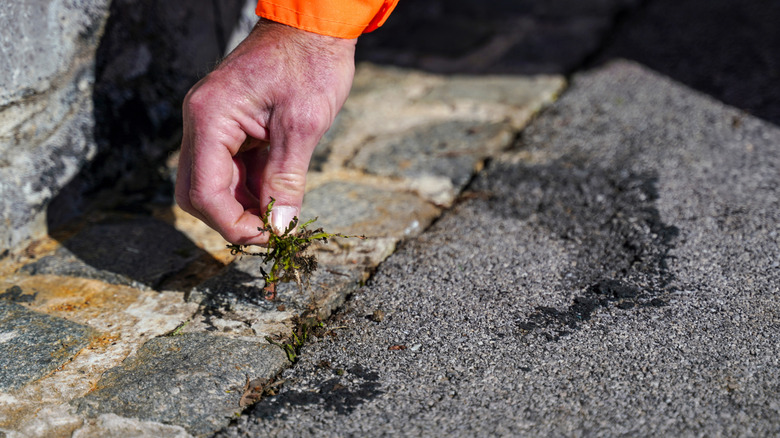
If you want to make your driveway look new again without resurfacing it or bringing out powerful tools, your best option is to give it a good clean. This step should already be part of your normal maintenance schedule as certain spills can actually break down the binders in your asphalt and lead to major damage, but the primary concern here is with engine oil, gasoline, and de-icing agents. An extra dose of green, whether it's from moss or weed growth, shouldn't be a cause for major concern, but it can certainly detract from the overall appearance of your outdoor space. Boost your curb appeal on a budget and give your asphalt some TLC with a simple cleaning solution that can stop unwanted growth in its tracks: vinegar and water.
While you should always apply chemicals to your asphalt with caution, a diluted vinegar and water mixture is generally considered safe to use so long as you rinse it away once it has done its magic. Many of the other recommended solutions to get rid of moss, however, aren't the best for the environment. Bleach treatments can kill grass and other plants if they're not heavily diluted, while commercial moss killers can result in runoff that's incredibly harmful to aquatic creatures. Vinegar can be harmful in large concentrations, but comparatively, its ability to naturally decompose without leaving behind residue makes it a much more eco-friendly option for this outdoor task. There's a reason vinegar is such a useful cleaning tool, and while it's often recommended for chores around the house, its effectiveness doesn't stop once you head outside.
How to use vinegar to clean moss off of your asphalt driveway
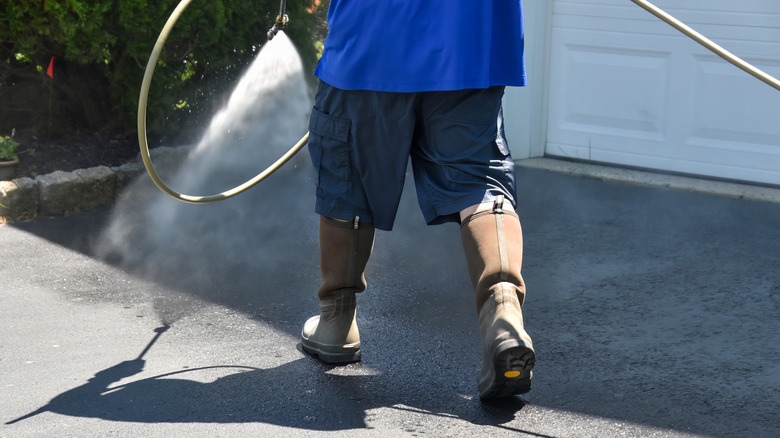
Vinegar might be considered pretty safe, but that doesn't mean that you should go in with it straight. Even if you're dealing with particularly stubborn moss, you should only used a 1 to 1 solution of vinegar and water. Mix it up in a spray bottle, then apply it to the areas of your driveway that have taken on a green tinge. Let the solution sit for about 15 to 20 minutes, then rinse it away with your hose — if you want to amp up your cleaning power, you can also choose to break out the pressure washer and use it on a low setting for this step in the process. After a few hours, come back out and start to scrub the surface of the driveway in these mossy areas with a stiff brush. Give it another rinse for good measure, and you should notice an improvement. If it's not completely gone yet, you can repeat this process several more times.
This cleaning solution works because the acetic acid found in vinegar can kill the moss on your pavers, loosening its grip, making it easier to remove, and giving you a bit of a grace period before it comes back. The same acid can also kill weeds, quickly dehydrating them, but this is more of a pleasant side effect than a recommended treatment. The type of vinegar recommended to kill large or stubborn weeds is horticultural vinegar, not typical household vinegar. An increased amount of acetic acid present in this stronger vinegar can cause irritation to the skin and eyes and should be used with caution.