

9 Brands Owned By The Company Behind WD-40
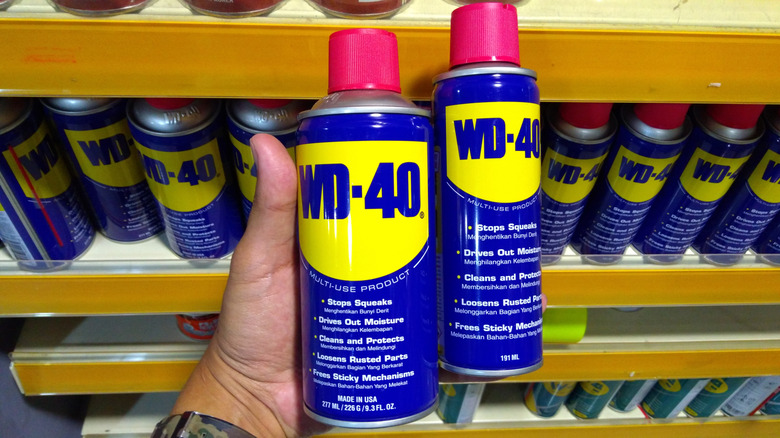
The WD-40 Company has been publicly listed since 1973. Its eponymous product remains its most iconic offering, but the company also owns a few additional brands, whose products are mainly sold in foreign markets. However, you can easily purchase most of these products in the U.S. The products have a range of household uses, from deodorizing your carpet to cleaning your toilet. Some of the products are other types of oil that work similarly to WD-40. Among them are Lava, No Vac, X-14, 2000 Flushes, and GT85 — to name just a few.
The WD-40 Company started out in 1953 as the Rocket Chemical Company in San Diego, California. The area had a substantial presence of military contractors, fueled by Cold War expansion of the defense industry. The Rocket Chemical Company worked closely with the defense industry to supply formulas that could protect missiles from corrosion. Originally contracted to develop a formula for coating the outside of the Atlas missile, the Rocket Chemical Company created WD-40, short for Water Displacement, 40th Formula. The product wasn't sold to regular consumers until 1958, and its formula remains a trade secret rather than being patented. It's part of the "untold truth" of WD-40.
The product was such a success that Rocket Chemical changed its name to WD-40 in 1969. Its domestic uses have made it a household name. You can probably find a can on a workshop shelf in many American homes because it's so good at preventing rust, loosening bolts, and fixing squeaky hinges. This garage essential even doubles as a powerful ant-repellent. Simply spray it on ant paths and the entrances to their nests.
Solvol
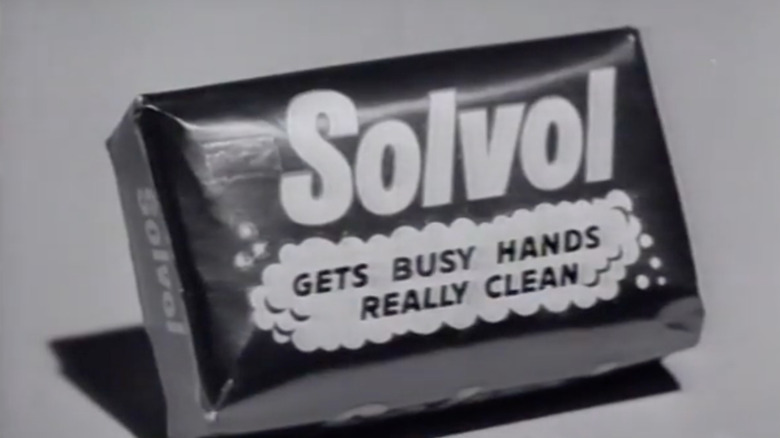
If you've ever lived in Australia, you're likely familiar with Solvol, a brand that WD-40 acquired in 2000. During the mid-20th century, black-and-white commercials showed people washing their hands with a bar of soap while whistling along to a catchy jingle. The soap's packaging featured the now-iconic tagline, "Get Busy Hands Really Clean." In early 2022, after 105 years in business, the company announced that it would discontinue the soap bars and only sell liquid soap due to production issues. A new formula containing pumice and essential oils was introduced in bar form in 2024.
Lava
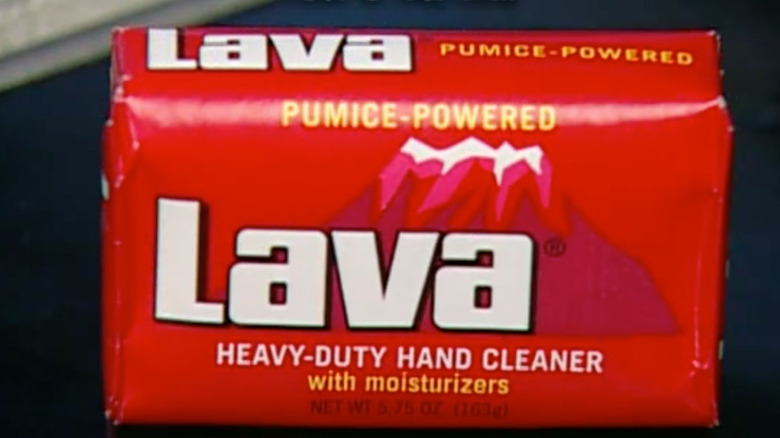
Lava is advertised as a heavy-duty hand cleaner for industry. The bars contain volcanic pumice, which influenced the brand's name and the volcano on the packaging. Lava soap is ideal for working environments where your hands regularly get covered in sticky substances — if, for example, you're an auto mechanic. The brand's tagline — "Go Ahead. Get Into It." — reinforces its reputation for cleaning up big messes. The William Waltke Company created the product in St. Louis, Missouri, in 1983, when the city was a major industrial center at the time, and WD-40 purchased the brand in 1999.
Spot Shot
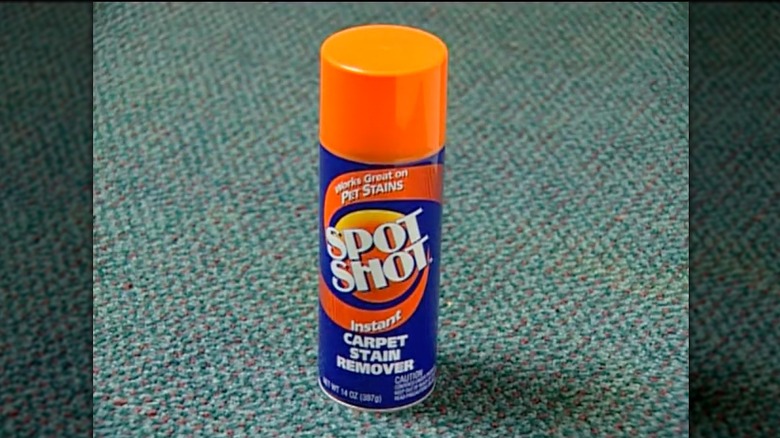
Like the WD-40 product, Spot Shot comes in an aerosol can. This American-made carpet cleaning product first hit shelves in 1983, and by 1989, it was being sold at Walmart stores across the country. WD-40 bought the company in 2002. In 2008, the formula was changed to make the product better for the environment. A pet-safe formula was also introduced. If you're a fan of WD-40, why not add this sister product to your list of best ways to clean carpets if you're a pet owner?
No Vac
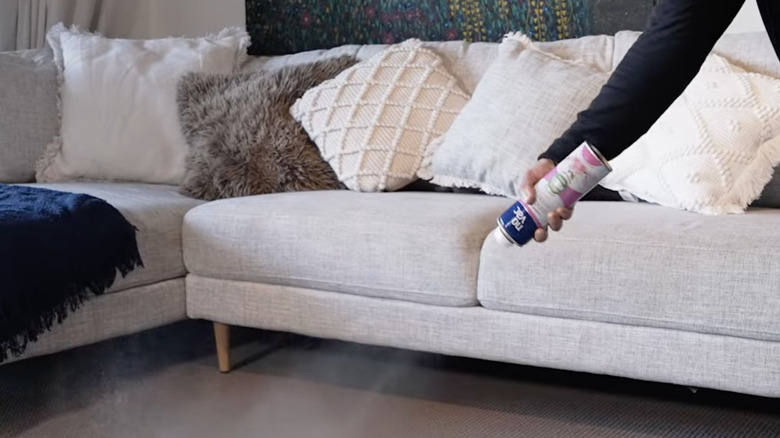
Unlike the other brands mentioned, No Vac wasn't acquired by WD-40. Instead, it's one of the company's homegrown products. It was introduced to the consumer market in 2002 in convenient aerosol form. Today, you can still use No Vac to remove odors and stains from your carpets, soft furnishings, and car upholstery. While powder deodorizers have to be vacuumed up after application, you can simply spray the foam on your rug and leave it for five minutes. Consider adding it to your household cleaning stash alongside your other favorite ways to clean and revive your carpet.
Carpet Fresh
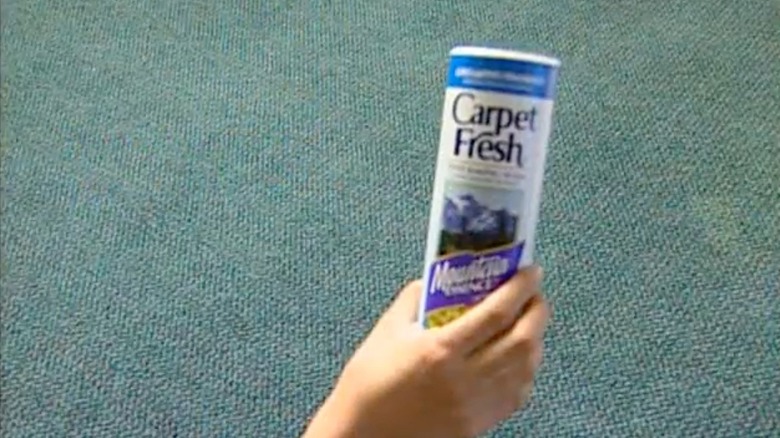
Carpet Fresh is sold in a cylinder that resembles a Pringles can. Simply sprinkle the powder on your carpet, let it sit for five minutes, and vacuum it up. The product comes in various scents. There's also a sprayable version of Carpet Fresh that's very similar to No Vac — you spray the foam on your carpet and allow it to dry. Just be aware that neither of these products remove stains. Carpet Fresh was acquired by WD-40 when it bought Global Household Brands in 2001.
X-14
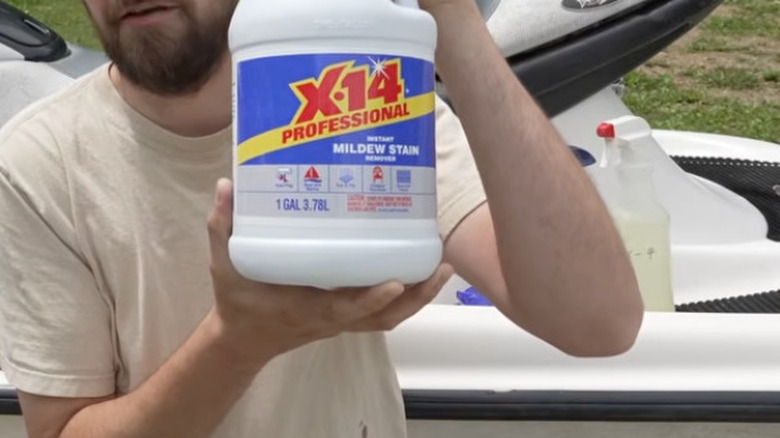
In 2001, WD-40 acquired a bathroom cleaner called X-14, which was developed in the 1980s. While all the X-14 products are designed to get rid of unwanted odors, only the X-14 Bleach Automatic Toilet Bowl Cleaner, is proven to kill 99.9% of bacteria in toilet bowls. You can purchases regular bleach tablets or tablets that tint toilet water blue. The product is designed to save homeowners time scrubbing the inside of their toilets. Can't find this product locally? You can also clean and disinfect your toilet with a lesser-known oil: tea tree oil.
2000 Flushes
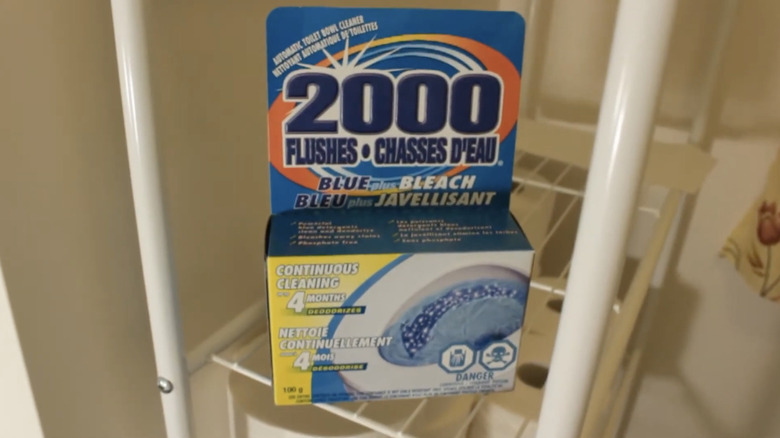
2000 Flushes is similar to X-14 — it keeps toilets clean and is available in the U.S. X-14 was designed not only to sanitize the toilet bowl but also to add fragrance, while 2000 Flushes has a subtle scent. 2000 Flushes comes in Blue Plus Bleach, which turns the water blue, and Blue Plus Detergents, which tackles bowl stains. WD-40 acquired 2000 Flushes when it purchased Global Household Brands. These disinfectant tablets may kill germs, but they're unlikely to eliminate them entirely, so knowing all the steps to cleaning your toilet the right way is essential.
3-in-One
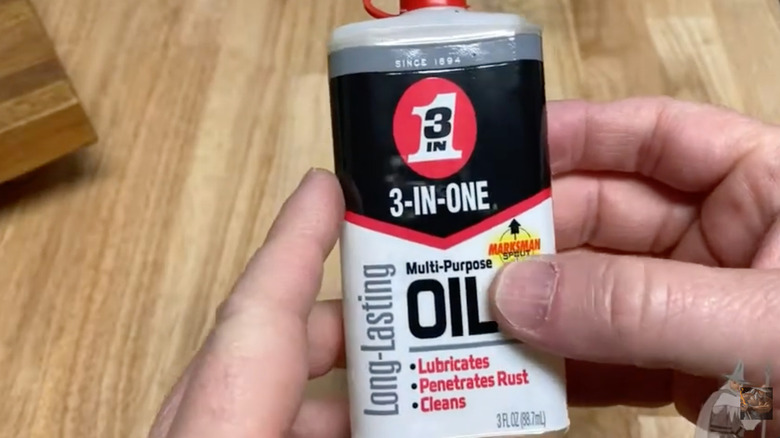
This popular household product originated in New Jersey in 1894, when George W. Cole needed something to lubricate his bicycle. He developed the original formula for 3-in-One, which is designed to clean, lubricate, and protect metal. The oil drips from the spout when you tilt the can, allowing you to apply it to hard-to-reach places like gears or door hinges. WD-40, on the other hand, has a large spray nozzle. The brand has had multiple owners since its inception; it changed hands from Reckitt & Coleman to WD-40 in 1995.
GT85
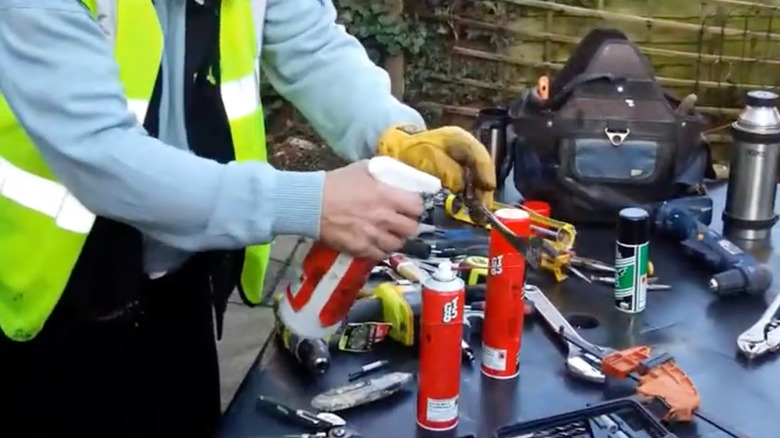
Like WD-40, GT85 is an oil-based lubricant that comes in a spray can. It's useful for coating a metal surface with oil rather than applying it to smaller areas. The product was developed in the 1980s by John Chapman, with the help of an ex-Royal Air Force chemist, to lubricate and protect parts on race cars. You can use it to loosen rusty bolts, remove rust from antiques, or protect your hubcaps from corrosion. WD-40 purchased the company in 2014 and sells the product primarily in the U.K.