

No More Solid Concrete: The Eco-Friendly Patio Alternative That Can Raise Home Value
We may receive a commission on purchases made from links.
Wondering which patio and paver trends are taking over backyards right now? Perhaps unsurprisingly, natural stone paving remains a popular choice. Natural stone offers a level of durability and style that's not easily rivalled. The curb-appeal-enhancing material may even increase the resale value of your property. Installing a natural stone patio or using the material throughout your landscaping gives your property a high-end feel compared to concrete, which is more affordable but arguably less aesthetically appealing. There are several types of natural stone to choose from when creating a patio, but bluestone pavers are among the most popular. Though it's not as tough as granite, it will resist cracking. Bluestone is quarried in the northeastern U.S.
You can choose sandstone from Pennsylvanian bluestone, which is a type of sandstone, or limestone from Shenandoah bluestone, which is a type of limestone. The stone most commonly ranges from blue to gray, making it stand out from most other types of natural stone, which tend to have more earthy tones. You can, however, find bluestone pavers in brown, tan, charcoal, and black. What's more, natural bluestone pavers are likely more environmentally friendly than their concrete counterparts. Their manufacture requires less energy and generates fewer greenhouse gases. Manufacturers split the quarried sedimentary rock along its natural layers, creating bluestone's unique surface texture, or cut it to specific shapes and sizes, depending on its intended use.
How to use bluestone pavers in your landscaping
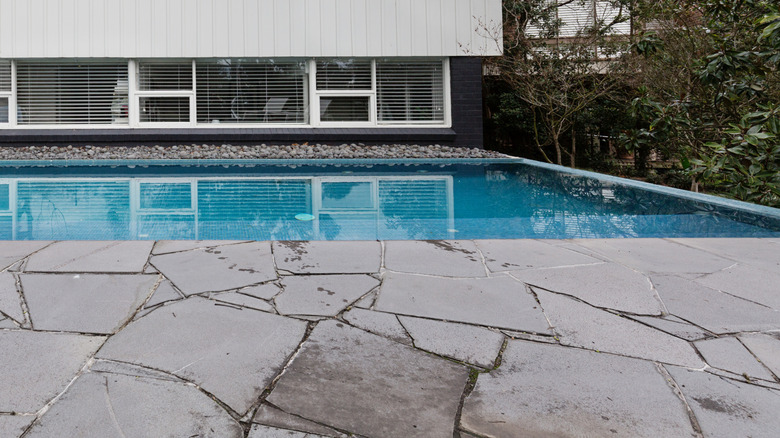
Bluestone patio pavers are a popular choice in areas with extreme temperature fluctuations, as they rarely fracture during freeze-and-thaw cycles. Bluestone requires almost no maintenance, giving you more time to enjoy your patio. It just needs regular sweeping and the occasional scrub with an outdoor cleaner. Plus, the rugged surface of bluestone pavers makes them naturally slip-resistant and safer in wet weather.
Perhaps the biggest advantage of bluestone is its effortlessly beautiful appearance. Each paver is different in shape, color, and pattern. Concrete pavers, on the other hand, usually look identical. If you want to simplify installation, choose neat square or rectangular bluestone pavers, or pick irregular pavers and put your patio together like a puzzle.
Another advantage of bluestone patio pavers is that you can use them throughout your landscaping. For example, they're one of the best paver stones to use for your driveway, as long as you choose thick pavers and have them installed professionally. Bluestone looks great as the flooring in an outdoor kitchen, too. You can even extend bluestone pavers indoors to maintain consistency between your backyard and open-plan living areas.
Reasons to consider skipping bluestone patio pavers
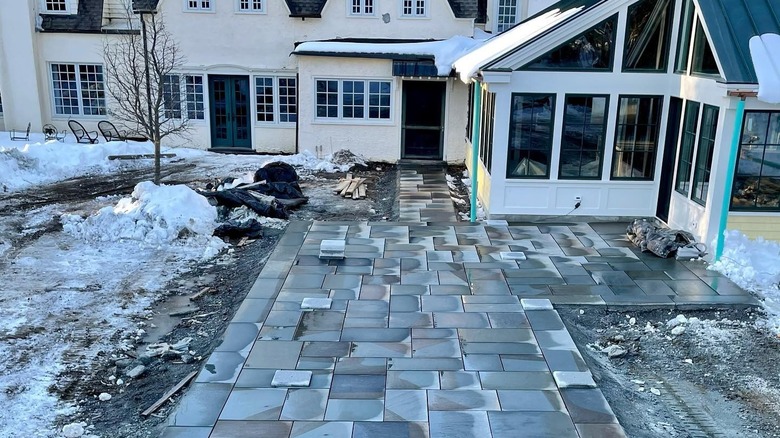
If you're considering a bluestone patio, don't look past these essential details. The material isn't without its downsides. Dark blue and gray natural stone pavers absorb sunlight and can become hot to the touch on sunny days. If you live in an area with long summers or don't have a patio cover, this may be a problem. Installing a UV-blocking ShadeMart Beige Rectangle Shade Sail could be an affordable solution.
What's more, the two types of bluestone suit different climates. Pennsylvania bluestone resists weathering better, so it holds its color longer. t also holds up better to freeze-thaw cycles. Shenandoah bluestone, which primarily comes from quarries in Virginia, will eventually fade to a light gray if exposed to the elements. It's made of limestone, so it's more porous than Pennsylvanian bluestone, and can get damaged during freezes.
While it's possible to install a bluestone patio yourself, it's a challenging material to work with, so professional installation is often required. If you get your bluestone patio professionally installed, you can expect to pay between $15 and $31 per square foot. By comparison, a professionally installed concrete paver patio costs $10 to $17 per square foot. If you live near a bluestone quarry, the pavers may be more affordable due to shorter transport distances.