

What To Do If The Brown Recluse Spider In Your Yard Or Home Bites You
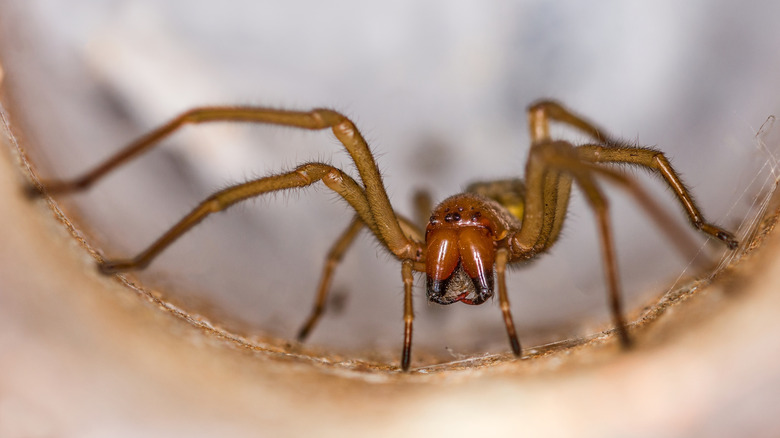
Finding a brown recluse spider in your yard or home can make even the most hardy of homeowners shudder — after all, it is one spider you absolutely do not want to find around your property. Knowing what attracts brown recluse spiders to your house can help you prevent unwanted encounters, but if you do cross paths with one, quick action is key. The bite of this creepy critter doesn't immediately hurt at all — it can actually take up to eight hours to start to feel the effects of a puncture. Unlike other spiders that can just cause minor irritation, the brown recluse bite can potentially cause tissue damage.
If you spot a brown recluse and suspect you've been bitten, it's best to trap it or use a shoe or other object to kill it — never use your own body to smush it. Either way, you'll want to put it in some sort of container, just in case a medical professional needs to see it for identification. After you've taken care of the spider, give yourself a once-over to check for bite marks. You'll always want to treat a brown recluse bite, according to WebMD, but the route of treatment will be based on your symptoms. Not every brown recluse bite needs to be a reason to head to the emergency room — a minimally symptomatic bite can be treated right at home, but if the symptoms worsen or if a vulnerable person gets bit, it's time to go seek treatment.
Regardless of whether you're treating your bite at home or going straight to see a medical professional, it's always a good idea to make sure your tetanus shot is up to date. Even though the brown recluse's fangs are tiny, since a bite breaks the skin barrier, there is still a risk of contracting tetanus.
Treating a brown recluse bite at home
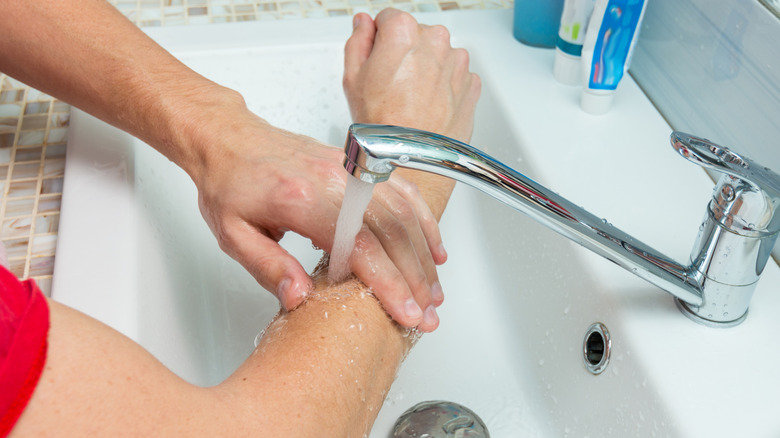
The initial brown recluse bite might only feel like a mild pinprick, so knowing how to identify a spider bite early can help you act fast. You'll want to inspect your body for localized redness to start. If you see a bite mark, wash the area thoroughly with mild soap and lukewarm water — this helps to reduce infection risks. After patting it dry, grab an ice pack and wrap it in a towel. Place it on the bite for 10 minutes at a time, repeating as needed to help minimize swelling. If you got bit on your arm or leg, keep it elevated above your heart level as much as possible to help combat swelling.
The Cleveland Clinic notes that, while the initial symptoms might include skin pain or swelling, you might have a burning sensation or a wound that changes color three or so hours after the time of the bite. In minor bites, the pain you first felt should disappear after about three or so days, with the wound fully healing within three weeks. You might also notice local bruising around the puncture site, and general body aches can sometimes occur, too, as your body reacts.
You can take an over-the-counter pain reliever if necessary. If you have mild itching, you can use a topical anti-itch cream to soothe the irritation. Remember to avoid heat, which will increase tissue damage. Also, it's important not to cut open the bite to try to suction the venom out. While the amount of venom injected is small, doing anything to try to remove it will only worsen the wound and risk infection.
When to seek medical attention
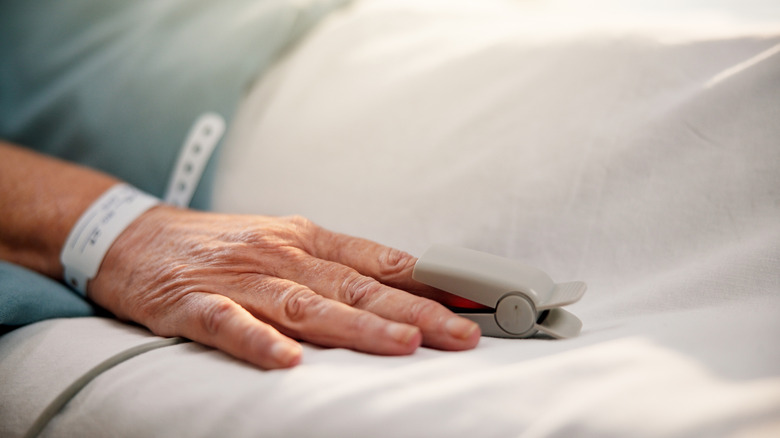
Most brown recluse bites never go beyond mild symptoms, thanks to the spider's small venom capacity. But there are some situations that require a visit to the emergency room. If you develop a severe rash, experience fever, dizziness, nausea, or chills, immediate medical attention is recommended. Wounds that have become infected, as well as open sores, blisters, or ulcers that develop at the bite site require a health provider's guidance as well. While these complications are rare, they are treatable. Doctors will provide proper specialized wound care or surgical debridement to remove dead tissue and promote proper healing.
If it's a child or an immunocompromised individual who has been bitten, contact your medical provider, as these two groups are both at a higher risk of developing severe symptoms. Even if you're not in the category of someone who is more susceptible to complications, you'll still need to monitor your symptoms.