

No Pricey Compactors: Fill Asphalt Driveway Potholes With A Simple Solution From Home Depot
We may receive a commission on purchases made from links.
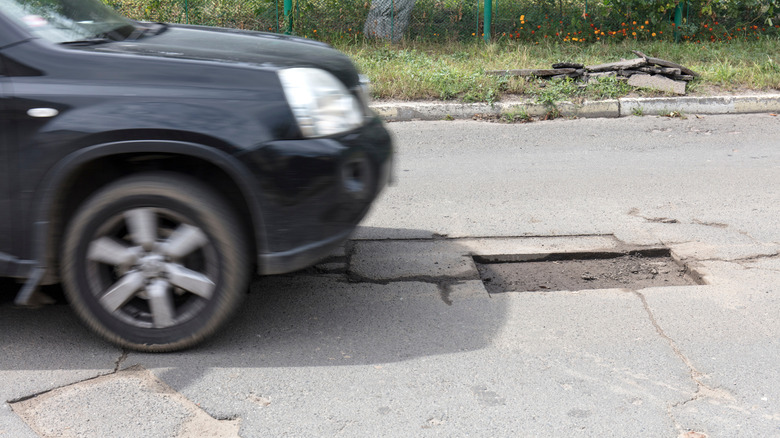
You might like the idea of installing an asphalt driveway at your home because it provides significant value, offering a cheaper option than concrete. However, one of the disadvantages of asphalt driveways is their reduced longevity compared to concrete. Over time and with weather exposure, the asphalt will crack. Water may seep into these cracks and enlarge them during freeze-and-thaw cycles, leading to unsightly potholes that could damage your car or create a trip hazard.
Repairing any potholes is a necessary step to take if your asphalt driveway is crumbling. You may think you need to rent a plate compactor and use a hot mix to fill the pothole for the longest-lasting results. However, this can be physically demanding work. Home Depot has an alternative solution that doesn't require a plate compactor and can be done with basic hand-held tools in the Road Rescue Asphalt Repair material ($32 for a 50-pound bag).
One bag will cover about 7 square feet of the driveway up to 1 inch in depth, making it ideal for repairing small potholes in driveways. If the pothole is about 3 inches deep, you could cover 2 to 2.5 square feet per bag. You'll typically save money doing the work yourself. Pros may charge $35 to $50 per pothole, but you'll likely have to pay $100 or more in trip charges before the work begins. Fixing potholes with the material available at Home Depot can be an inexpensive way to make your driveway look new again.
How to use the pothole repair mix without making a mess
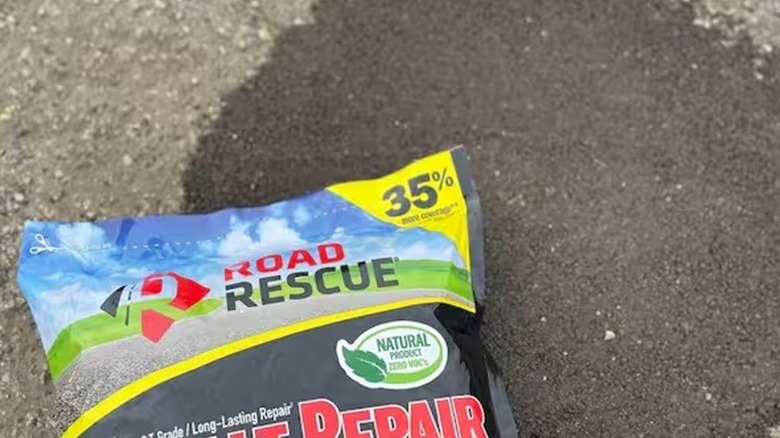
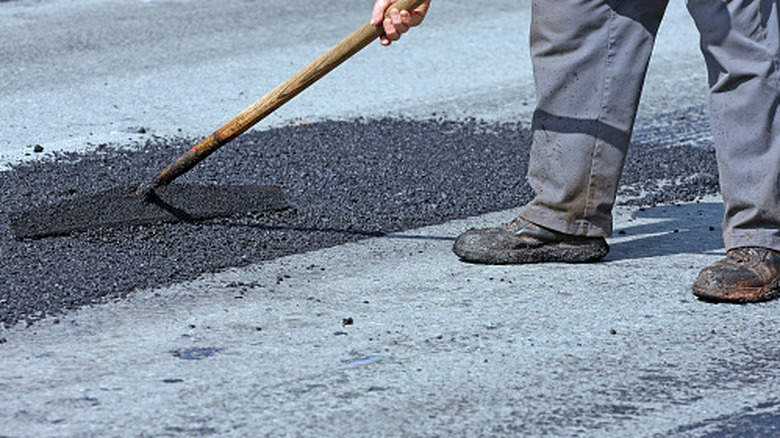
To deploy the Road Rescue pothole repair material, remove any loose debris and moisture from inside the pothole. Sweep the edges and nearby area to further remove debris. Pour the asphalt repair patch material into the hole, creating a pile that's slightly higher in the middle than at the edges. You can then tamp down the material with a steel-plated hand tamper. You can also use your vehicle's tires and slowly drive back and forth over the material to compact it. After compacting, it's ready for vehicular traffic.
Customer reviewers at Home Depot appreciate the ease of application. Multiple people said the product successfully filled in potholes of any size or larger cracks and gaps. "It was easy to apply, compacted well, and created a clean finished edge," one customer said. If you dislike using tar or hot mix for asphalt repairs because of the mess, this "works just as good as the messy stuff," one customer reviewer said.
To roughly calculate how much to buy, measure the pothole's length and width in feet at the widest areas. Multiply these measurements to calculate the square footage. Divide this number by seven to determine the number of bags. Then measure the depth of the pothole in inches at the deepest spot. Multiply the number of bags you previously calculated by the inches of depth of the pothole.
Downsides to using the asphalt repair mix from Home Depot
Although using the Road Rescue Asphalt Repair material is convenient and should save you money with DIY work, the reviews point out a few drawbacks with this pothole fix. One customer claimed the material was too dry and chunky to fully bind well. "Now, a month later, it's crumbling up and coming loose, making nothing but a mess. I am going to have to completely scrape the patch material up," the reviewer said.
Though it's a quick and easy fix, if you expect your Road Rescue patched pothole to perfectly match the rest of the asphalt, prepare to be disappointed. "The color isn't a perfect match to my aged asphalt, but it did the job well, and I'm happy with the result," one Home Depot reviewer said. (However, another customer noted that the patches do fade in color to more closely match the original asphalt over time.)
Even though you can roughly calculate how many bags you'll need, some reviewers said you should purchase a few extra bags. One customer's initial calculations led him to purchase eight bags, but after trying to fill the hole completely, he regretted not having an extra bag to ensure maximum compaction. Another reviewer recommended making sure you have enough extra material on hand to heap over the top of the pothole to account for settling after compaction.