

Ditch Retaining Walls And Meet The Living Solution For A Sloped Yard
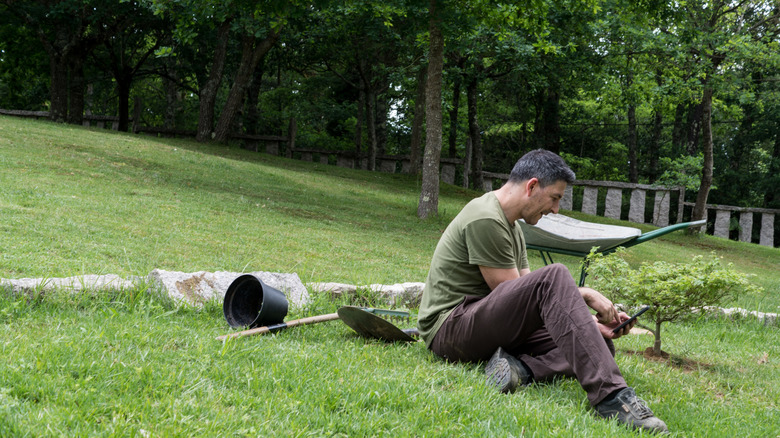
If your yard slopes, you may find that rainwater runs off surfaces quite quickly, washing soil downhill in the process. Eventually, the layout of the land may even change. While you can install retaining walls to combat soil erosion, they're costly and labor-intensive landscaping structures. You might not have the bandwidth for such a big project right now — or ever. If your yard has a gentle slope rather than a steep slope or structural cutout, consider a living solution to help keep soil in place: native viburnum shrubs like arrowwood viburnum (Viburnum dentatum), mapleleaf viburnum (Viburnum acerifolium), and black haw (Viburnum prunifolium).
Viburnum shrubs grow in USDA Plant Hardiness Zones 2 through 10. For example, black haw is hardy down to Zone 3, while arrowwood viburnum can tolerate Zone 2 winters. What makes this genus of woody plants so good for erosion control is its shallow spreading root system, which grows horizontally, binding the soil together as it expands. Plus, the lush green foliage of these shrubs catches heavy raindrops, diffusing and softening the water before it hits the ground. The overlooked part of shade trees that helps control erosion — the canopy — serves a similar function. As a bonus, all three Viburnum species are host plants for the spring azure butterfly, as well as being deer-resistant.
Why these native viburnum shrubs are perfect for sloped yards
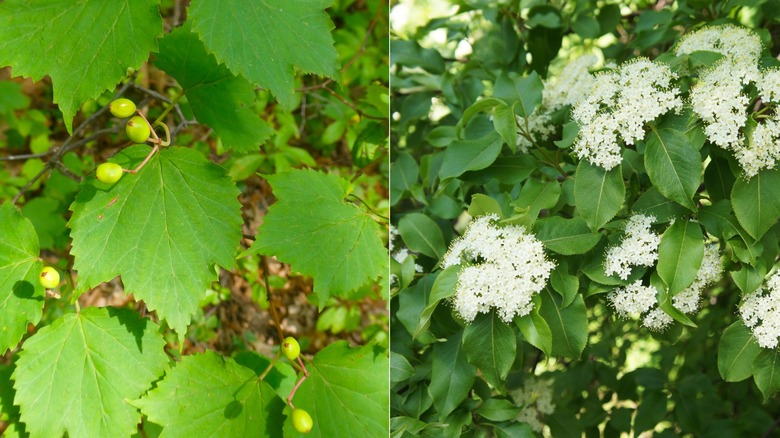
Arrowwood viburnum is ideal for slopes that are often exposed to heavy rain. This species tolerates mild flooding because it naturally grows along the banks of streams and lakes. Think of it as a natural way to control drainage for sloped yards or prevent erosion along shorelines. Conversely, it's relatively drought-tolerant. It's a large shrub, growing up to 10 feet tall and wide. Creamy-white flowers appear on the plant in spring and attract pollinators.
Choose mapleleaf viburnum for a shady, sloped yard. Like arrowwood viburnum, it prefers moist, well-drained, acidic soil and is quite drought-tolerant once established. This shrub is on the smaller side, with a maximum height and spread of 6 feet. It puts out lots of suckers, which is an advantage for preventing soil erosion. The more roots a plant produces, the better it can bind the soil. It produces stunning fall foliage in shades of pinkish-red and purple. Pair this viburnum shrub with other plants and trees that can reduce soil erosion while beautifying your yard, like sweetspire, daylilies, and ferns.
Black haw is the largest of these three native Viburnum species, reaching 15 feet tall and wide at maturity, although it grows fairly slowly. It has a branching root system with a long central taproot. Black haw thrives in well-draining soils on the drier side, making it ideal for slopes that don't get much rain. The large clusters of creamy-white flowers appear in spring and have a sweet fragrance.